
Photo courtesy of Ellie Manders.
There’s a preconceived notion that composting is smelly, filled with worms and overly complicated. But for Ellie Manders, a senior at Booker T. Washington High School for the Performing and Visual Arts and a Lake Highlands resident, those “gross” factors are exactly what drew her into the world of composting.
When Manders was just nine years old, her interest in conservation and preservation began after listening to a podcast about Greta Thunberg and her School Strike for Climate movement.
“That got me really passionate about just how much damage we were making and how little there was that the world was doing about it,” she says.
Her commitment to environmental causes deepened when she decided to become a vegetarian.
“I started just thinking of all the little ways I could do my part to help,” Manders says.
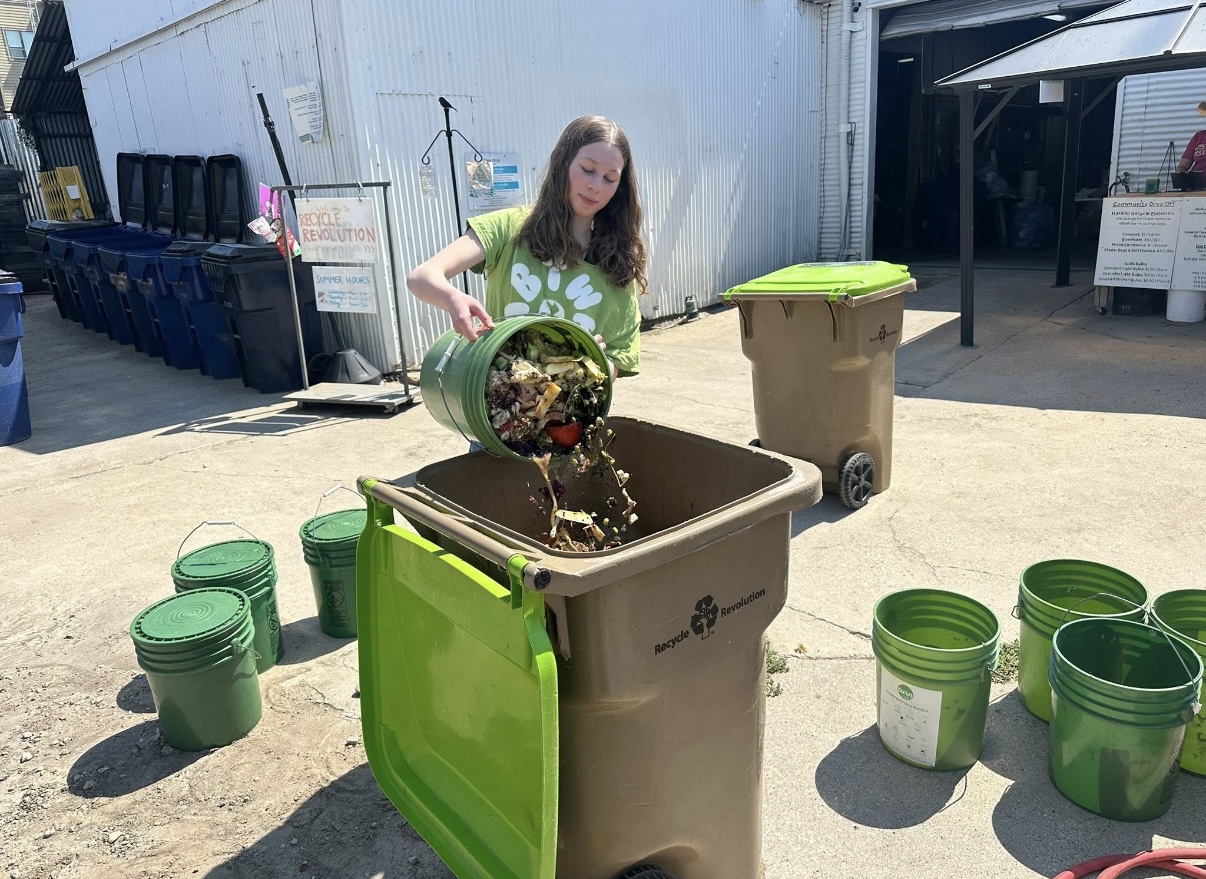
Photo courtesy of Ellie Manders.
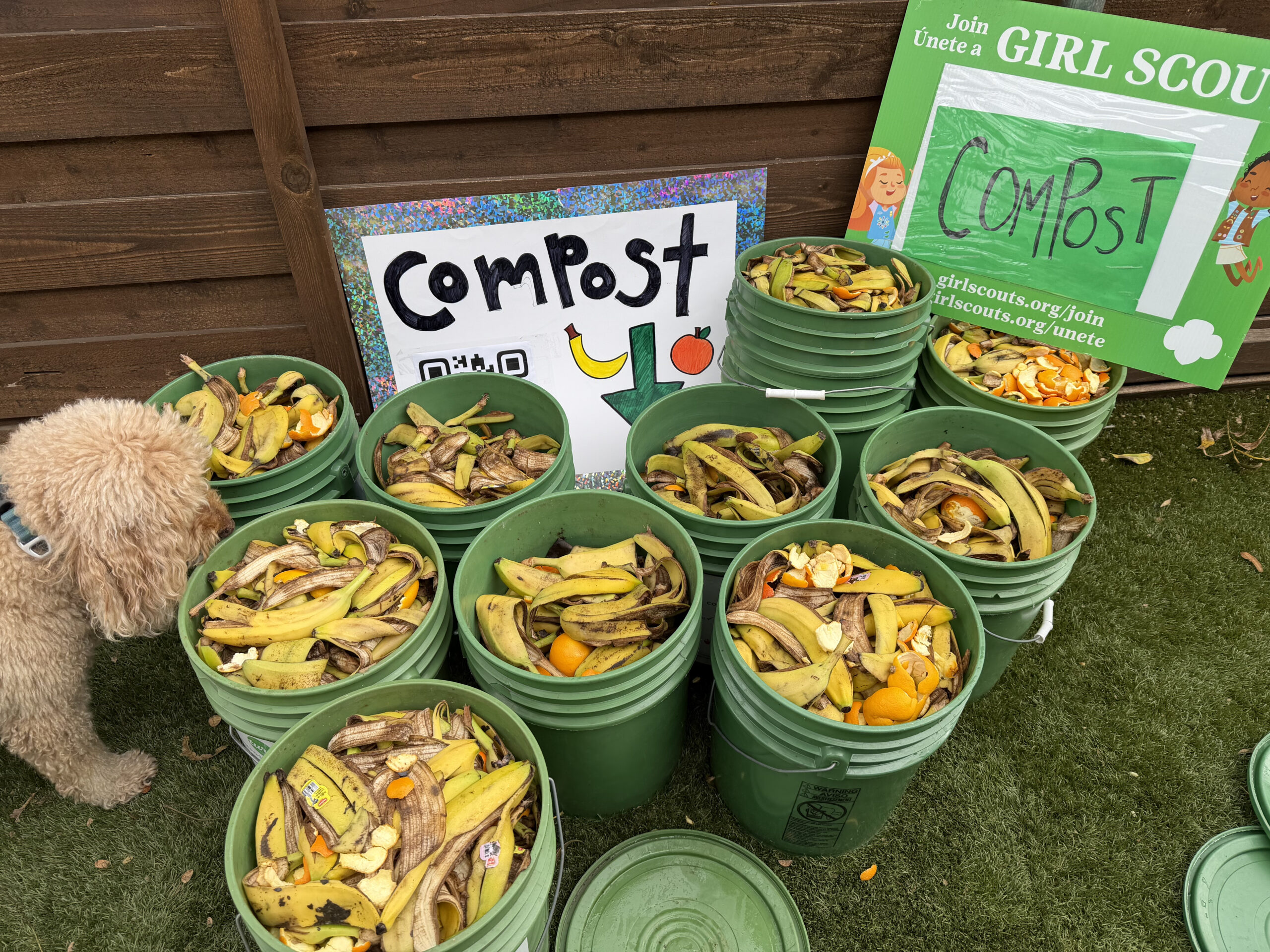
That passion eventually led her to earn a Girl Scout Gold Award, the highest honor in Girl Scouting. For her project, Manders created a composting initiative designed to educate community members about food waste and sustainable waste management.
As part of the project, she collected food scraps from neighbors and, with the help of her mother, transported them to Recycle Revolution for composting. Through the initiative, Manders aimed to make composting more accessible while showing residents how small changes can reduce waste.
“I think it’s important to give [my neighbors] exposure to the issue so they may feel driven to make a change,” she says.
In addition to partnering with Recycle Revolution, Manders works closely with 4DWN, a composting initiative that combines skateboarding and food conservation.
After launching the project in her neighborhood, Manders noticed a shift in how many residents viewed composting.
“I think, in general, they are realizing that [composting] is an important issue, and they are happy they don’t have to turn the compost themselves in their backyards,” she says.
Manders’ efforts extended beyond her neighborhood. As part of her Gold Award project, she also taught younger Girl Scouts about composting and environmental stewardship.
“When they think of composting, they think, ‘Ew, worms and dirt,’ but I’ve gotten to show them compost after it has been turned and finished, and they like what they learn and what it really means,” she says.
Although composting has become a significant part of her life, Manders does not know whether she will continue the project after high school. What she does know is that her commitment to environmental advocacy will continue.
As she prepares for college next year, she hopes to focus on broader sustainability issues and find ways to incorporate environmental stewardship into her future career.
“I haven’t decided what I want to major in college, but whatever it is, I want to incorporate environmental sustainability and continue to make a difference.”