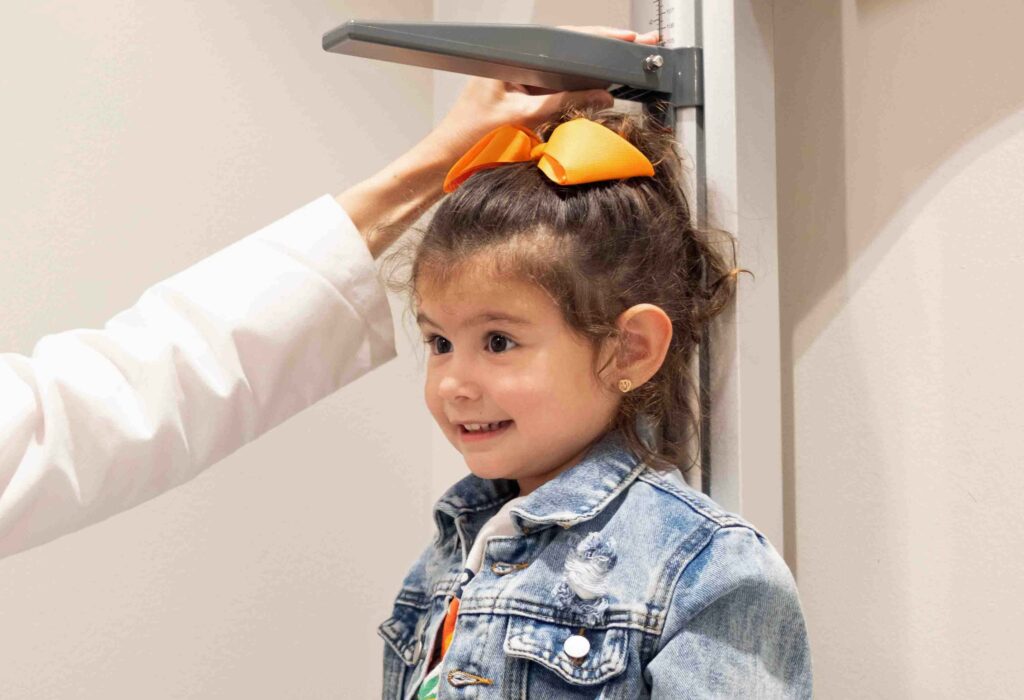
Courtesy HHM Health
All day long they come. Some arrive by rideshare or personal vehicle. Others journey via DART, changing buses or trains along the way. Most, though, show up at HHM Health after walking from their apartment community in the Vickery Meadow neighborhood nearby. They seek medical treatment for themselves, their children and/or their family members because they’ve heard healthcare providers here are capable and caring.
Their ailments — and their life stories — vary widely. Some need more than one hand to count the generations in their family who’ve grown up within a mile or two of HHM Health’s headquarters inside the Northwest Community Center. Others are recent immigrants from Southeast Asia, South America, Africa, Mexico or another far-flung area in the world. Patients speak 68 different languages, and many are eagerly learning English for the first time.
HHM Health is a Federally Qualified Health Center — a hard-earned designation which enables the clinic to provide comprehensive primary care in underserved areas, regardless of each patient’s ability to pay. Services offered include women’s health, pediatrics, behavioral health, infectious disease prevention, diet & nutrition, pharmacy, vision, dental and imaging.
HHM Health first opened as Healing Hands Ministries in a tiny clinic on Skillman Street in 2005. Founder Janna Gardner was working as a school nurse at Stults Road Elementary back then, and she saw that many students and their families were relying on Richardson ISD school clinics to meet their medical needs. Healing Hands treated a total of 250 patients that year, and the all-volunteer clinic was open only on Thursday evenings.
Healing Hands was soon embraced by Texas Health Presbyterian Hospital Dallas as a way to improve service to these patients and keep them out of overflowing emergency rooms. Uninsured and underinsured patients seeking care in the ER for every runny nose, upset stomach and school immunization were wreaking havoc in the larger healthcare system, and Healing Hands’ innovative plan to pull these families into a neighborhood clinic where care was more personal — and, frankly, cheaper — won the support of Texas Health and donors alike.
Today, HHM Health sees more than 300 patients per day and has already seen about 50,000 this year. In addition to their Vickery Health Center on Pineland Drive near Greenville Avenue, they operate the Greenville Dental Center at Greenville Avenue and Royal Lane, Woodhill Pediatrics Associates on Walnut Hill, CeCe’s Place at Hope Cottage in East Dallas, HHM Health at South Dallas, HHM at Mesquite, and Pediatric Health Specialists in Irving.
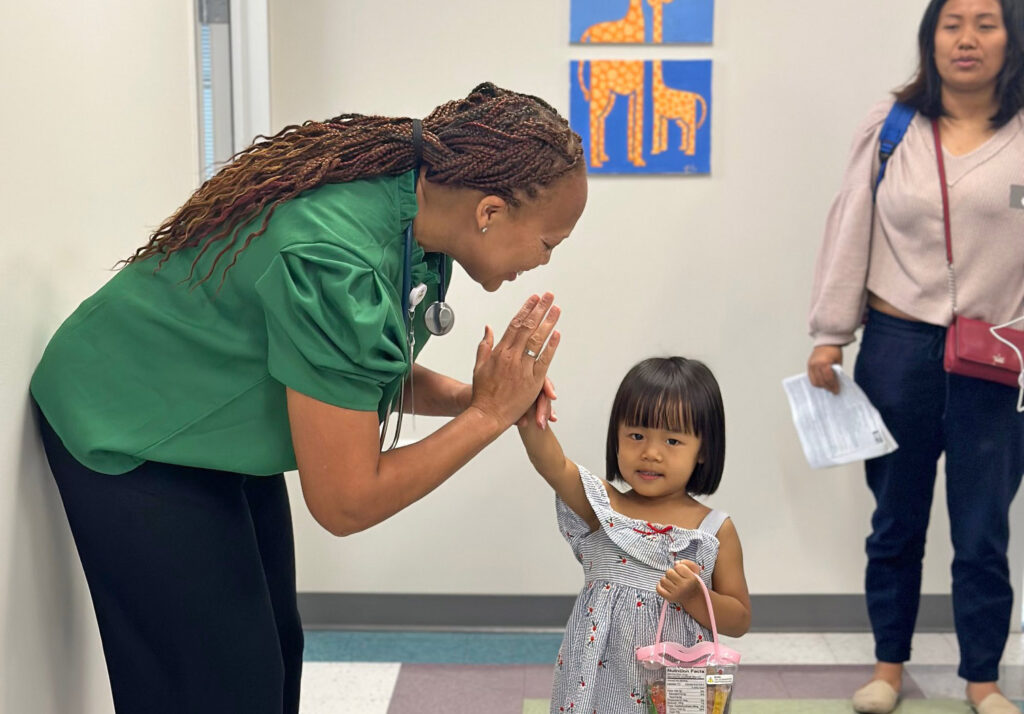
Cashoyna Tillis high fives a pediatric patient at HHM Health
Nurse practitioner Cashoyna Tillis works hard to make sure cultural and language barriers don’t interfere with the quality of care her patients receive. The small-town Mississippi native knows each visitor brings their own backgrounds and experiences through the doors with them.
“I really just enjoy being able to do what I do, and I know it makes a difference,” she says with an infectious smile. “If you make parents feel seen and heard, they will buy into the care they’re receiving and trust you to provide care to their children.”
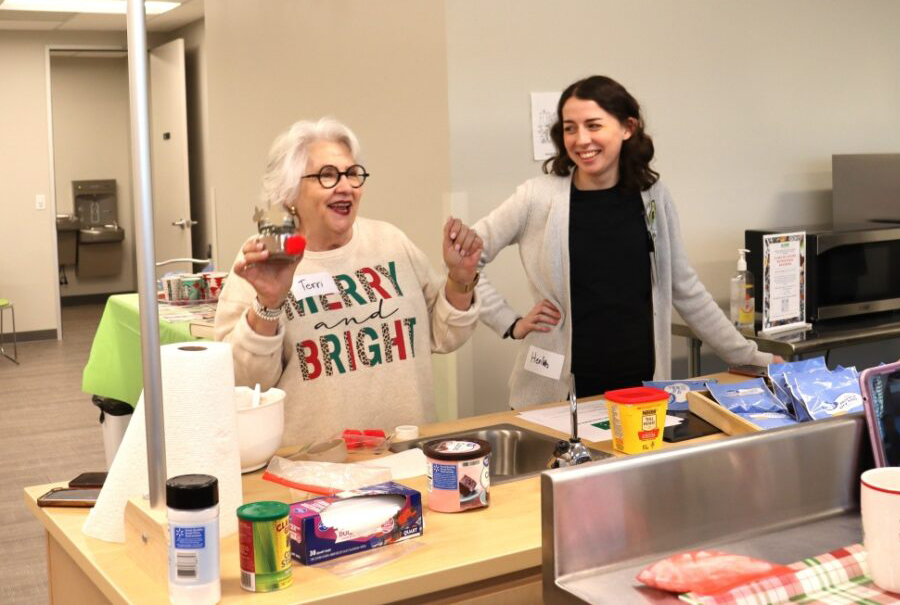
Terri Heard shares a cooking class with refugee women from all over the globe
Tillis has learned to first study which parent will be communicating the health history and needs of the ailing child. In some cultures, the mom explains how the child has been eating, sleeping and suffering. In others, the dad is considered the leader of the home and sole communicator. In some families, both parents give her a big hug of greeting and gratitude. In others, she’s learned not even to shake the hand of the baby’s father or older brother.
“It’s all about respect,” she explains. “It may be different from what I’m used to, but I’m accepting them as they are and having full respect for their cultural norms.”
She remembers shaking the hand of a little boy, who then stuck his hand out a second time. His mother explained he wasn’t really trying to shake her hand, so she relaxed and let him lead the way.
“He took my hand and put it to his forehead as a sign of respect,” she recalls. “Now when I see him, I remember that. He shows respect in a different way.”
Tillis says she works to remember and accommodate these various cultural differences because — bottom line — it results in better care for the family.
“We are all part of humanity, and we deserve to be respected right where we are,” she says. “I want them to feel seen. I want them to feel heard.”
Many of the pediatric patients have young, first-time parents, and many are separated from their extended families by thousands of miles. She can’t let barriers get in the way.
“Communication and education are so important,” she says. “The more educated parents are, the more confident they feel in taking care of their children. Imagine — it’s your first day. It’s your first child in the United States of America. You may not necessarily know the system or what to do or how to ask all the questions you need to ask.”
In addition to live interpreters, HHM Health uses Jeenie, an online program which fetches live translators in any language. It helps to avoid mistakes in dosing or treatment, and it puts both caregiver and receiver at ease.
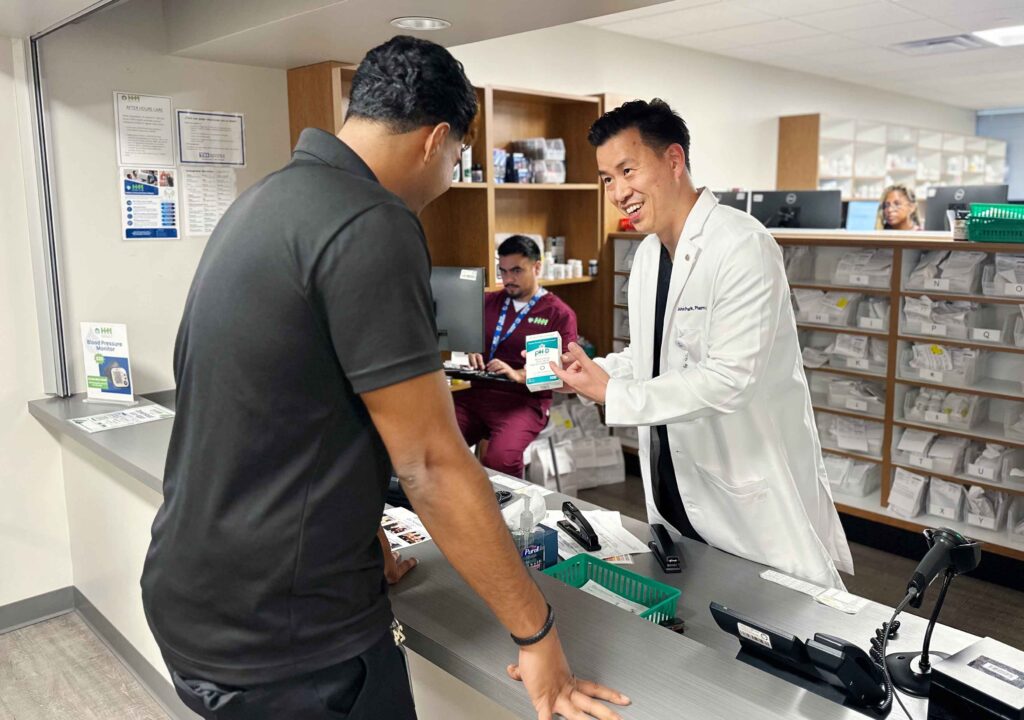
Dr. John Park and his staff work to keep wait times low
Like Tillis, Dr. John Park and his crew strategize before the clinic opens each morning. As director of HHM Health’s onsite pharmacy, he is determined to keep the wait time for medication below ten minutes.
“We try to make sure patient care comes first,” Park says. “We don’t want to rush anything, but we are cognizant of the wait time. Obviously, people come in because they are sick. They are uncomfortable. We are aware of that. But at the same time, we don’t want to rush or do anything to jeopardize their care.”
“Our patients are very appreciative, and they really enjoy our service,” Park says. “My technicians have been here for a while, and they know what they’re doing. They’re very professional and respectful.”
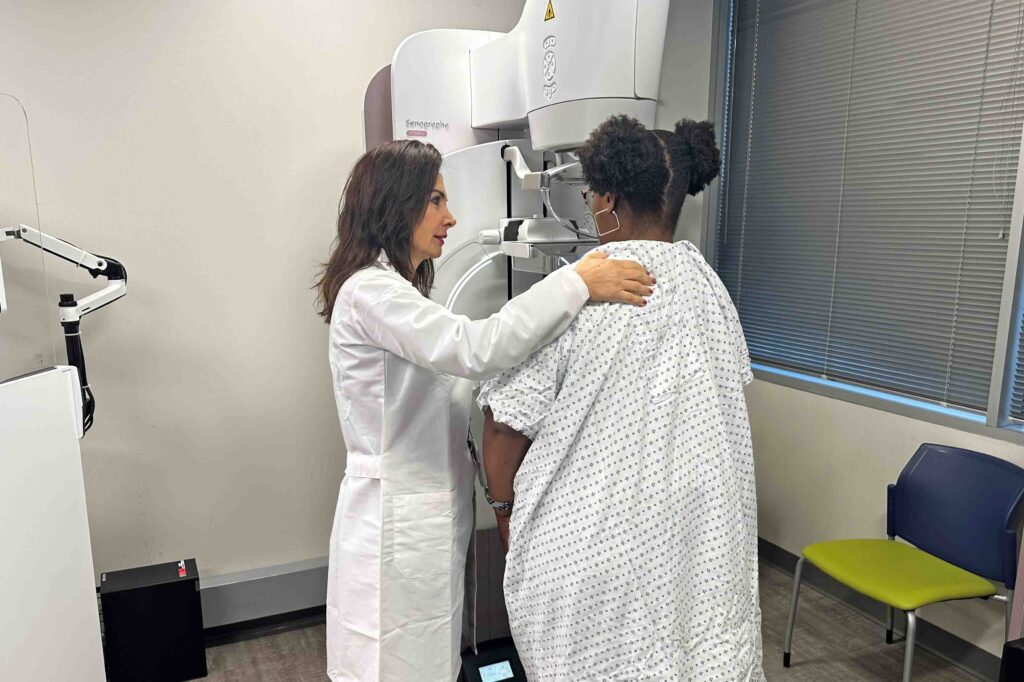
Marjan Sadoogh conducts a mammogram using state-of-the-art equipment
When Healing Hands began, much of their equipment was donated by doctors purchasing the latest and greatest for their private clinics. Today, HHM has stricter standards. Just because patients have limited personal resources, doesn’t mean their medical equipment must be second-rate or hand-me-down.
“As you can see, this GE machine for 3D screening mammography was made in France,” mammographer Marjan Sadoogh explains while conducting a tour. “The machine edges are rounded, and the surfaces are warmed for comfort. Our picture of the breast includes about 57 images — it’s thermal and it’s painless. The study takes about ten to 15 minutes, depending on the patient, and the report is ready within a week.”
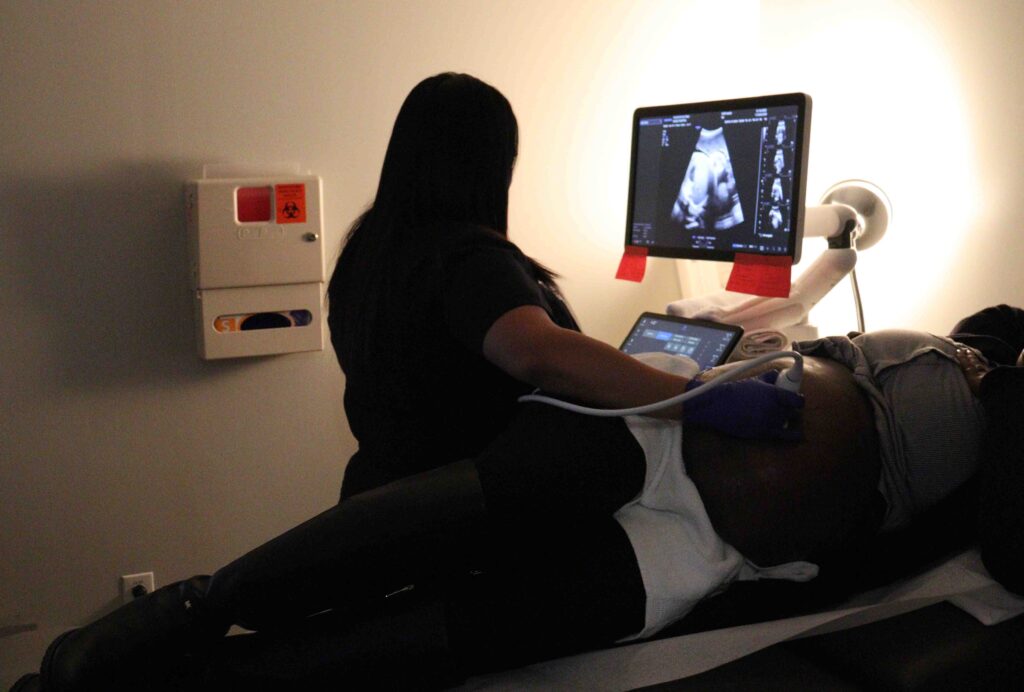
Technician performs a sonogram at HHM Health
Dr. Taibat Eribo is medical director of women’s health services. She’s often scrambling to eat a granola bar or down a water bottle between her visits with expectant mamas, but she stops in her tracks when asked about the clinic’s new sonogram machine, which she calls “game changing.”
“Ultrasound makes a difference,” she says emphatically. “Not only does it give mothers joy to see their babies, whether healthy or not, but it is also diagnostic. We’ve had multiple babies (with serious illness or malformation) that we never would have been able to know about until birth and prepare the mom for.”
In cases where the fetus was found to have anencephaly or lack kidneys or face another life-threatening issue, ultrasound helped parents and extended family make preparations for palliative care.
“Sometimes babies are growing normally until a certain point, then they stop growing normally. The parents get to meet with the maternal fetal medicine specialist and the entire care team before delivery. We have a chance to plan to deliver this baby in a calm and controlled manner. Parents can prepare mentally for what life will look like without this child. All of that would not be possible without an ultrasound.”
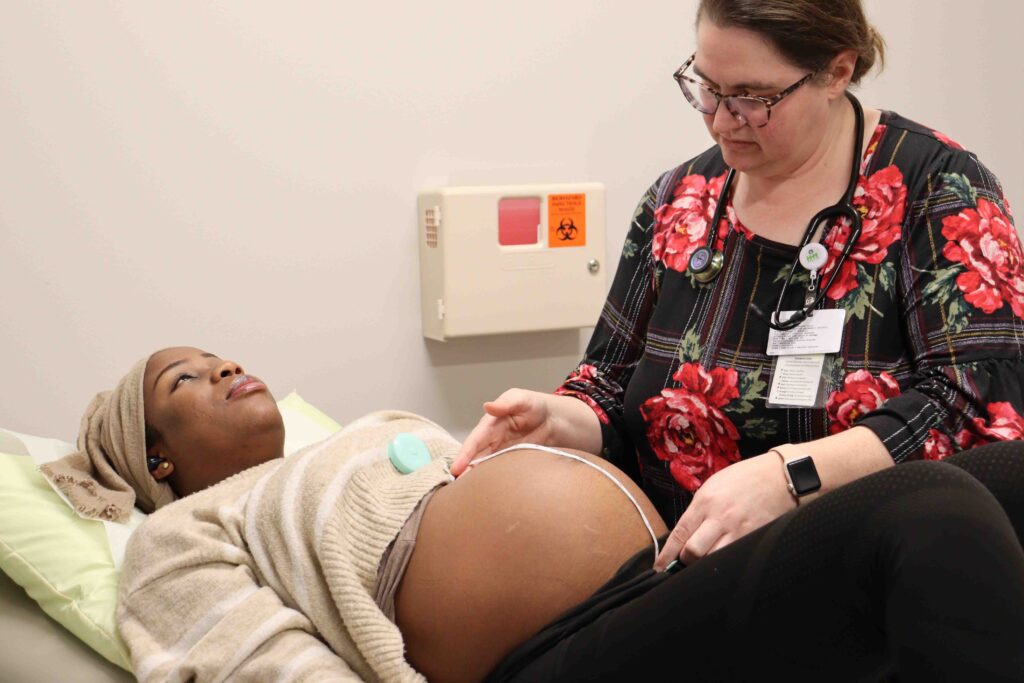
Courtesy of HHM Health
Texas has the highest uninsured rate for children in the nation, and Dallas has the highest rate of uninsured people in the region. Texas is ranked 49th in the nation for reproductive care and women’s health based on maternal mortality rate, insurance coverage, preventative care and other factors, and more than 2,200 American babies die before their first birthday. Eribo says these numbers must change.
“The maternal morbidity and mortality in the United States abysmal,” she says. “It’s unacceptable, and if I can do anything to decrease that morbidity or mortality by providing care, it’s a win. I am choosing to be here doing this work, because that is what I want.”
Eribo realizes that people hear HHM Health is a “Medicaid Clinic” (note: they also accept insurance), and they may envision dirty, congested waiting rooms with an unsympathetic staff. Think again.
“When people think of a community health center, they may think of places where you go just because it’s the last resort,” she says. “We take pride in providing the kind of care women would receive in a private practice setting — in the labs we draw, the ultrasound, the counseling they receive, the access to maternal fetal specialists throughout their pregnancy.”
Eribo says it’s not uncommon for women to arrive after losing a job, experiencing divorce or being dropped from their insurance for myriad reasons.
“All of a sudden, all they have is Medicaid,” she says. “They are expecting this dingy environment where everyone is rude and unhappy, but they get a great experience the whole way through, from the front to the back. We treat you like you were meant to be here. I take pride in that. That’s why I’m here.”
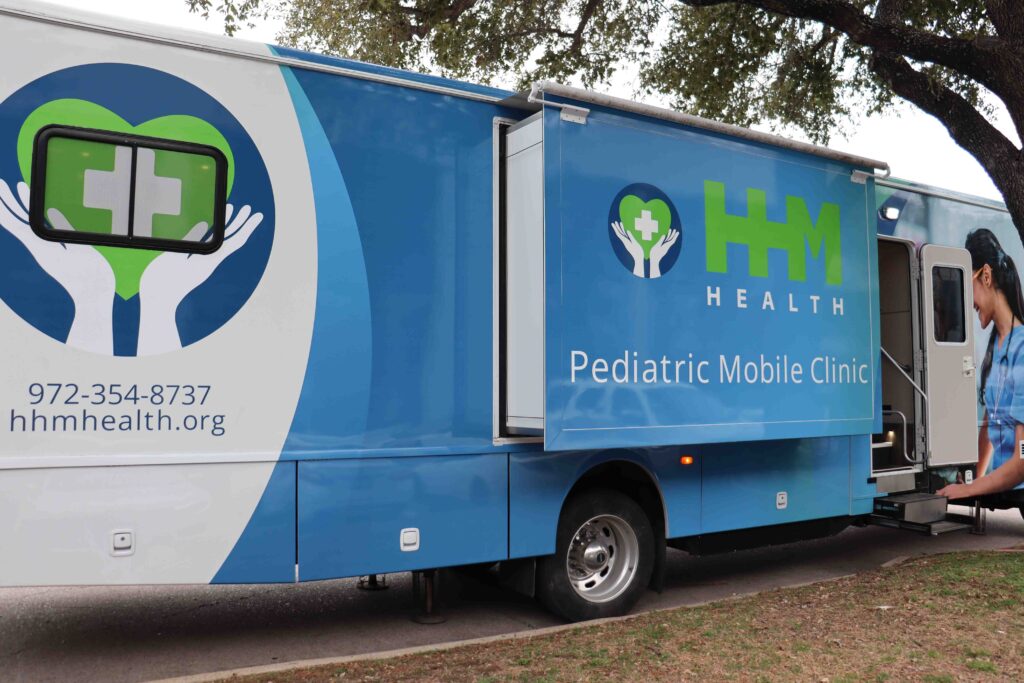
HHM Health’s new mobile unit
Dr. Erica Solis leads HHM Health’s new mobile unit, launched in August to treat patients at churches, schools, homeless shelters, domestic violence centers and community events. At a recent outing, Solis met a mom with five children who escaped in the night with nothing but the clothes on their backs.
“Two kids had asthma, but she didn’t have their nebulizers,” Solis recalls. “She said, ‘We’re here now, and we need all the things.’ So, I was able to update their vaccines, treat the asthma, do labs, get nebulizers — it was full service.”
Being prepared for any person to walk up with any ailment at any time requires a certain flexibility. Solis says she brings just that.
“That’s one of the reasons they hired me,” she laughs. “It’s one of the reasons I came here. I love community outreach. I love the missions and goals of HHM. We’re boots on the ground. You can read articles (about treating populations where the needs are great), but when you’re actually here treating people, it puts faces to these stories.”
Solis points to the recent addition of behavioral health services at HHM, which, coincidentally, she calls “game changing.”
“There’s a lot of the trauma with some of the refugee populations,” she says of patients who have escaped countries ravaged by war, camps devoid of food and villages devastated by violence. “You can’t just fix one thing. It’s all interconnected.”
You may join Friends of Healing Hands via the link here. You may enroll as a patient here. If you’d like donate, learn more here. Your gift of $50 pays for one well-woman’s exam, $100 pays for one dental cleaning, $250 covers two vision exams, $500 equates to five behavioral health care sessions and $1,000 covers all nine months of prenatal care.
HHM Health’s headquarters and Vickery Health Center are at 5750 Pineland Drive.