Even in dentistry, when you’re working with a child that has an issue, it always felt good to finish the project,” Mark Kogut says sitting in his book-filled study.
Photography by Lauren Allen
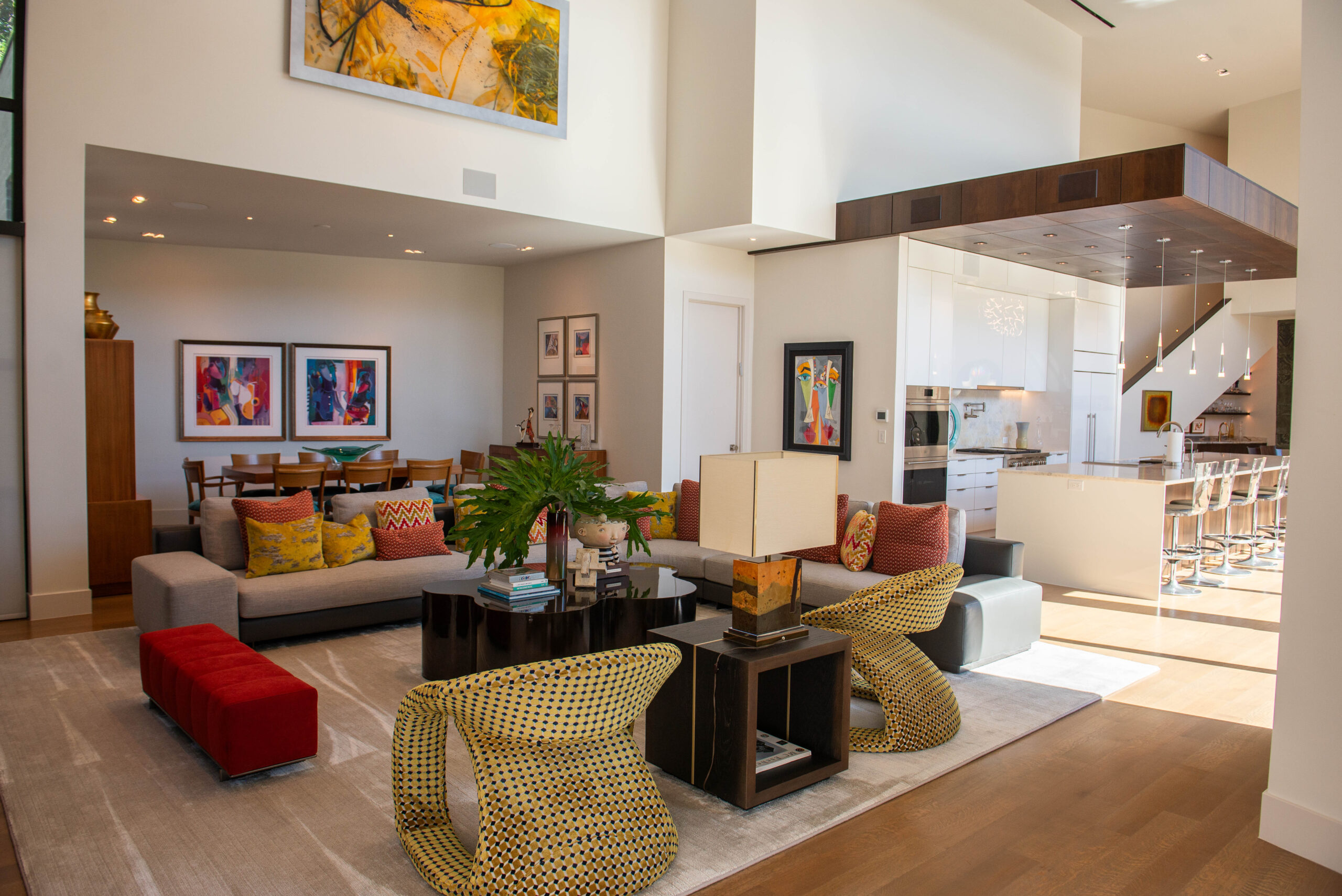
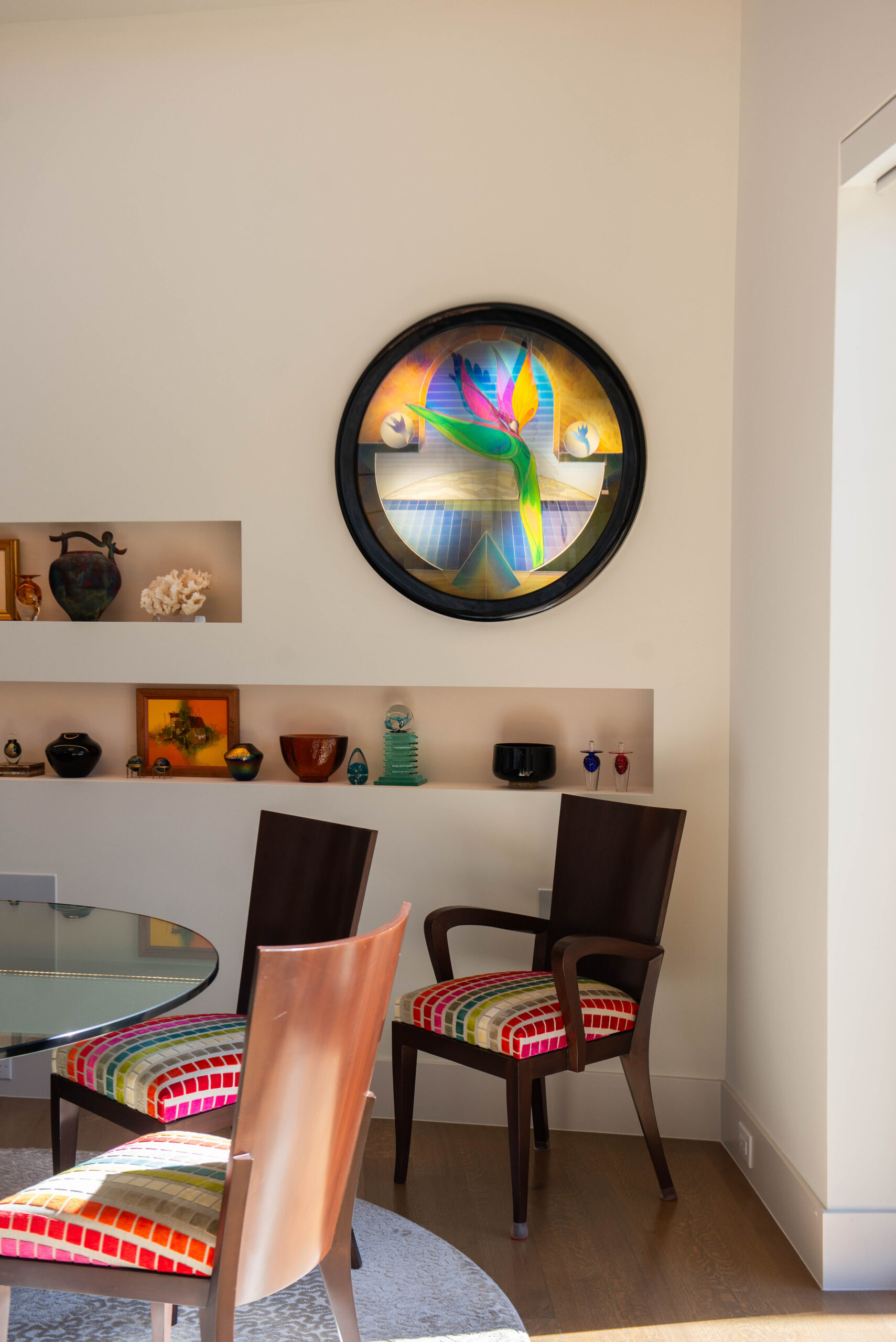
Kogut worked in pediatrics for 42 years. He’s also somewhat of an enthusiast for design, art and literature — something that becomes evident as you walk through his contemporary Urban Reserve home, a decided crucible for his interests. From its DMA-esque walls tastefully adorned with glass-blown pieces to a two-story window wall blurring the lines between dining room and exterior, he’s built a dream home designed for aging in comfort.
He needed some help getting here. While the 73-year-old has designed dental offices and won awards for his work, a more specialized mind was needed.
That’s where Billy Ware came in.
Kogut, a fan of Contemporary styles, is also a cyclist who found the property after scouting out The Reserve while riding on White Rock Trail. A few years prior, he’d missed out on a home designed by Ware. The biggest draw? A two-story tall window wall.
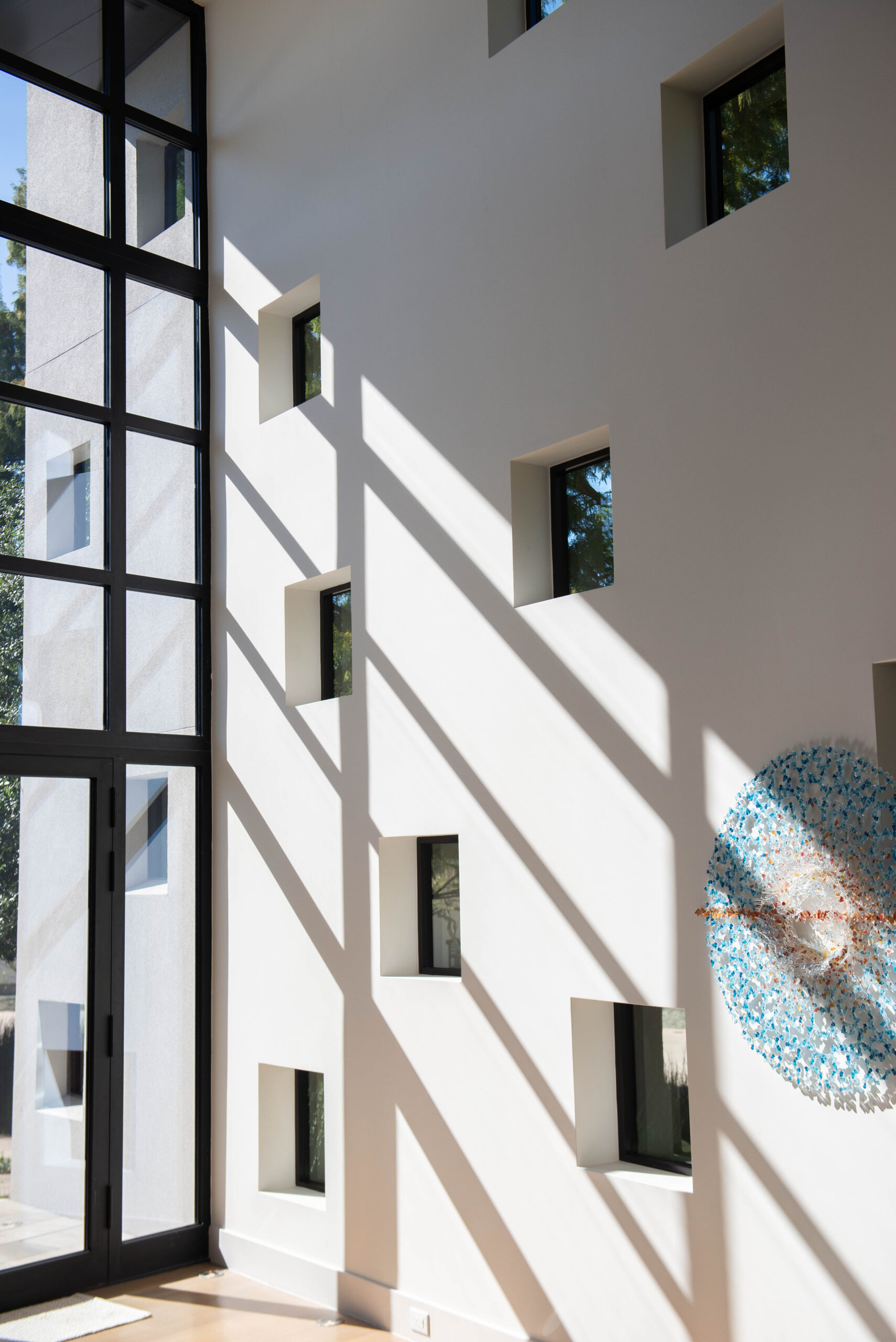
“The house had a feature in it that I thought was pretty special, and when I was told that it had gone under contract, I found out who designed the house,” Kogut says. “Billy had won some awards for that house, and I said, ‘There was a feature that you had in that house that I want to copy.’”
For the next six months, Ware “coached” Kogut through the design process alongside builder Ross Williams, he says.
“Billy was really easy to work with,” Kogut says. “We could talk freely with one another, and pass ideas back and forth. And I think another thing that was good, and this is something that’s important for coaches as well, he asked good questions. Like, ‘OK, Mark, what are you trying to do here? Why are you doing this?’ And helped me to clarify things.”
In a green community like Urban Reserve, there is an emphasis on sustainability and energy efficiency in structure, an approach Ware had extensive familiarity with in his career. The home utilizes geothermal heating and cooling systems and solar panels. In the fall, sun shines through the centerpiece window wall to warm the home, while in the summer, blinds and a specially-designed canopy block warming rays.
Ware and Kogut, as it turned out, would only have half a year together. With small aspects of the design incomplete and builders waiting for a start date, Ware died in 2018 at the age of 45, leaving a wife and three young children behind.
“I felt like we were becoming friends. We were certainly partners in the design of this. And he was young. I think he was only 45, that’s young. And so I get emotional thinking about that,” he says, even though it’s apparent in his voice.
The project was one of several builds Ware was unable to complete due to illness. Sarah Harper had worked with Ware in the past and stepped in to help Kogut and his team finish what her late colleague had started.
Photography by Lauren Allen
Harper finalized several details of the project, the window wall being the most prominent of which, and helped move it from design to documentation and, eventually, building.
“It was more like a labor of love to get that done for them, and to kind of honor the work that (Billy) had done, because otherwise they would have had to take it to an architect and potentially start over,” Harper says.
By 2023, despite a near-total reset after most of the frame was blown away by the 2019 tornado, Kogut finally moved into the home.
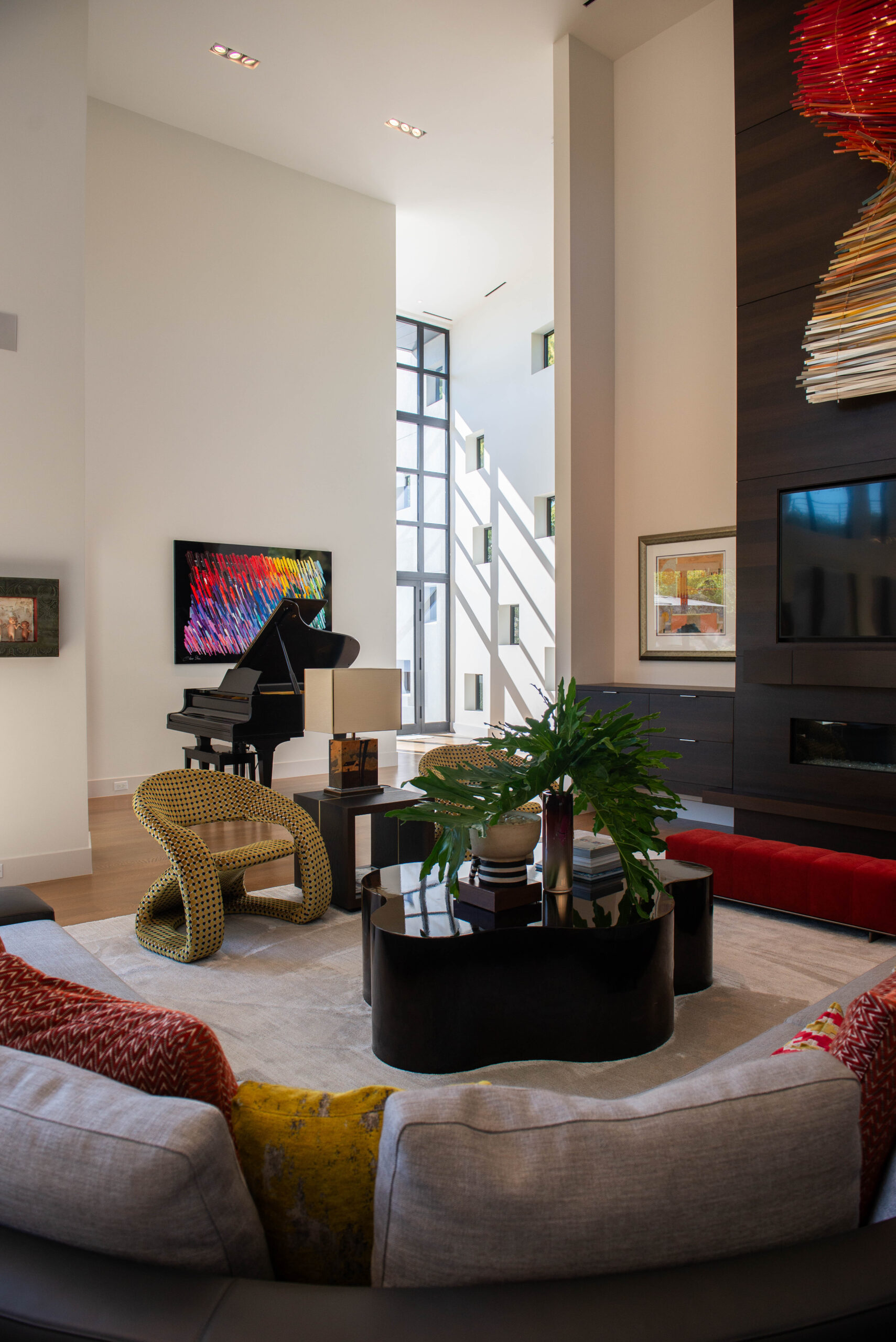
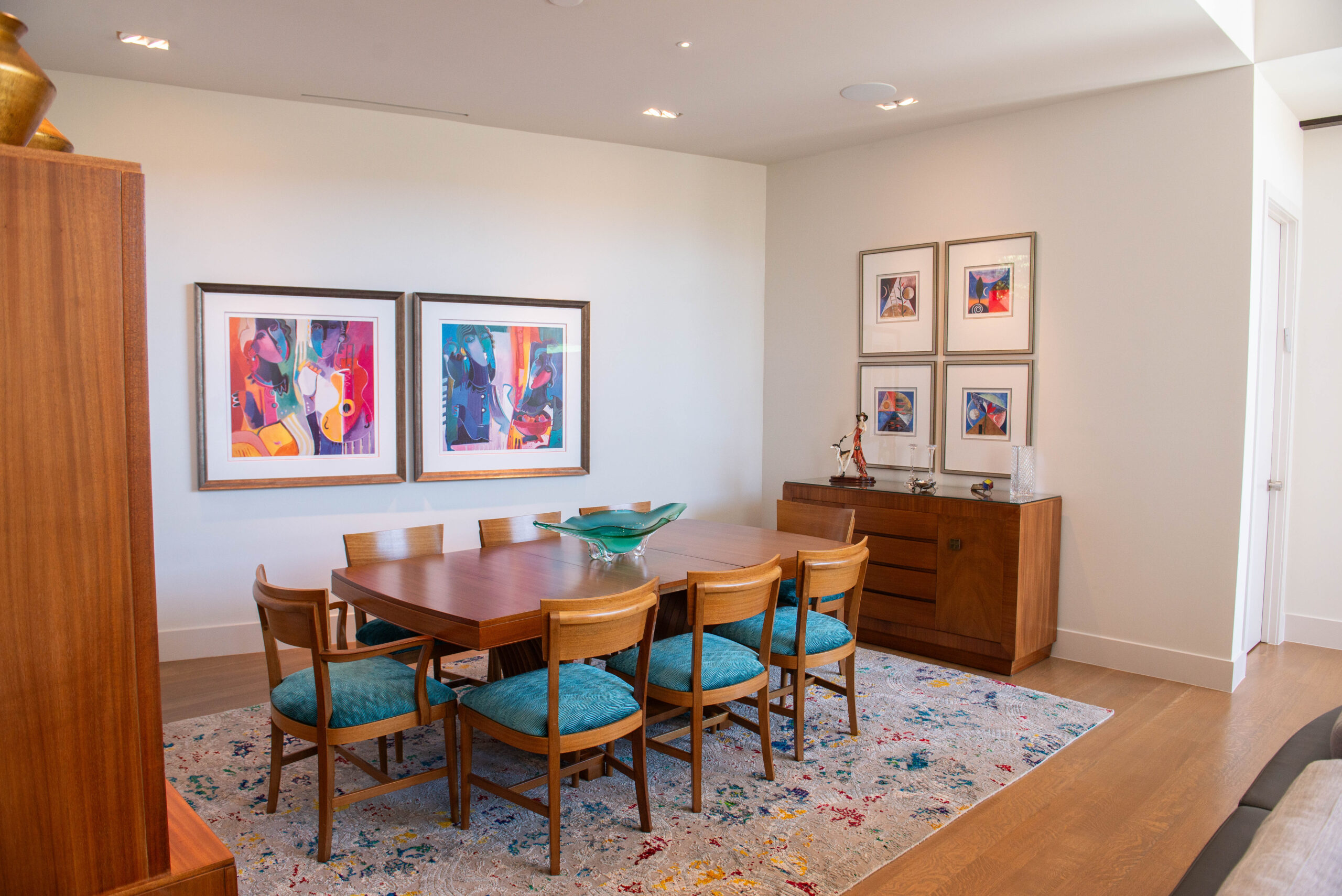
The facade is made up of three different materials: steel, stucco and brick. At just over 7,000 square feet, the interior is drenched with natural light and pops with Kogut’s collection of colorful contemporary art.
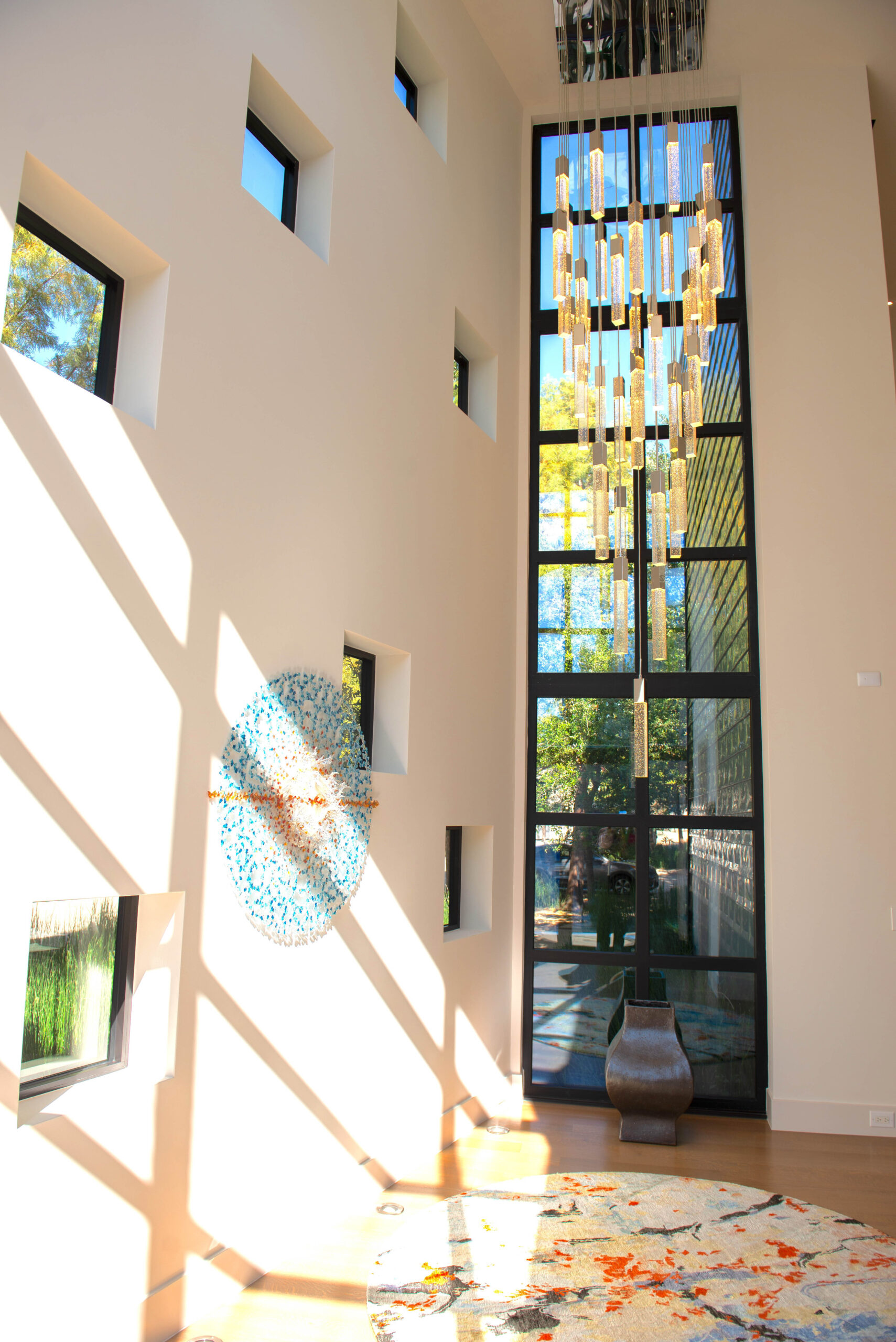
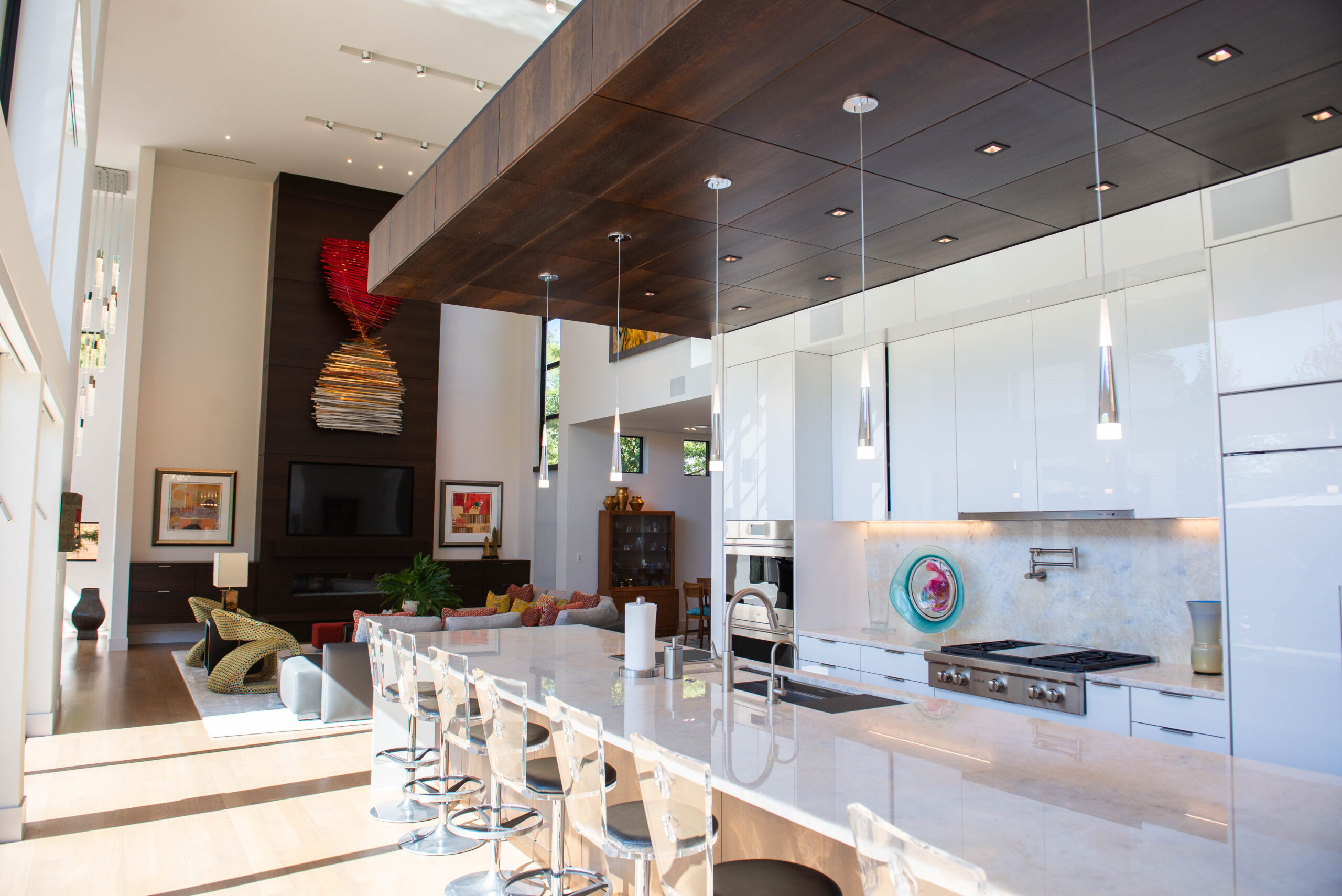
Past a 14-foot sculptural chandelier in the entryway, the home opens into an expansive public area. A large island kitchen sits in the middle. Above it sits a partial floating ceiling which Kogut added to offset the open coldness of strict contemporary design and introduce an element of intimacy within the space. A large, ceiling-to-floor fireplace may anchor the room, but the focus is decidedly found while facing outside from the kitchen.
The wall of windows.
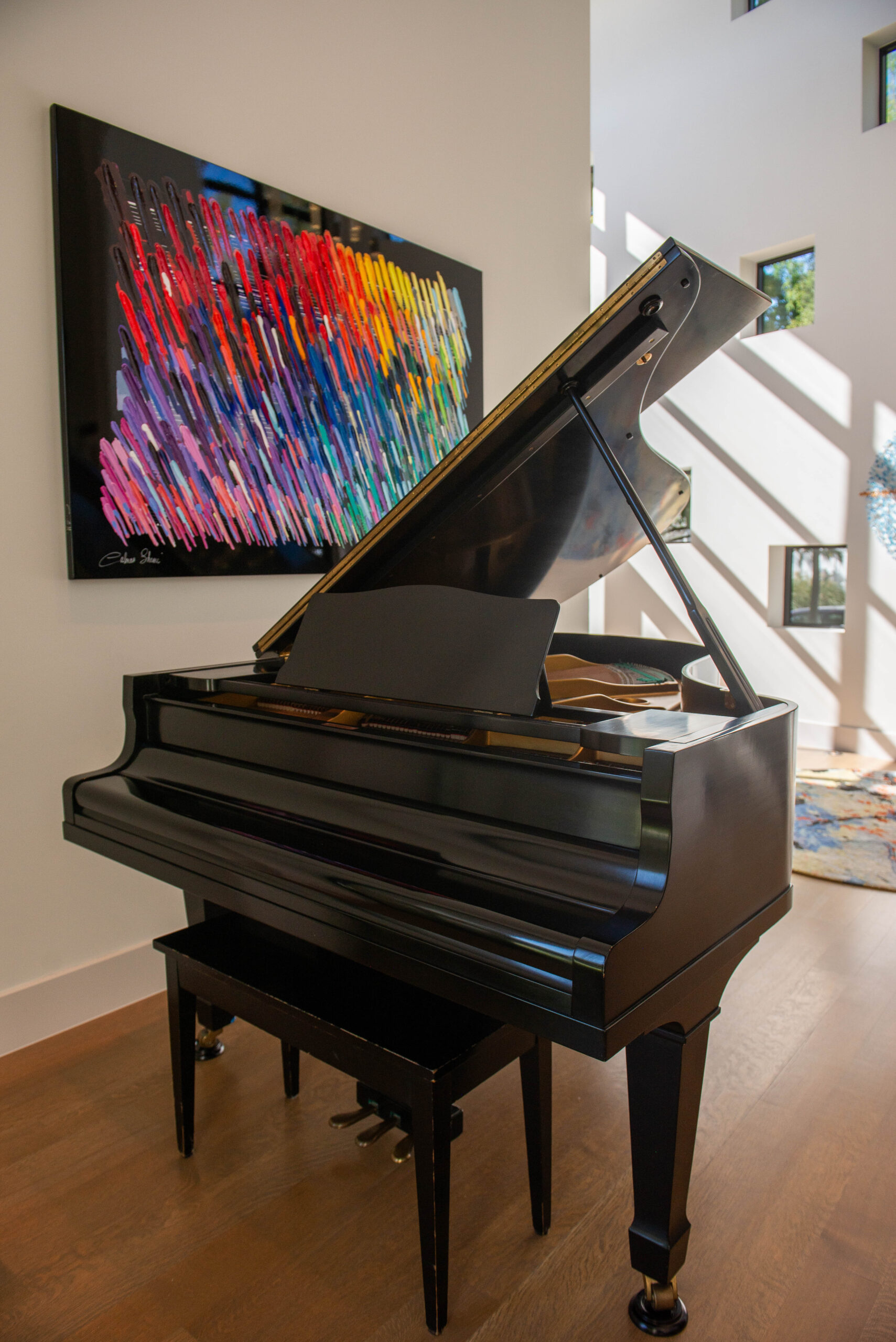
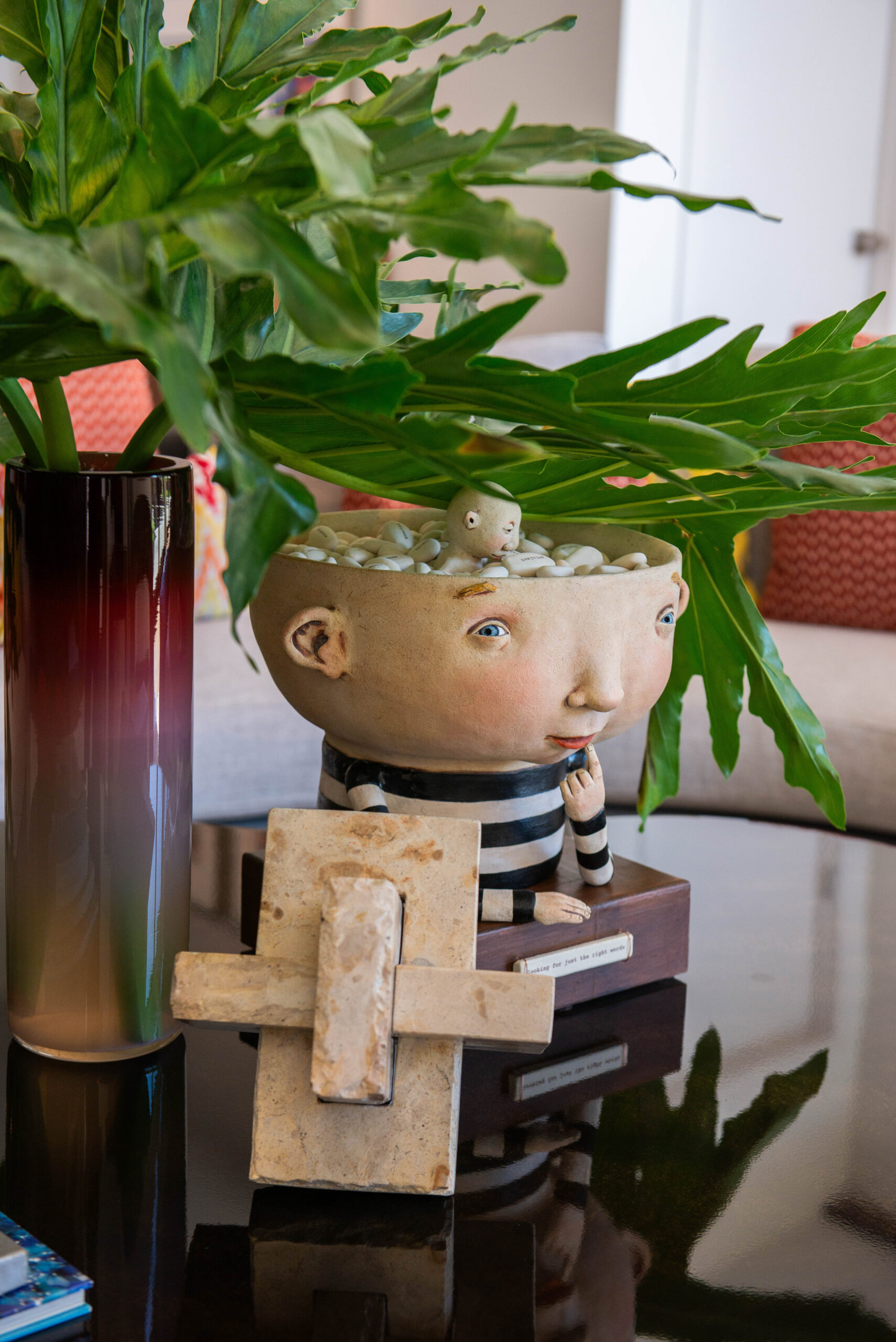
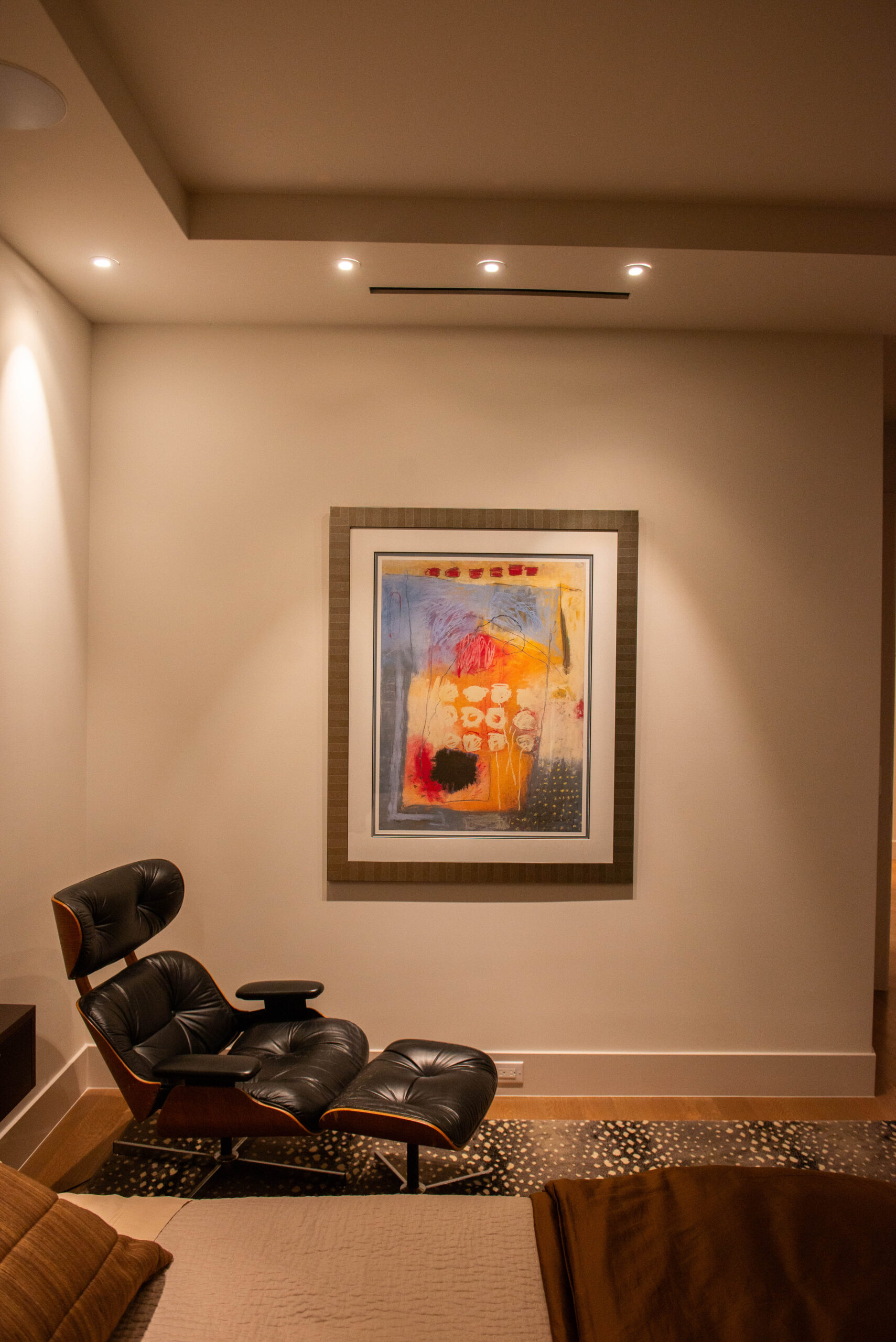
“I said I wanted to build a house around it, and I want us to design this house as a place where we can put art. This was what it was,” Kogut says. “So obviously we built everything around this, and we have all these spaces where art can go.”
Photography by Lauren Allen
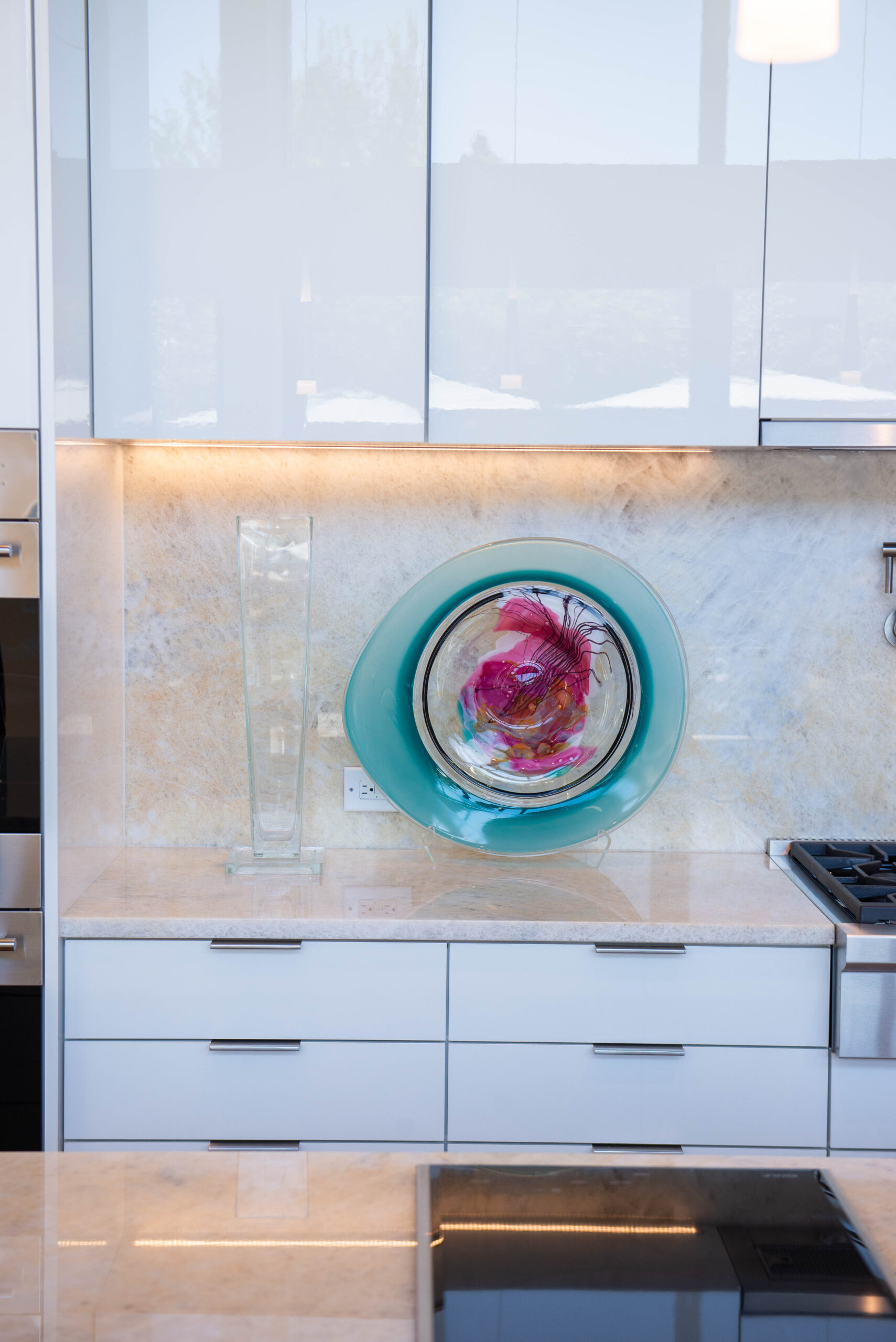
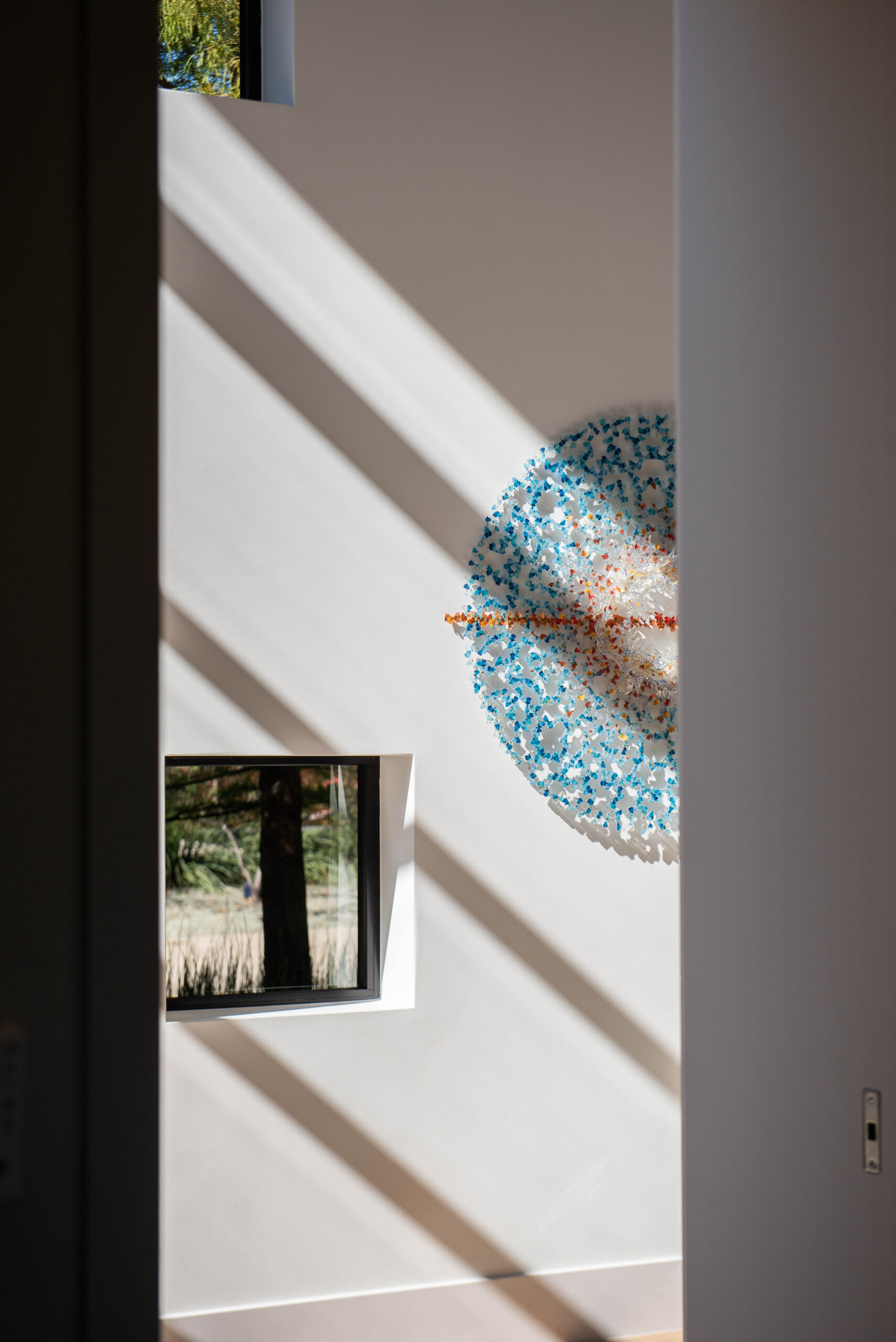
The relation between decorative and functional glass becomes apparent in the home’s entryway, where a disc-shaped glass sculpture sits complemented by yet another wall of smaller windows. Some of his collection came from his old dental office, but a fair amount of the work found in the house was specifically commissioned, such as the glass sculpture straddling the staircase designed by Carlyn Ray, who also created the piece above the mantle.
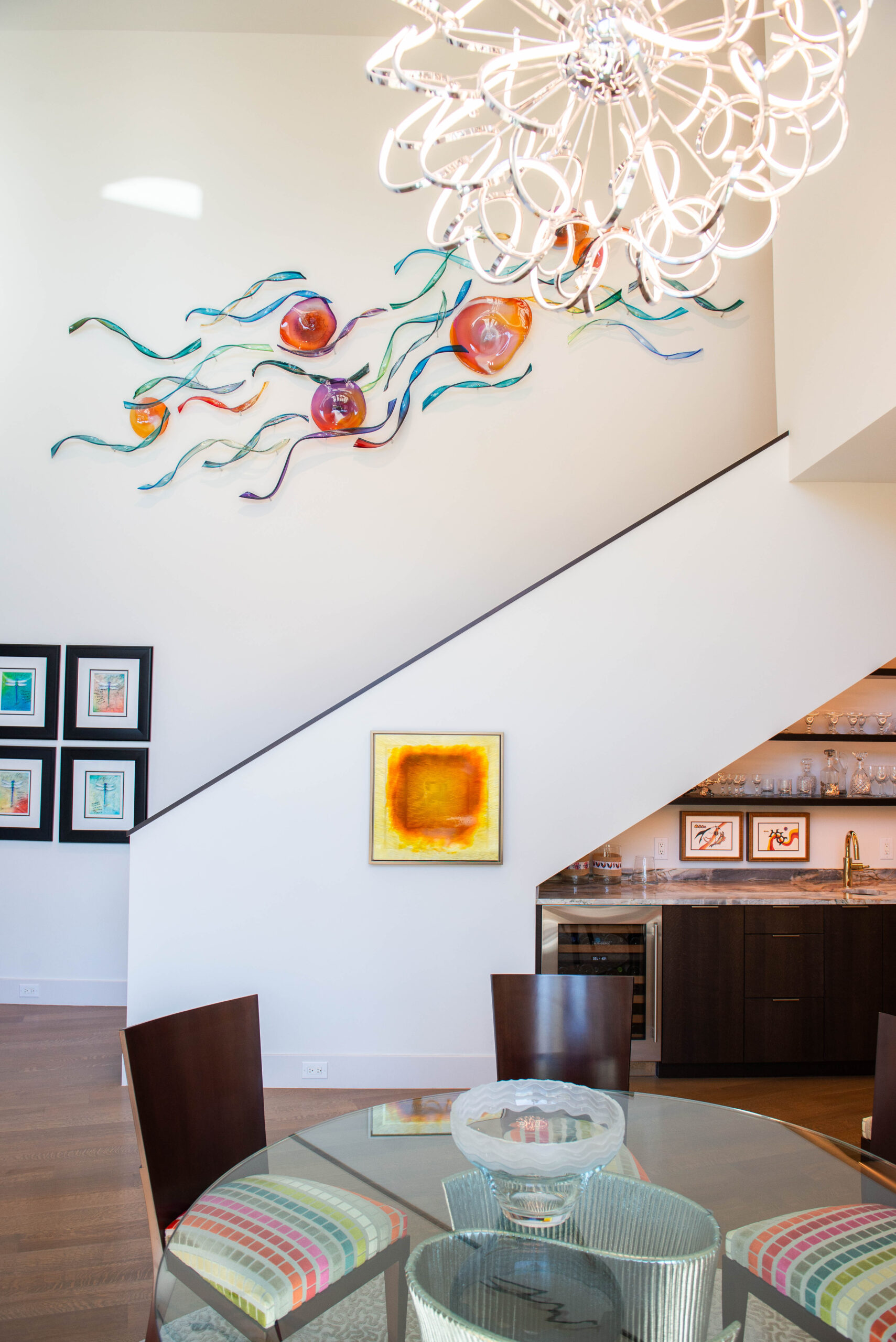
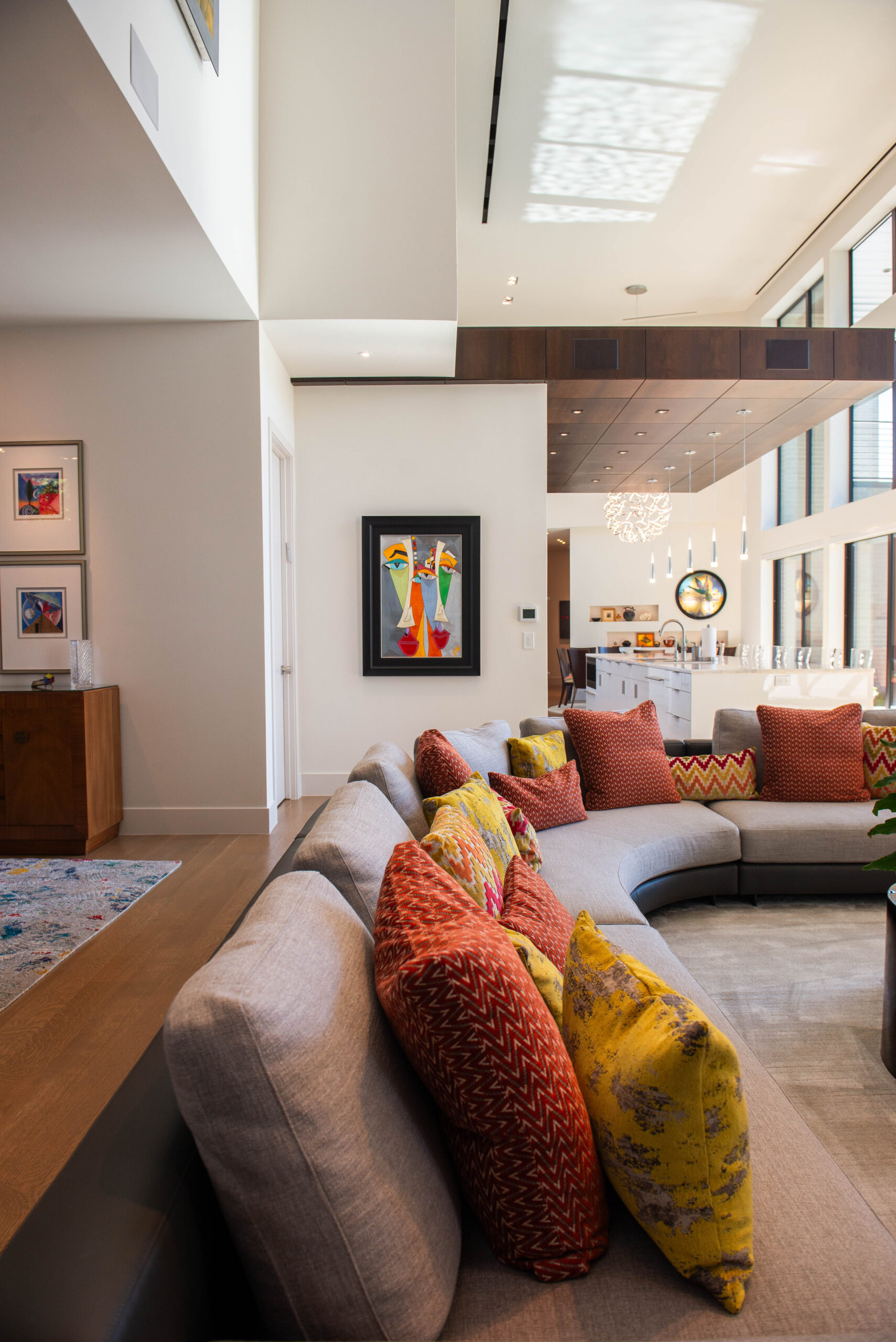
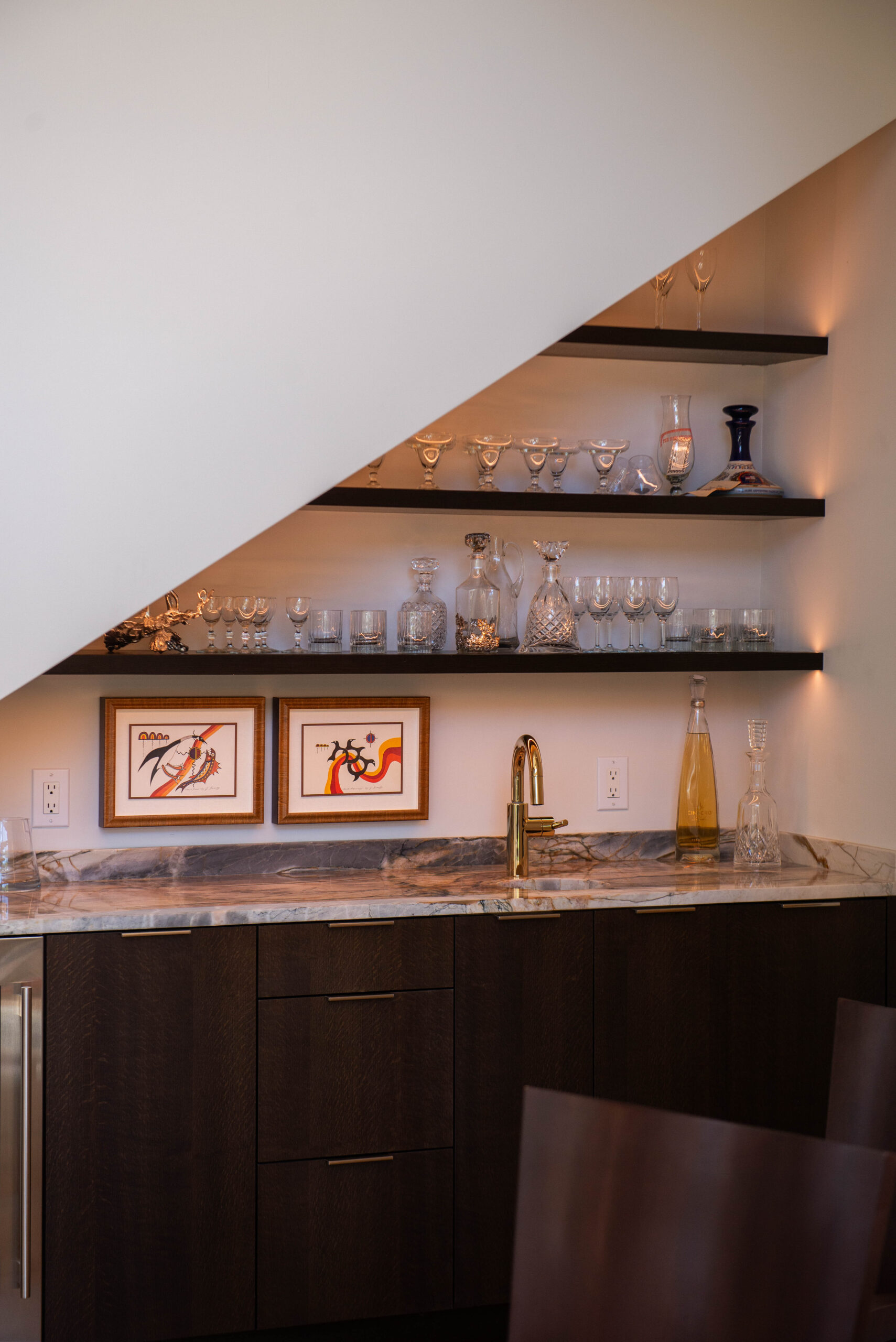
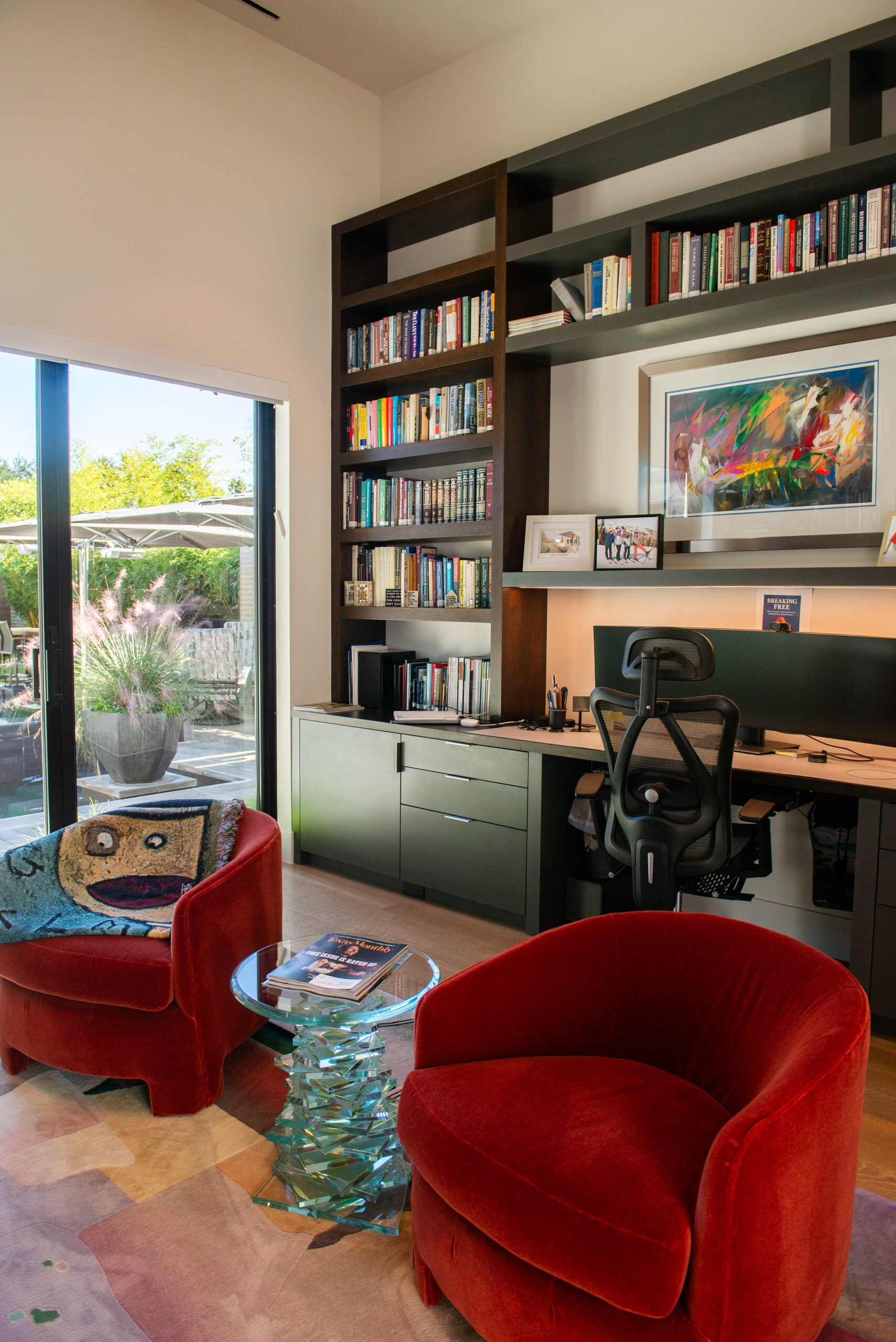
Kogut designed the home to be a gallery. Some pieces were commissioned to fit the space, while others had space built specifically for their display. One such example is found in his favorite room, the study, where a muted gray sliding door covering a TV on one of his many bookshelves was built with the specifications of the now-hung verdant print in mind. The office opens to the backyard, where a shallow standing pool and umbrella-shaded leisure area sit underneath a second floor balcony.
“Going in and out of the house,” Kogut says, “there’s lots of access to the backyard and places for people to sit out there.”
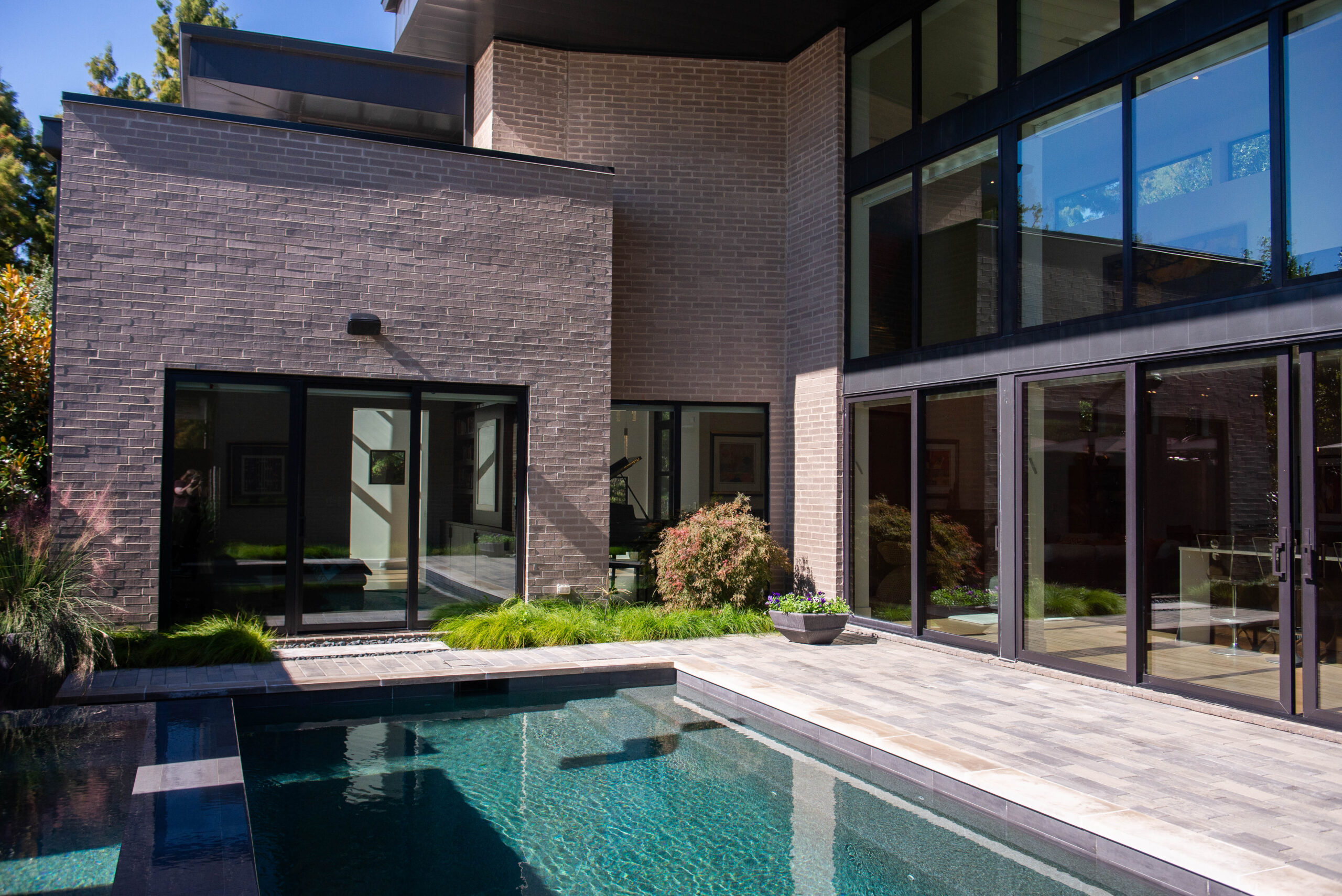
Photography by Lauren Allen
While art, sustainability and the all-important window wall drove large parts of the design, aging in place was also a point of emphasis for Kogut. Everything he needs on a daily basis (bedroom, kitchen, bath and garage) can all be found on a single level without steps. Upstairs, three bedrooms and three-and-a-half bathrooms can host the retired dentist’s children and grandchildren.
Kogut says he plans to stay in the home for the long haul. He may have designed much more than the average homebuilder’s client, but still gives credit where credit is due.
“He was very kind. I like to work with kind people,” he says. “He was very tolerant of my ideas, and some of the ideas that I would bring up, he’d say, ‘Mark, we can do this, but this is going to cost a fortune.’ I said, ‘You may want to think of another way to do certain things.’ So, in a sense, the way I looked at it is that Billy and Ross were two of my coaches in designing this house.”