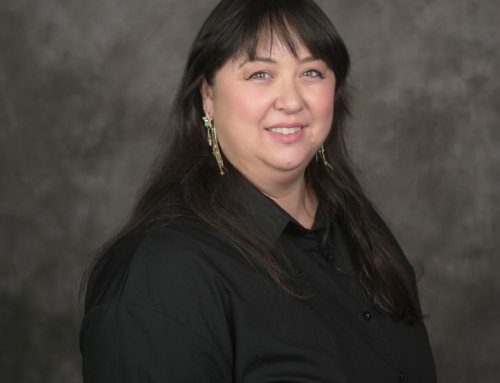
Michele Andre, the second-ever director of the City of Dallas Office of Community Police Oversight, met with Hamilton Park residents Thursday evening at Willie B. Johnson Recreation Center.
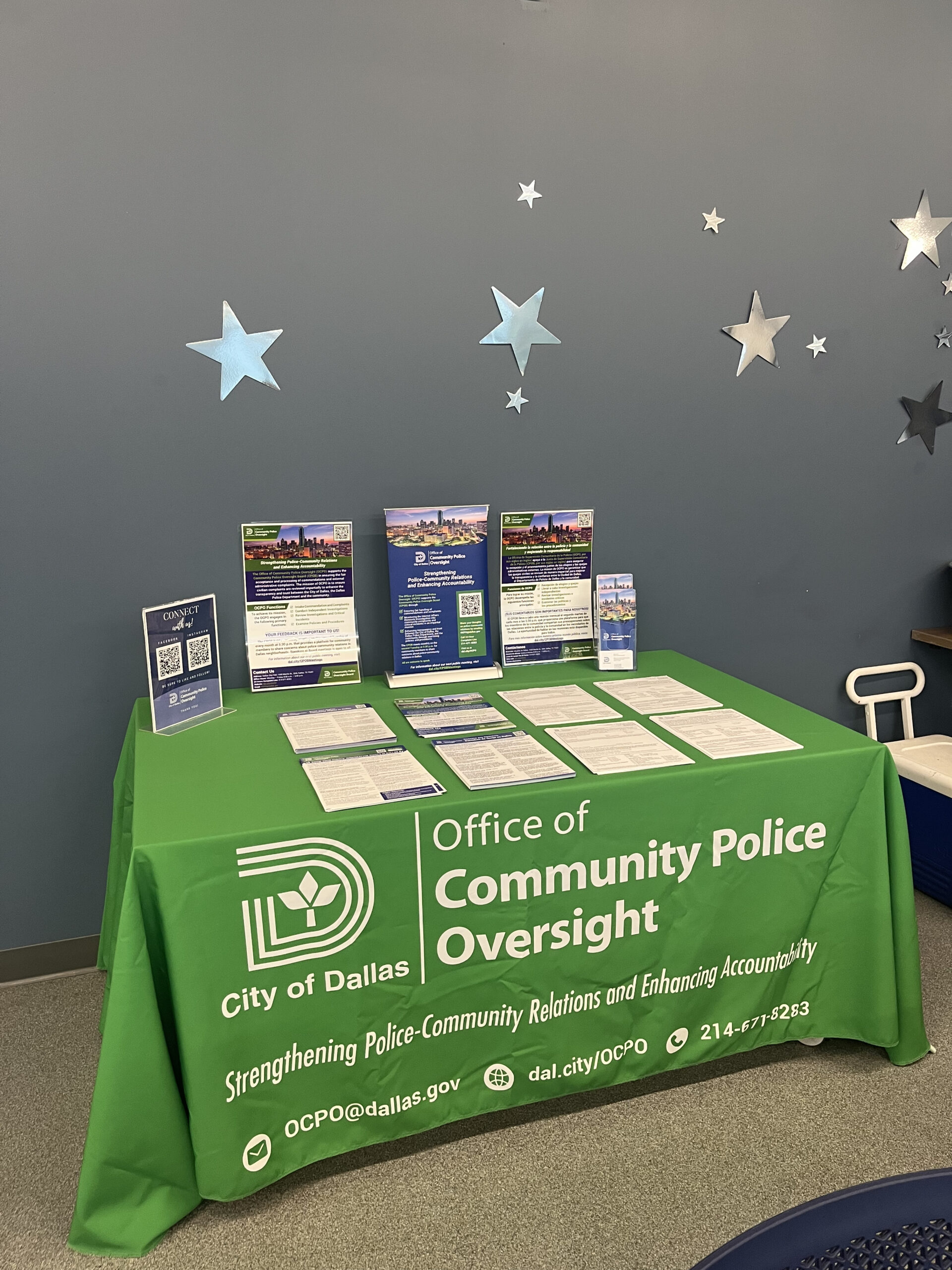
Photo by Katharine Bales
Andre introduced herself to residents, listened to their concerns and answered questions. Senior outreach specialist Alma Perez and District 10 board member Jenny King were also in attendance.
“It appears that there are efforts being made,” Hamilton Park resident Amanda Nickerson said after the meeting. “Whereas before, you didn’t see that; you didn’t feel that. Even with the few people here, you can get a sense of the effort.”
The Community Police Oversight Board (CPOB) predates the Office of Community Police Oversight (OCPO) by 30 years, Andre said. Run by volunteers, the board organized in 1989 to hold police accountable locally. The office didn’t come along until much more recently, in 2019.
“It’s new,” Andre said. “2019 wasn’t that long ago.”
As part of its mission, the office welcomes both positive and negative feedback — in the form of commendations and complaints — about Dallas police officers.
Dallas residents can file a complaint against an officer in one of several ways. Complaints can be made online by submitting a complaint electronically to the OCPO in English or Spanish, or forms are downloadable in 11 languages on the OCPO website. Alternatively, civilians can call OCPO’s 24/7 complaint line at 214-671-8283. Forms are also available to complete at the Dallas Police Department’s Internal Affairs Division or at any of the City of Dallas’ seven police stations. Forms printed from home can be emailed to OCPO@dallascityhall.com, mailed to the OCPO, or delivered to the Internal Affairs Division or a Dallas police station.
To leave a commendation, neighbors can thank an officer electronically through the OCPO or choose one of four other commendation options.
“If you have a wonderful officer experience, you can submit them to be recognized for their excellence,” King said.
Statistically, neither commendations nor complaints are as high as they should be, Andre said. Last fiscal year, almost 1,600 out of 1.3 million Dallas residents filed complaints, amounting to just over 0.1% of the city population.
“One of the things I was tasked to do was to help with awareness of the office,” Andre said. “And we are seeing an increase in complaints as a result of doing that.”
The office’s outreach goals are to raise awareness about the OCPO and CPOB’s mission and purpose, gather input from community members and stakeholders, involve and consult historically underserved and underrepresented communities, and build trusting relationships with the public, according to the OCPO Community Outreach and Engagement Plan.
Nickerson asked how the office is working to engage the Hispanic community, given that it comprises a significant portion of the Dallas population.
Over 42% of the city’s population is Hispanic or Latino, according to data from the U.S. Census Bureau.
“Your office is small now, but the Hispanic community is not,” Nickerson said.
Besides translating all public materials to the seven most common languages in Dallas, the oversight office has made it a priority to hire Spanish speakers, Andre said.
“I wanted to make sure that the office was representative of the community,” she said. “Hiring people that speak Spanish was important.”
While the office has made efforts to hire more bilingual staff members, the department is pushing to increase the number of police officers on staff. In its attempt to hire more officers, it has removed the college requirement for new recruits.
“Right now you need 60 college credits, but there will be the ability to go in with just high school,” Andre said. “You would need to be at least 21 and have three years of full-time experience.”
Another resident raised safety concerns she had experienced at her apartment complex. Perez encouraged her to utilize her neighborhood and apartment resources.
“With your neighborhood police officer and apartment manager, you can start a crime watch,” Perez said.
The Community Police Oversight Board hosts a monthly meeting on the second Tuesday of every month, with the exception of July. The next meeting is set for 5:30 p.m. Tuesday, Aug. 12, at Dallas City Hall. At these public meetings, community members can voice any concerns they may have about police-community relations in Dallas neighborhoods.
“We can care for our community, but if someone outside of our community doesn’t care, then it feels like it falls on deaf ears,” Nickerson said. “You didn’t feel that tonight.”
Dallas City Hall is located at 1500 Marilla St. in downtown Dallas. Public transit is available by bus and train, including DART services and the M-Line Trolley downtown.