Wondering about your fourth grader’s upcoming science project? Worried about which math class your child should take at Lake Highlands Junior High? Looking for some advice for your sophomore’s research paper?
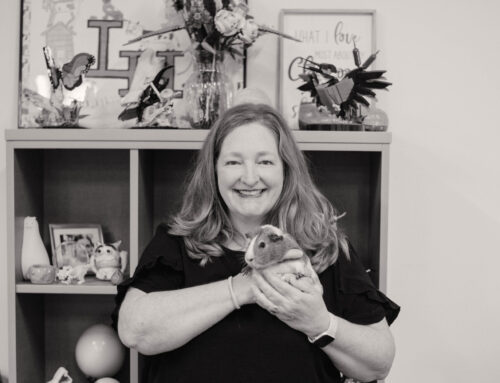
Ask Lake Highlands mom Jana Bertrand.
Bertrand has sent her 10 children through Lake Highlands schools over the last 20 years, and she can tell you all about the curriculum, the teachers, and the evolution of Richardson schools.
“I’ve got a whole library of textbooks, novels, Cliff Notes, reference books and science projects,” she says laughing. “After the first few get through third grade, you begin to realize that you’ve got seven more children who will need to collect butterflies for their science project. I started storing butterflies in the freezer each year so we would be prepared.”
The Bertrand children range in age from 26 to 12 years old. Only four of them are still living at home now, which makes for a relatively quiet house for Bertrand. In past years, before the older ones began graduating and moving away, crowd control was critical.
Amazingly, Bertrand handled the children without any outside help. “I had someone to help me with cleaning the house and cooking,” she explains, “but I always thought that my children deserved to have their mom there to take care of them.”
Bertrand earned a teaching degree from SMU, and taught in public school for two years before she became a mother. She has carried many teaching skills into her parenting style, a philosophy that she credits for the overall educational success of her children.
“I always believed it was very important to create a learning environment in the home,” she says. For example, during summer breaks she would run a “summer school” program at home. While the infants and preschoolers napped, the oldest children would teach the younger ones. “We knew that part of fifth grade was memorizing the states and capitals, for example, so I would have the older children teach the younger ones the upcoming subjects.”
Bertrand always made sure that this kind of learning was low-pressure and fun. “It is very important to just let kids relax,” she says, “but I believe you can do things at home to help create a love of learning that will stay with children forever.”
After so many years of taking her children to Lake Highlands schools, Bertrand has some observations about the changing face of public education.
“I’ve seen a few changes over the last 20 years that I’ve been involved with RISD,” she says. For one thing, the facilities have changed. “You see so many portable classrooms at our schools now,” says Bertrand.
She worries about the increasing numbers of children who do not have a “real” classroom, and about the stresses children face as a result of ever-increasing class size. She also notes the changes she has seen take place as a result of the implementation of the TAAS test. Says Bertrand, “TAAS puts a great deal of stress on kids, parents, and teachers that was not there before.”
Finally, she notes the evolution of the computer as a basic classroom tool. “When I took my oldest child to school, there was no such thing as computers in schools. Now, there is one in every classroom!”
One thing that Bertrand says has not changed over these past two decades is the quality of the teachers in Lake Highlands schools. She uses words like “honest,” “caring,” and “supportive” to describe all the teachers who have taught the Bertrand children over the years.
“I have a real problem with parents who come down on our teachers,” she says. “We all went through a very difficult time when I got divorced seven years ago,” she explains. “I was trying hard to help the children deal with this, and the thing that sustained me was the caring teachers, principals and counselors.”
Bertrand has worked hard to build good relationships with her children’s teachers over the years, and stays in touch with many of them.
“We are still in contact with the first grade teacher of my first child,” she says.
Bertrand laments that teachers are not treated with as much respect today as they were in the past, an attitude that she says trickles down from parents to students. She also feels that paying teachers more is critical.
“Sadly, teaching is a financial sacrifice,” she says. “We must devote more money to education.”
Mostly, Bertrand views education as a partnership between parents and teachers. She tried hard to always be an active participant in the education of her children, and feels her efforts paid off.
“I can’t over-emphasize how grateful I am to all the wonderful teachers in RISD who have reached out and impacted my children over the years.”