
Photography by Lauren Allen
In 1961, the Rooth children spent many of their weekends clearing out ivy on a lush property backing into White Rock Creek in the Sylvania Dells section of Highland Meadows.
Their father, notable architect Carl H. Rooth, is responsible for numerous commercial structures scattered throughout Texas, including several at the University of North Texas and the Collins Radio 277 complex, which was instrumental for NASA’s Apollo mission.
He wanted the Eden Roc Drive plot for his one and only residential project — his family home.
The two-story, midcentury modern house, which people often assume is a Ju-Nel, had all the markings of ’60s interior design -— wall paneling, floating stairs, interior brick and sharp angles.
About 20 years later, Daniel Sibley’s family moved to a ranch-style home on the south side of Eden Roc Drive. It’s important to note that it was his assumption that all of the houses on the north side of the street had ping-pong tables. He played Hot Wheels in the neighborhood’s front yards with the neighborhood kids and attended Wallace Elementary School.
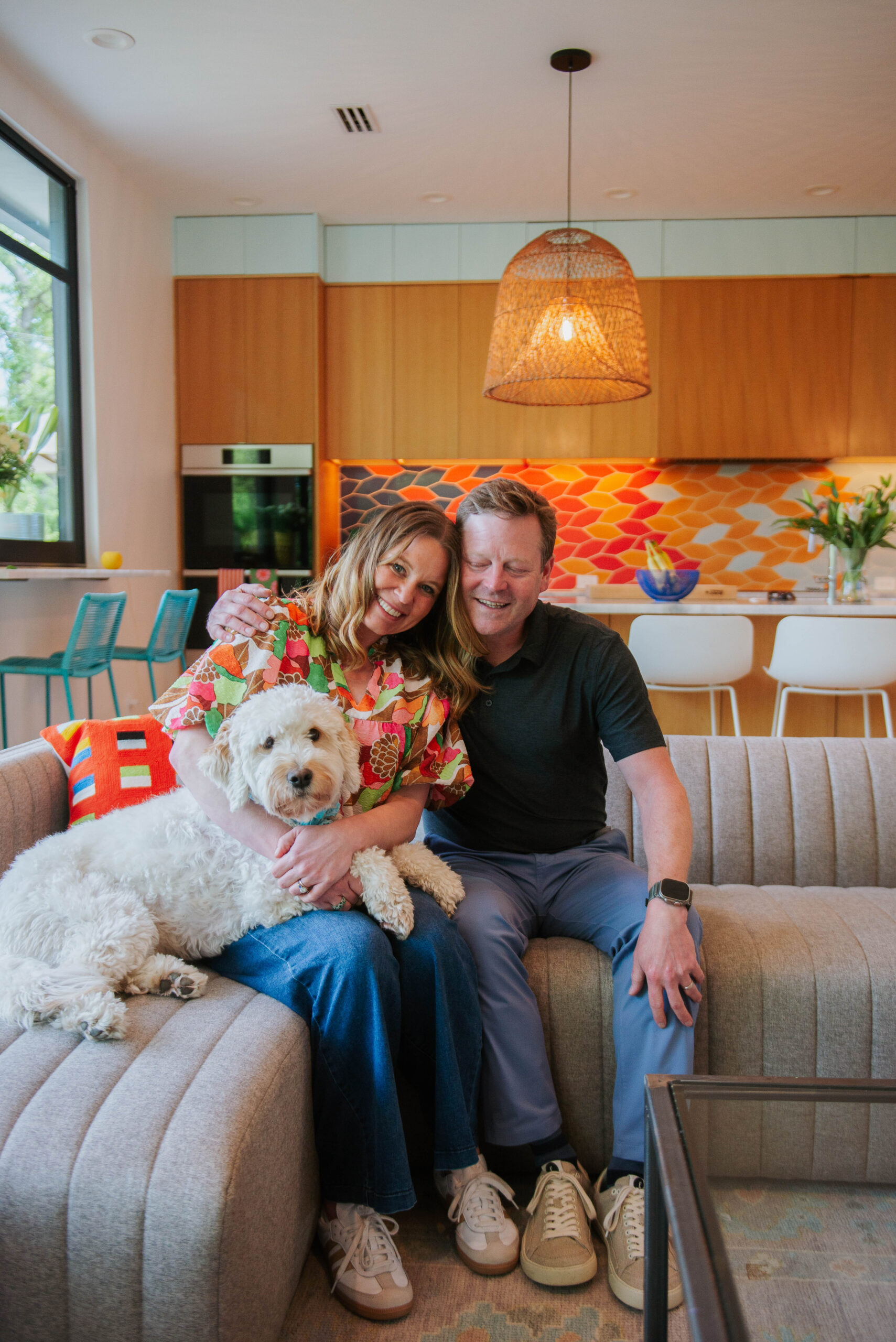
Sibley grew up, went to Baylor University for an economics degree and worked for Dickey’s Restaurants in finance before making a lateral move into their construction department and then started his own design firm. He selectively works on residential projects within 5-6 miles of his own home. He married his former roommate and friend’s younger sister Katie about 15 years ago, got a house in the Lake Ridge Estates neighborhood and they had two daughters.
Although they made their Ridgehaven Drive ranch home, the Sibleys had their eyes on Highland Meadows. Katie particularly loved the 70-year-old Lannett Circle home, where the Mediterranean Garden Club hosts their annual July Fourth party. But that house’s true custodians are descendants of the original owners.
But at the right moment in the real estate market, Carl H. Rooth’s one residential project was for sale.
“I didn’t even need to step into the house to say this is our house,” says Katie, who is an HR executive for a global tech company. “We came in the back, I remember, and I was like, ‘OK, that’s enough. Let’s make the offer.’”
It surprised Daniel because, as a contractor, his mind was going through all of the work it needed.
“I thought, ‘She’s gonna jump back in the car. We’re gonna speed away.’ But she stopped me,” Daniel says. “There’s an energy to houses, and this just felt like it was calling us.”
So in 2021, Katie found herself tearing out ivy in the Eden Roc backyard. And lo and behold, Rooth’s daughter Linda, who herself had been doing the very same thing almost exactly 60 years earlier, was peeking over the fence.
With her came the blueprints, photos and original drawings of the landscape and interior design.
“She’s been so generous, and of course, she’s told us so many stories that are just fun,” Daniel says.
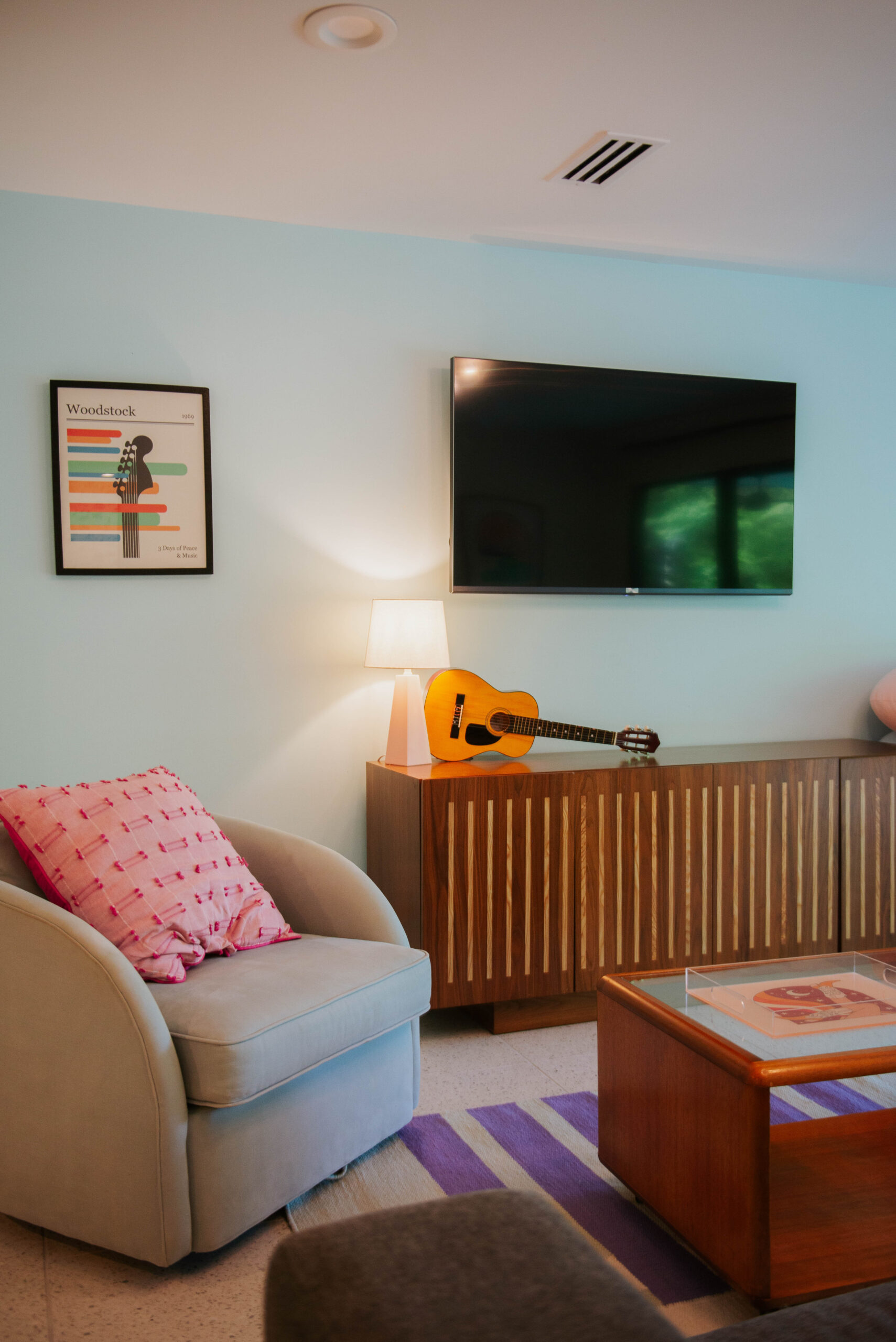
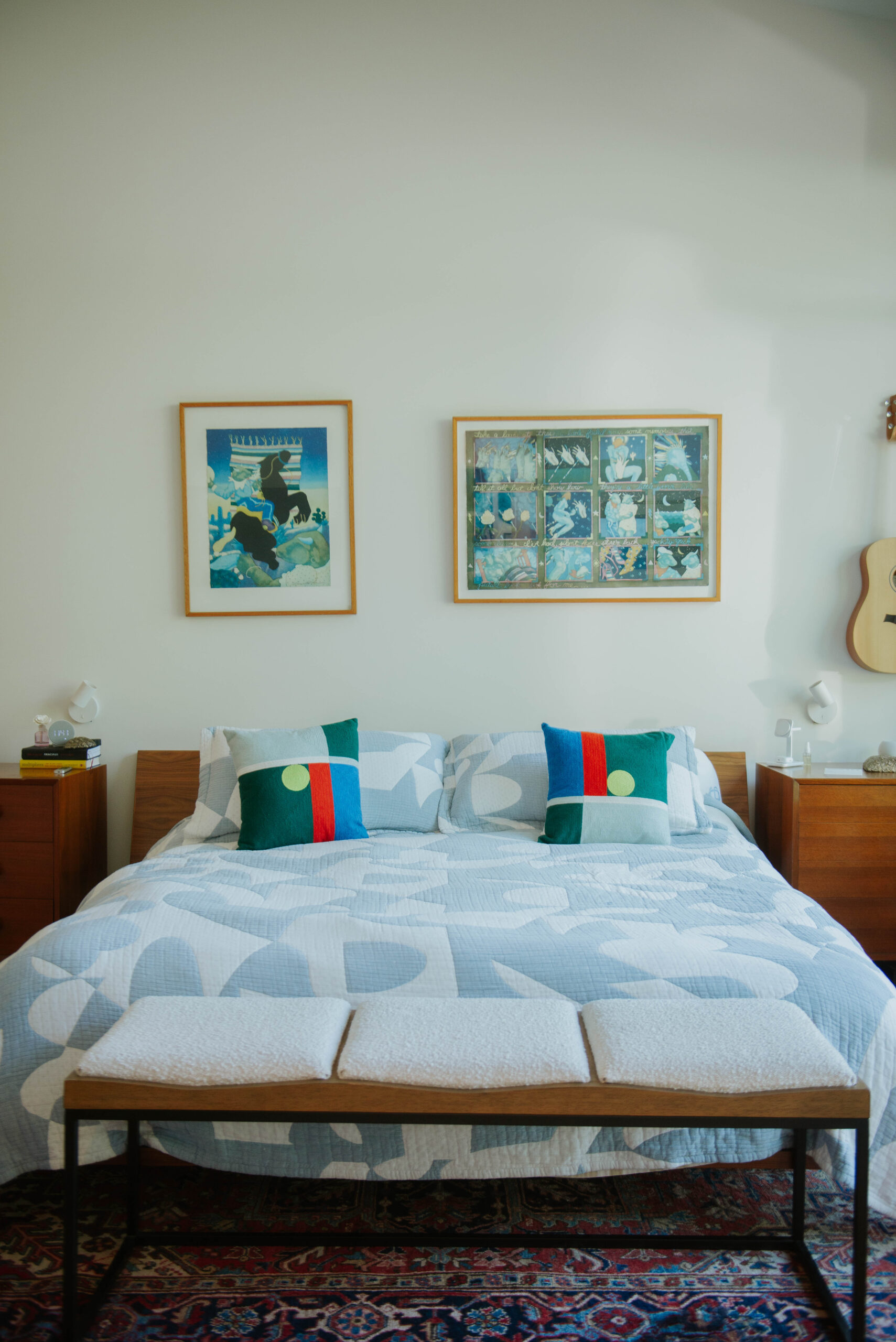
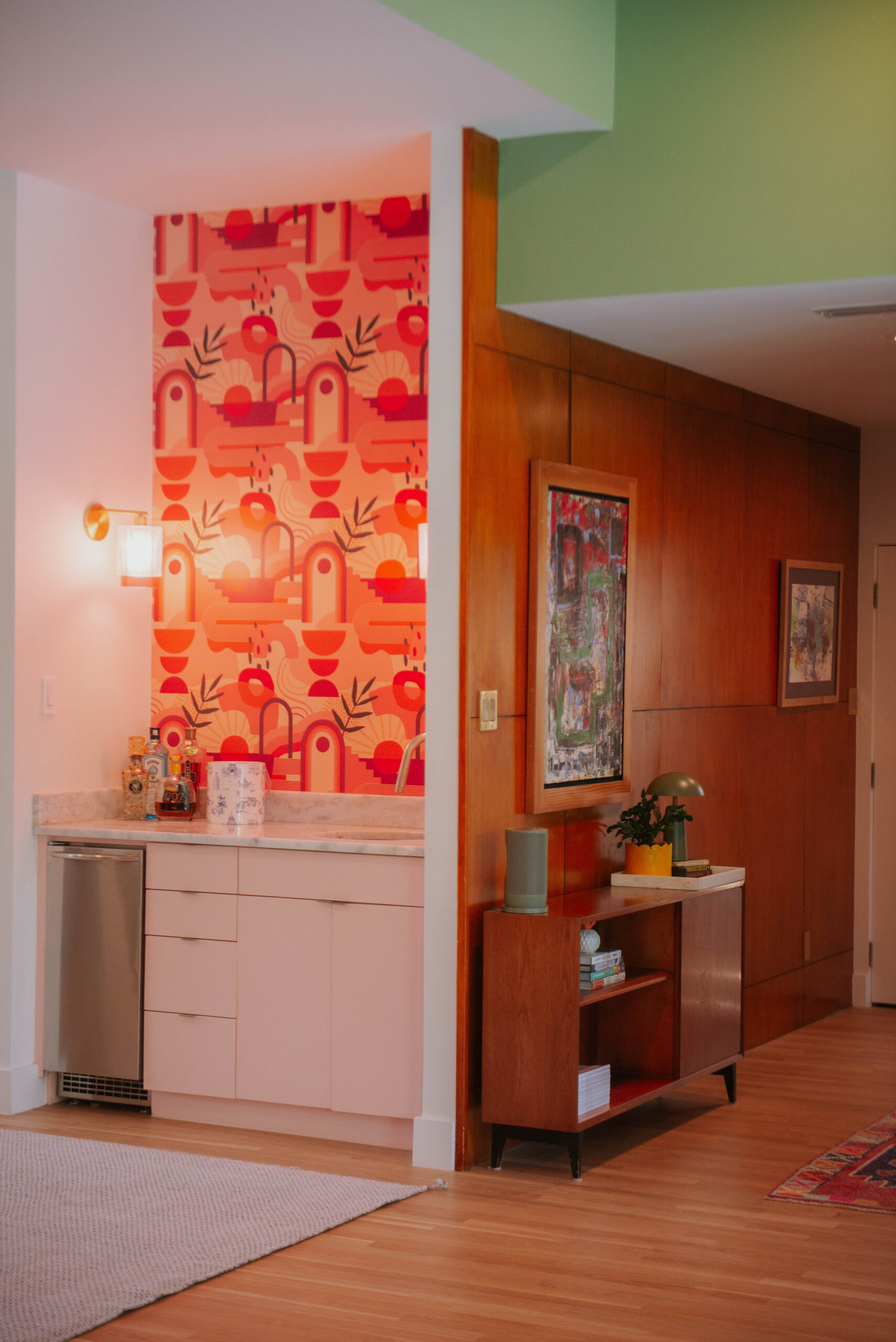
The Sibleys are the fourth owners — it’s a neighborhood where the front door keys aren’t passed on often.
“I think it was Daniel’s master plan all along, though, to get us here,” Katie says. “Because he grew up on the street and then went to Wallace, where our girls went to elementary school.”
Built into the rocky topography of East Dallas, the entryway drops you off on the second floor, where the kitchen, living room, dining room, “green room,” access to the pool in the front yard and wraparound patio in the back yard are located.
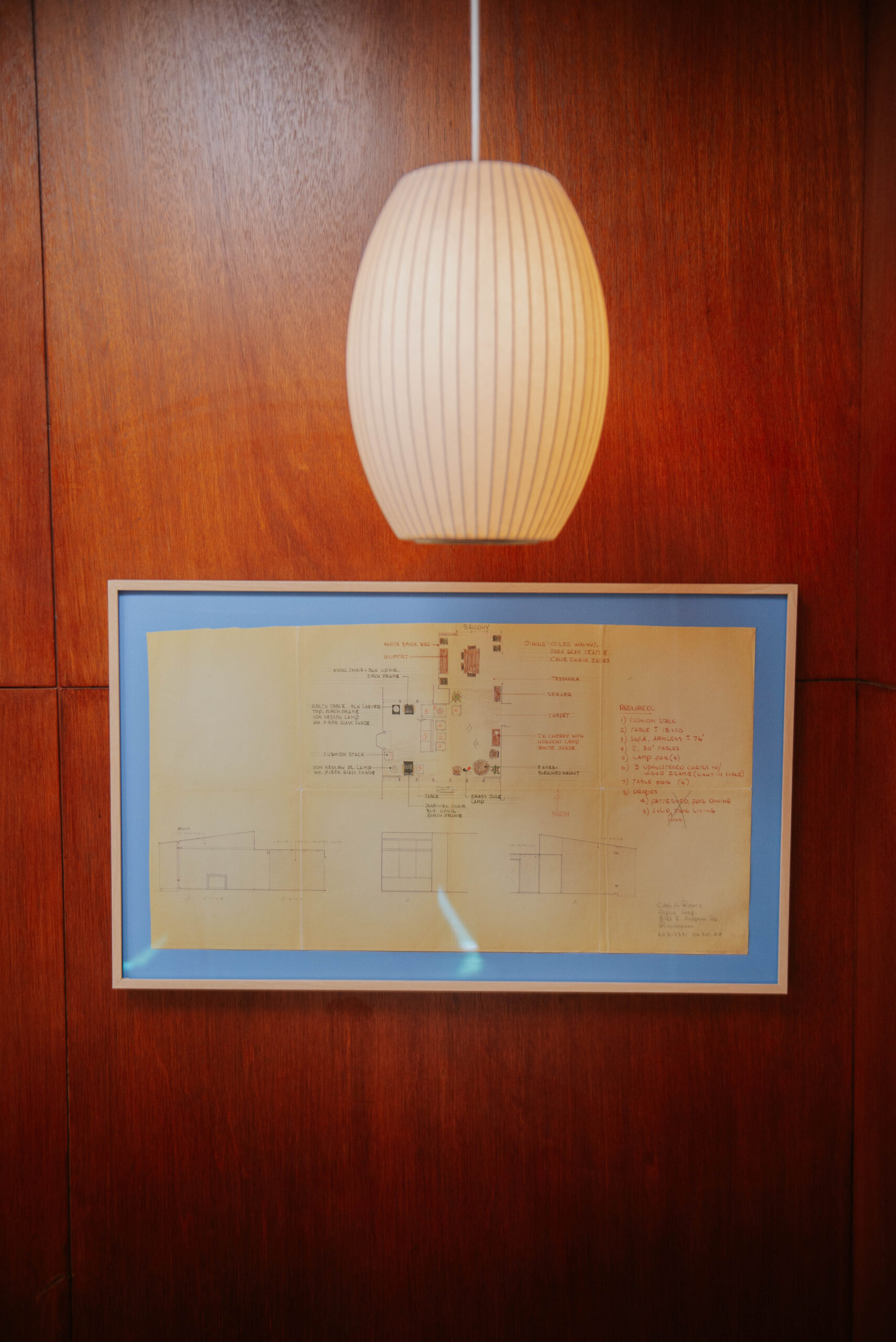
From purchase to move-in, it took 10 months to renovate the home. They expanded the footprint by about 2,000 square feet. The three-bedroom, two-bath is now a 4,300 square foot, four-bedroom, two-full baths, two half baths and an office, which works for a work-at-home family that entertains often.
Daniel has always had a love of houses. He originally wanted to be an architect, but that was not a degree program offered at Baylor. As a child, he would ride his bike around, look at houses in the neighborhood and draw homes. His grandparents owned a 1940s traditional in Lakewood.
“It’s 4 Nonesuch Road, which I always thought was such a neat address, like a storybook,” he says. “It had a big lot, and it was stately. And I loved it. I just thought it was fun to explore around, and maybe that was kind of where it started.”
This home specifically fell in line with Daniel’s own work as a contractor. He tends to focus on older homes that are architecturally interesting but need to be updated both for structural reasons and lifestyles.
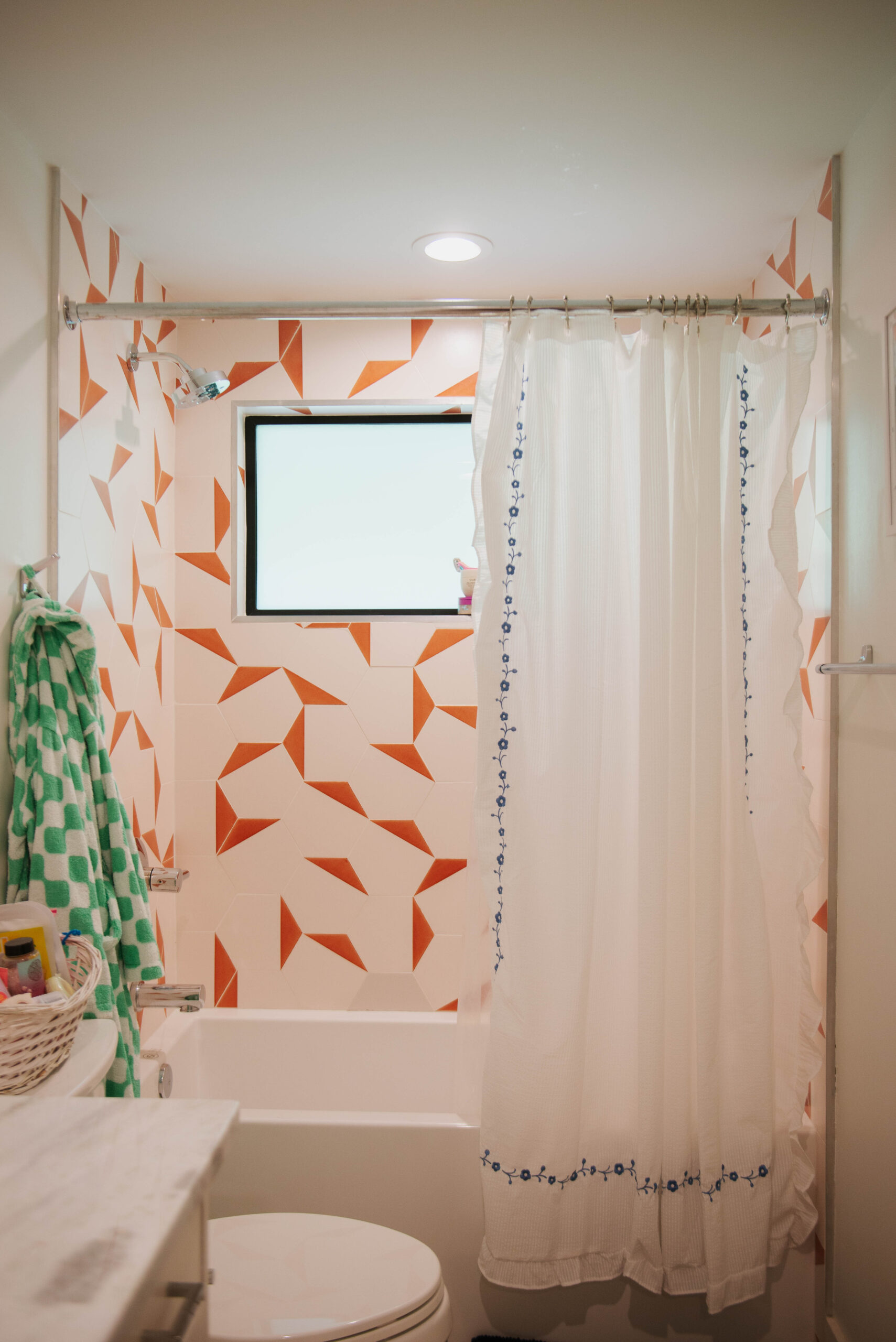
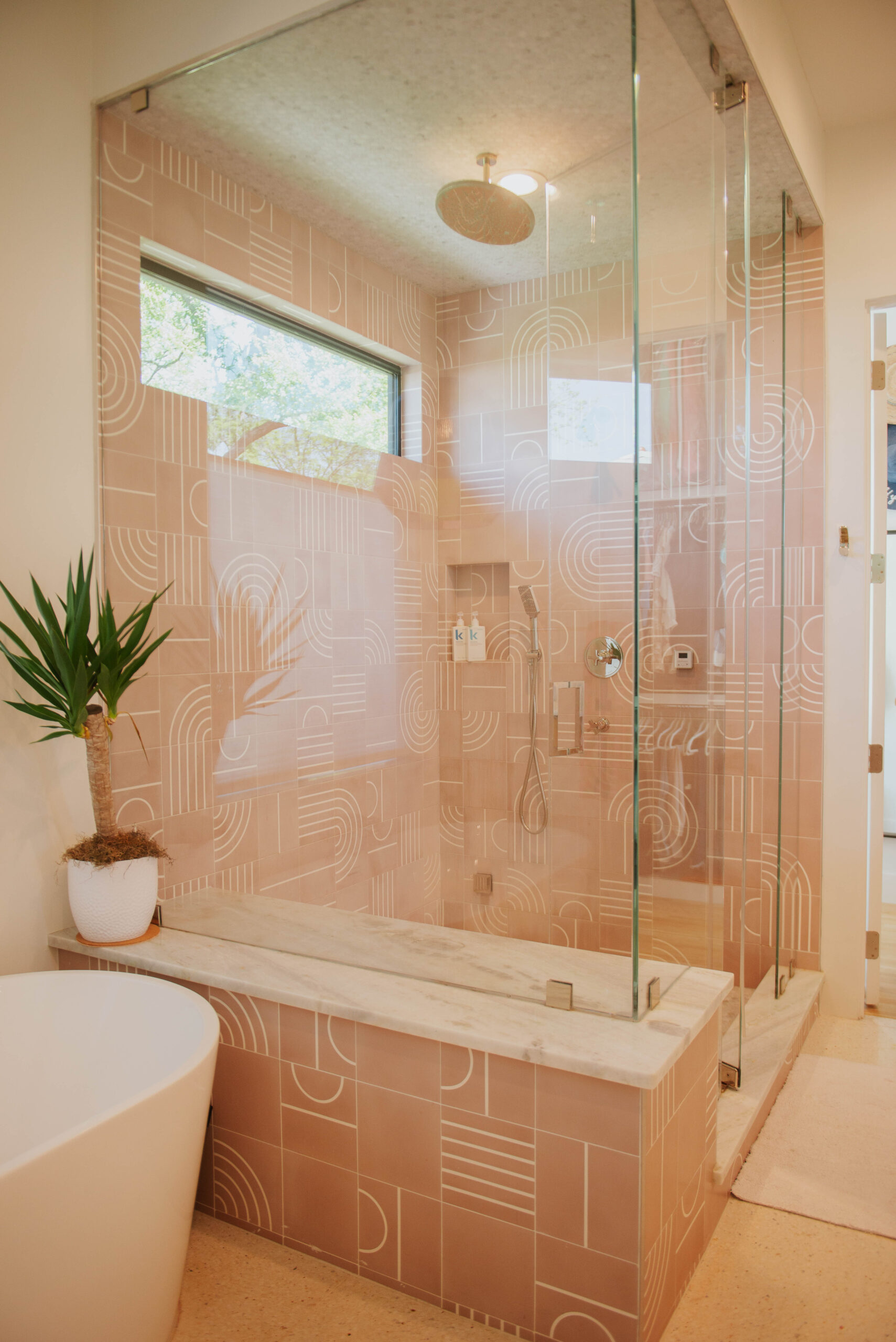
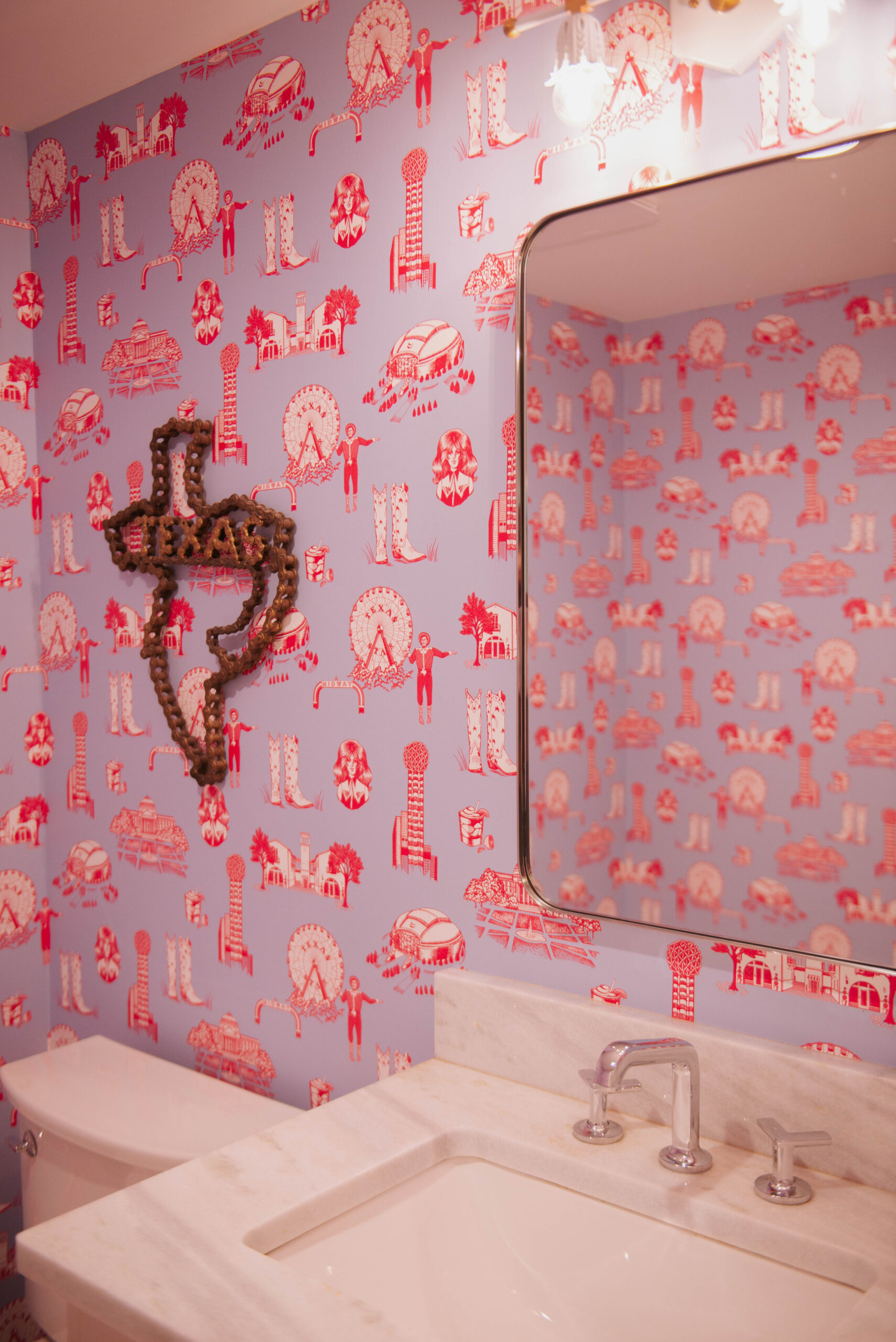
“It’s turned into basically people that want to save as much of the original house as they can,” he says. “And I’m really into reusing everything we can. So at a bare minimum, we keep the foundation and then build on top of that, because I think you still keep some of the soul if you keep the foundation.”
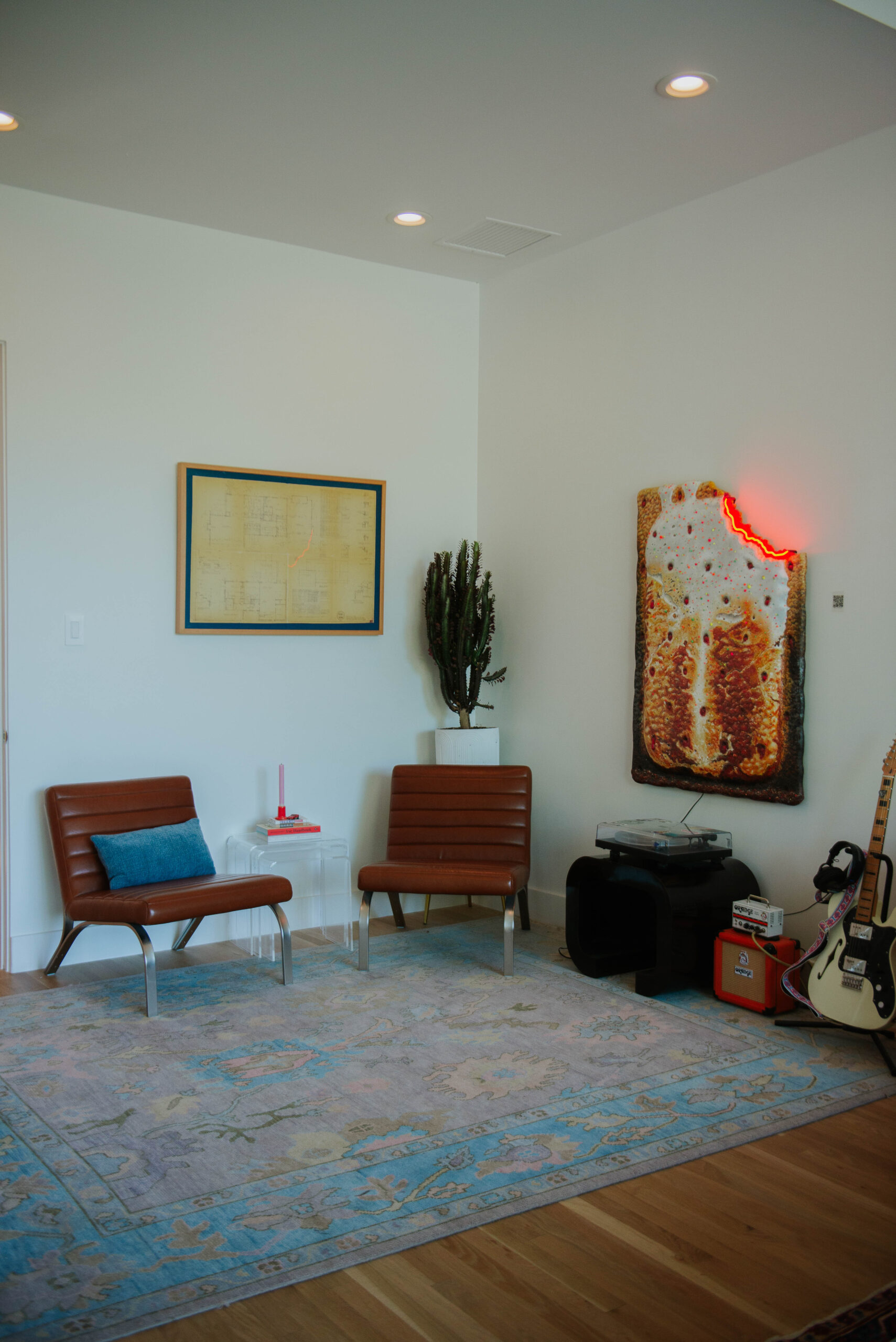
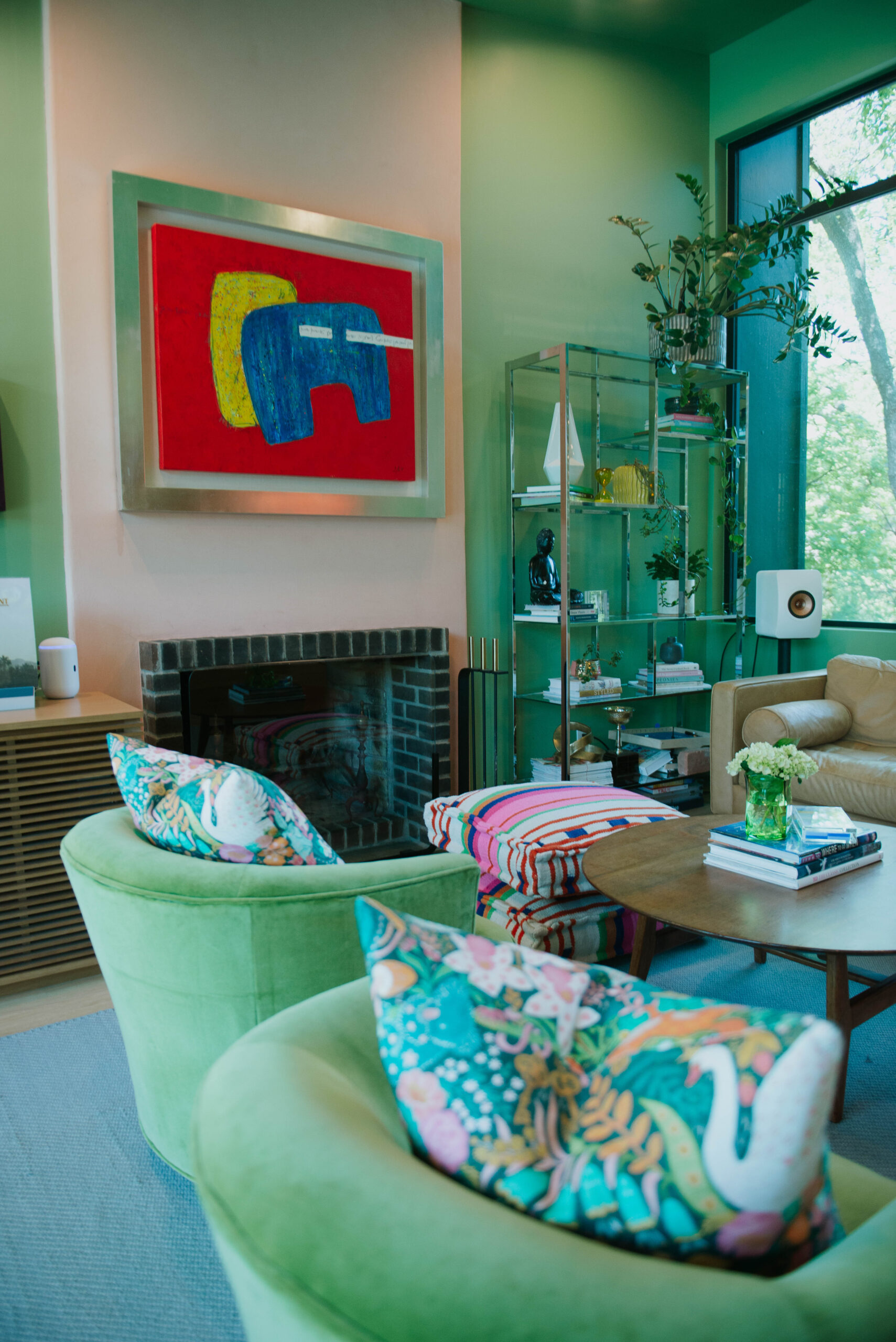
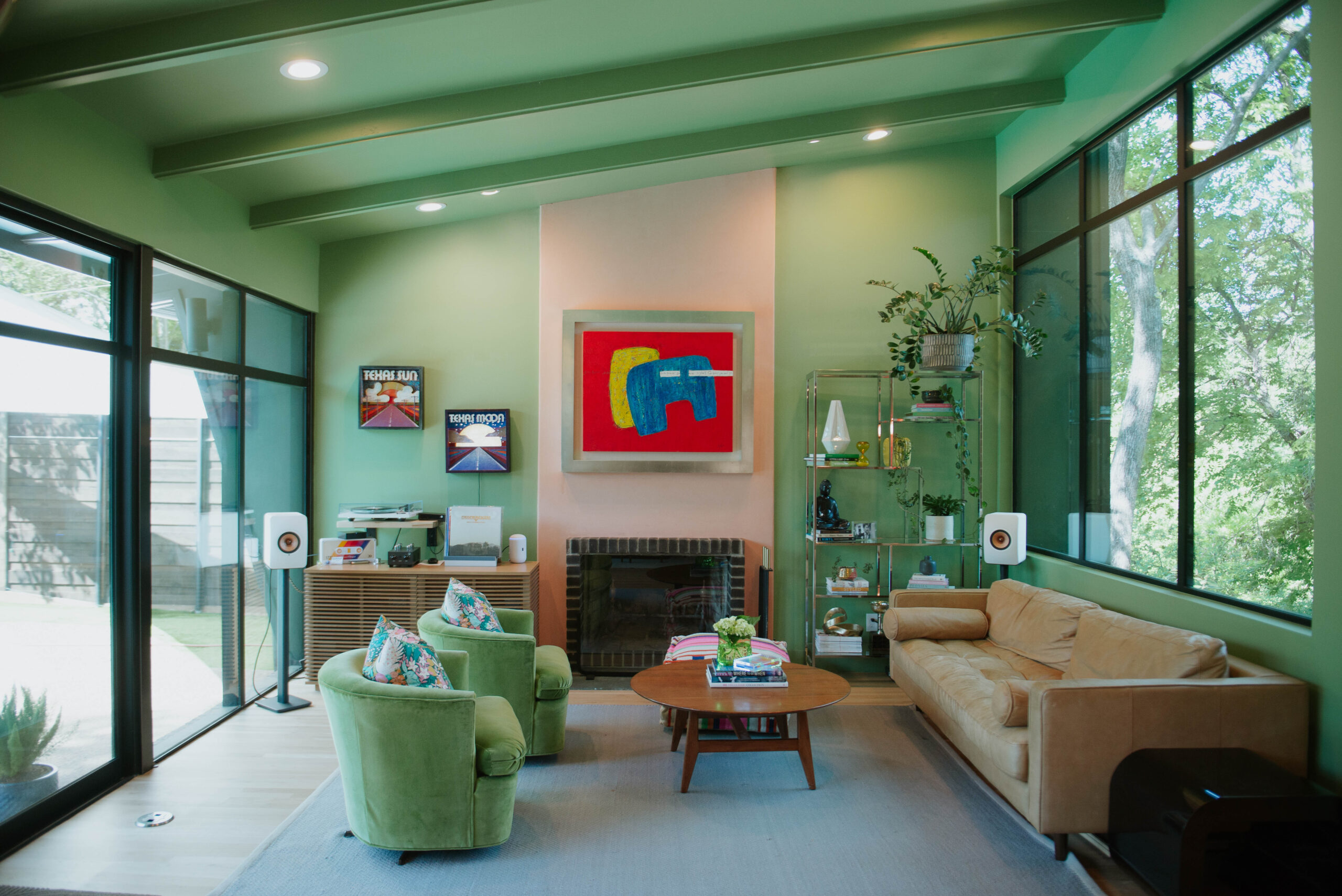
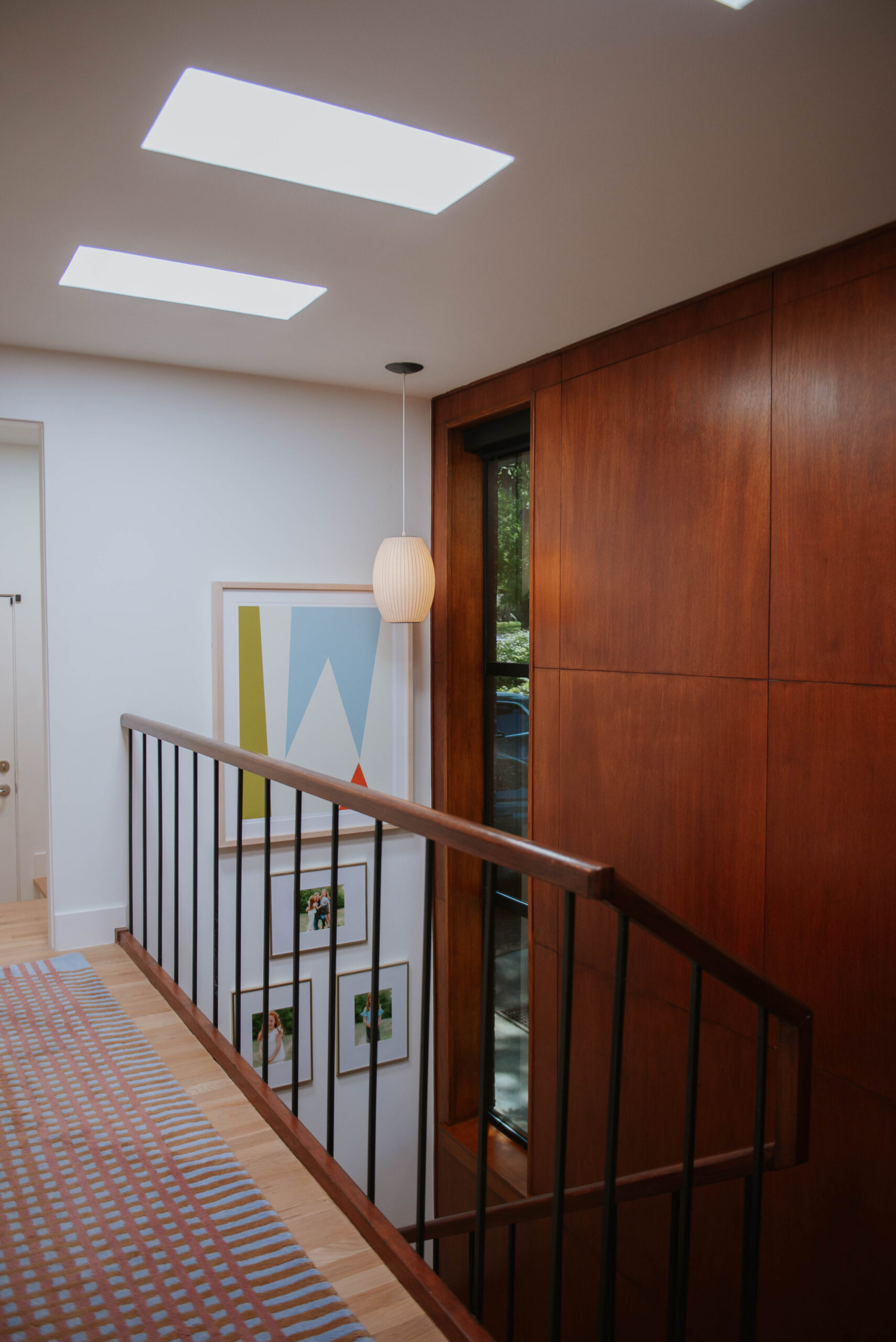
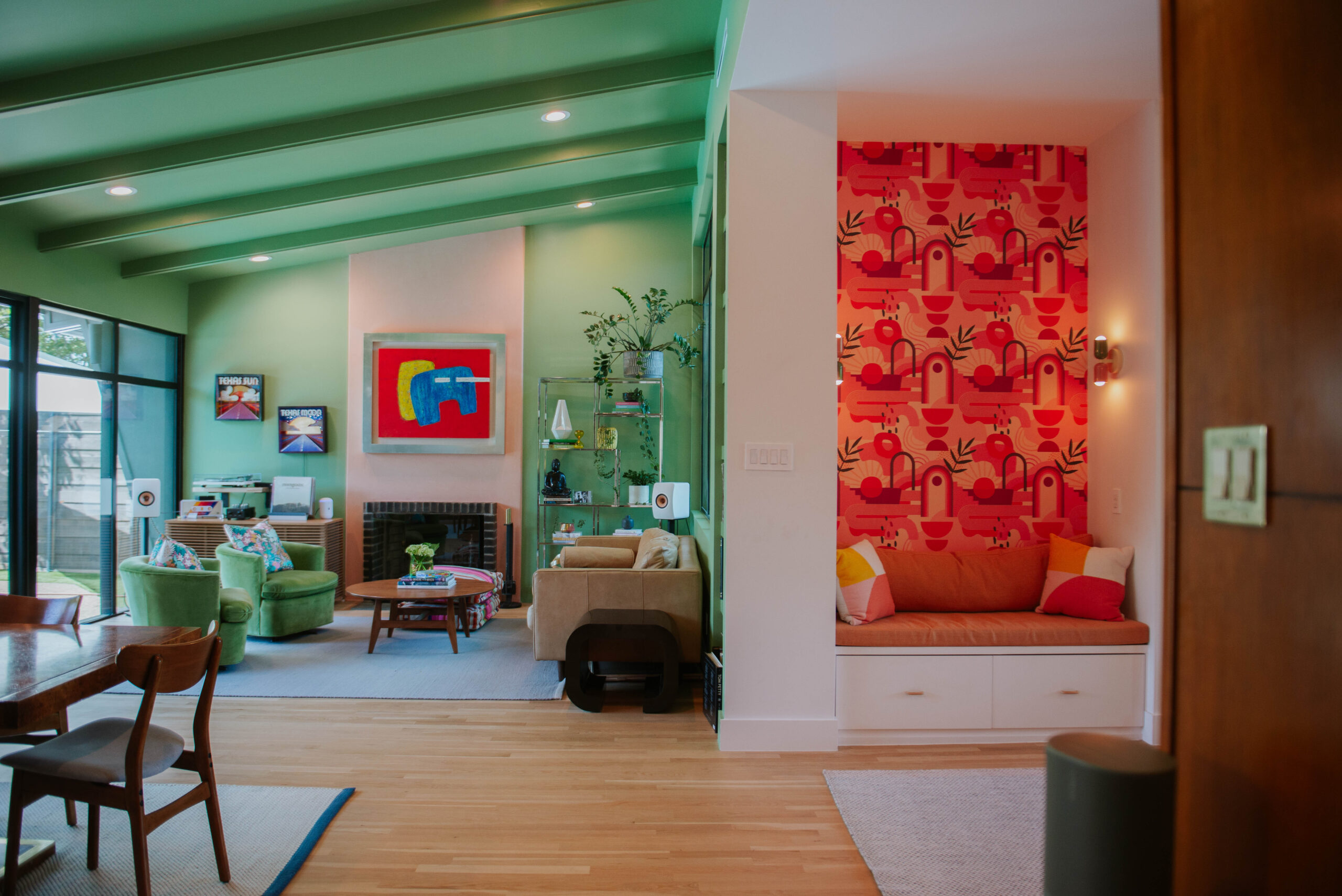
Stripping the home allowed the Sibleys to reincorporate and preserve some of the midcentury details that had been taken away. The wood paneling, floating stairs, brick wall and sharp angles are all there. Somewhere over the course of 60 years, some of the original features were hidden or erased, like the low, boxy fireplace with soapstone hearth unadorned by a mantle that was hidden by Austin stone. They removed the ’90s finishes and used stucco.
The clean lines of the midcentury modern aesthetic just happen to be the closest labeled category Daniel can reference to try and explain his inspiration.
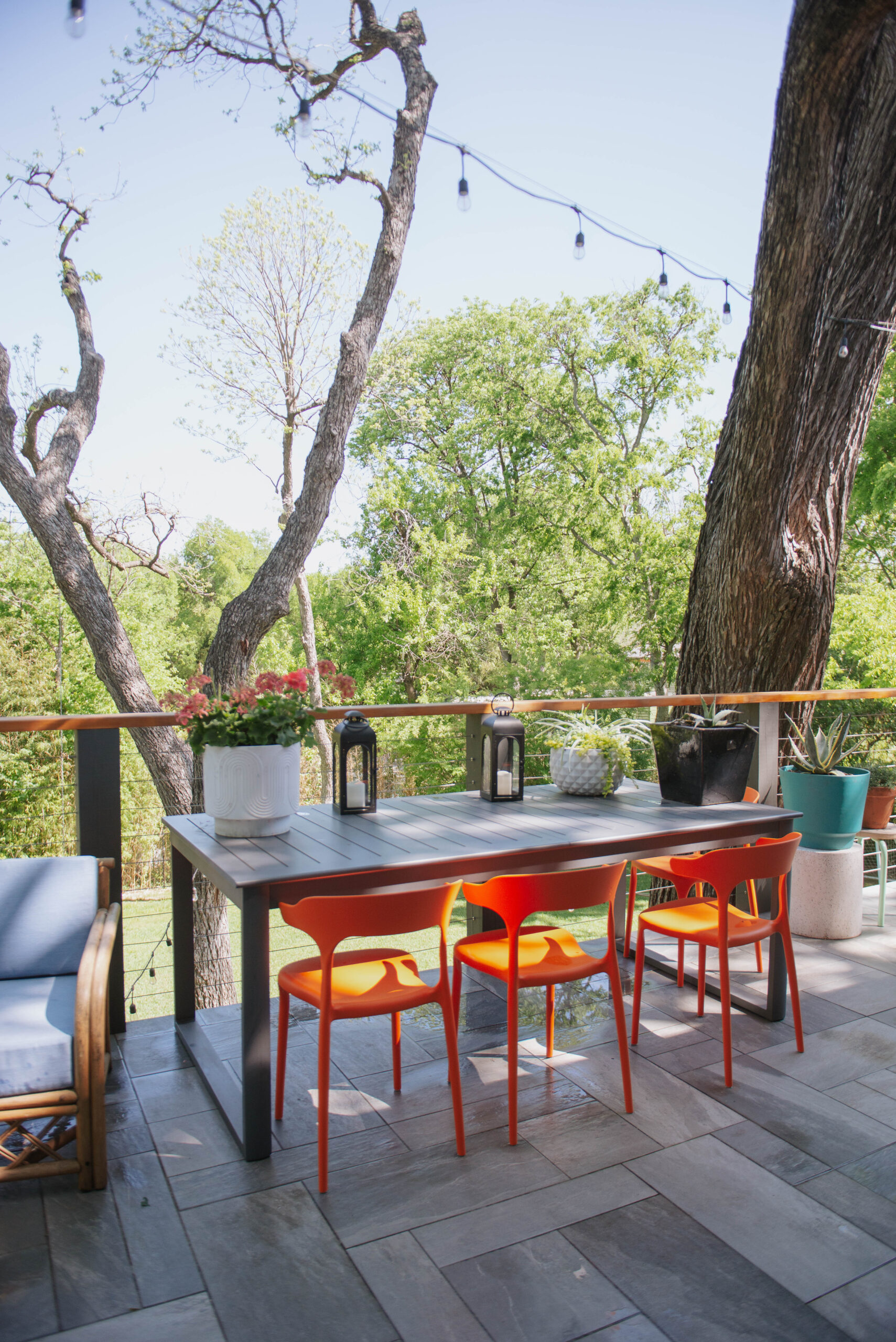
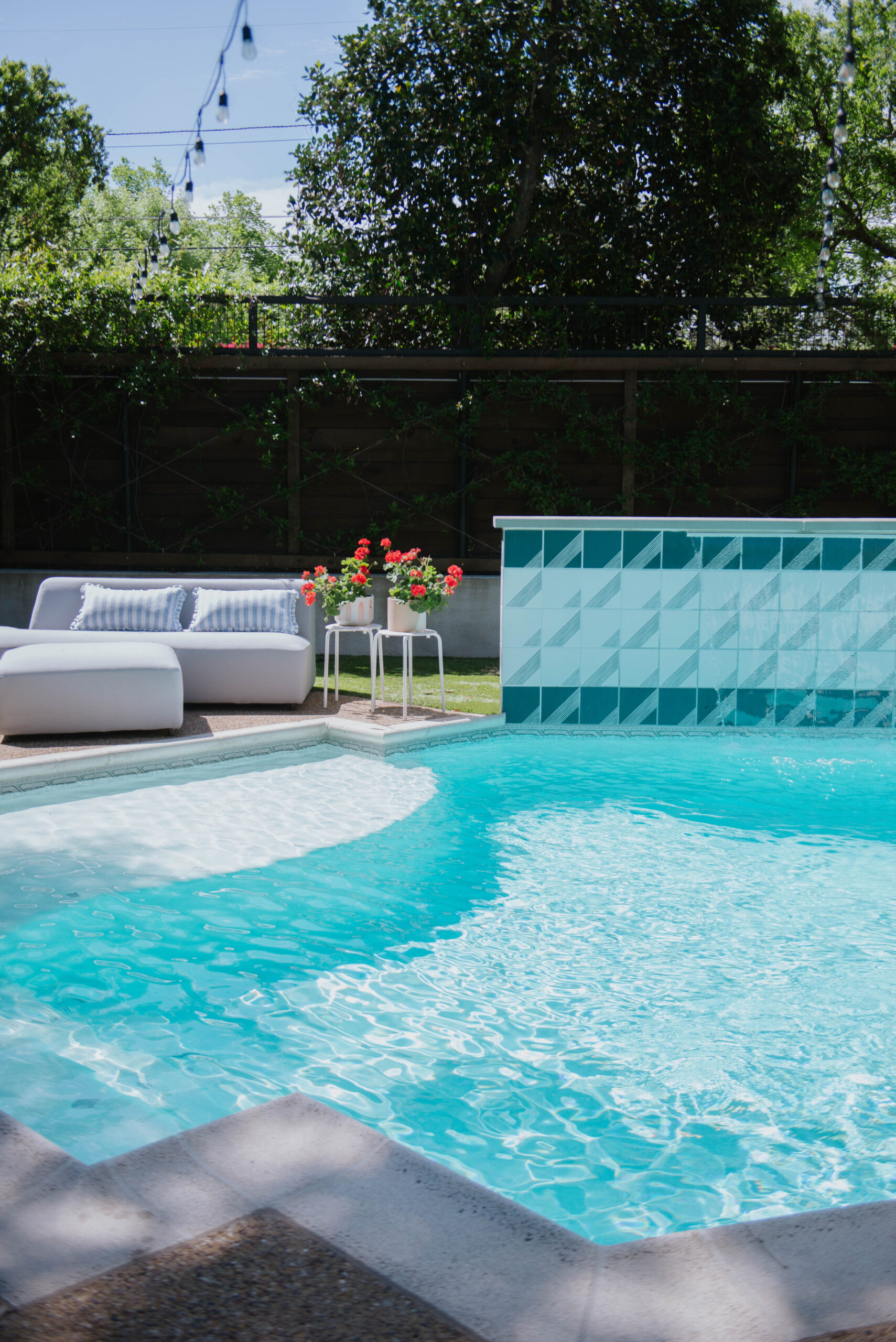
“For instance, you asked me what inspired me to pursue home design and construction. I purposely avoided mentioning Frank Lloyd Wright because everyone does. I was probably more inspired by artists like Jasper Johns, Mark Rothko and Piet Mondrian,” Daniel said in an email.
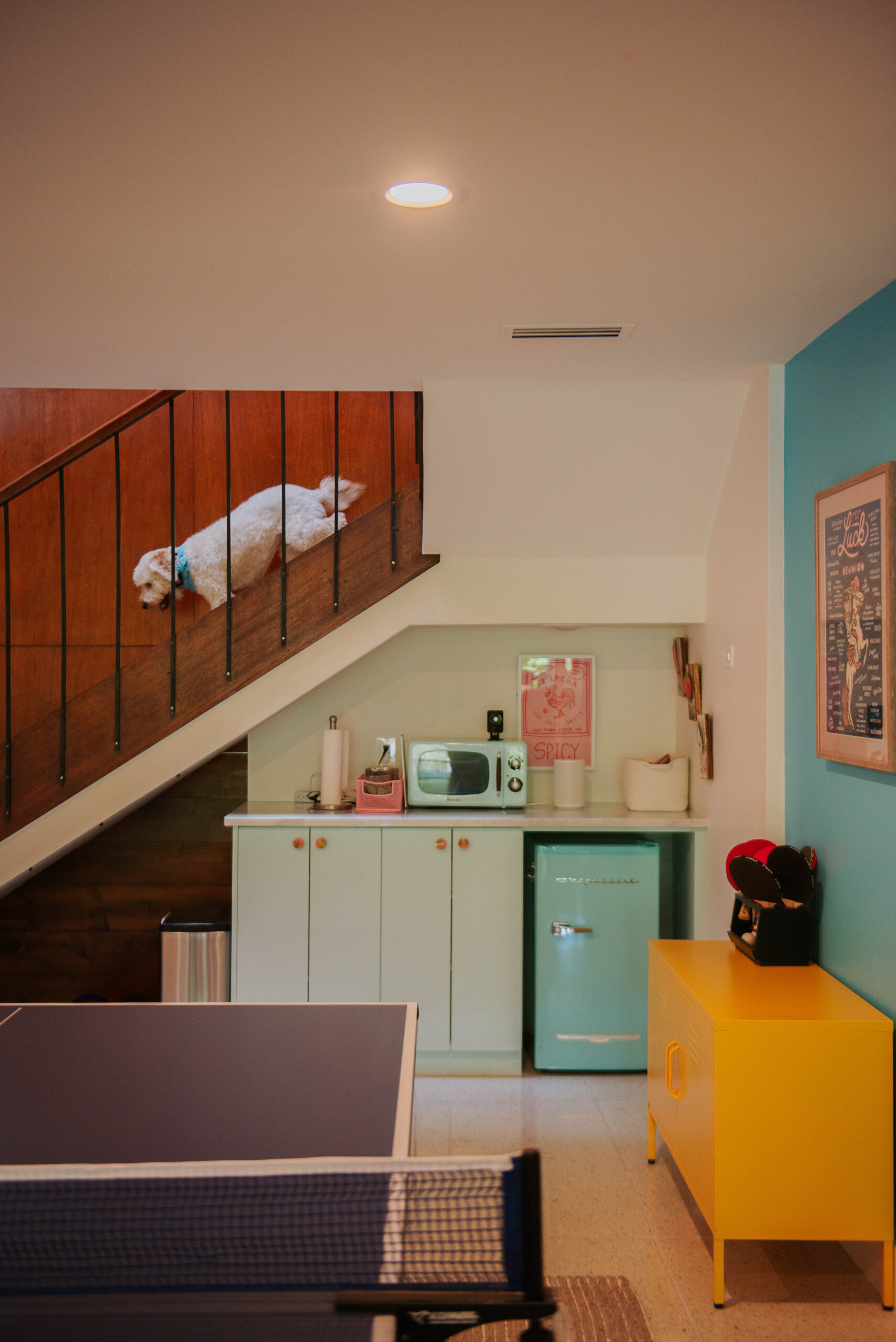
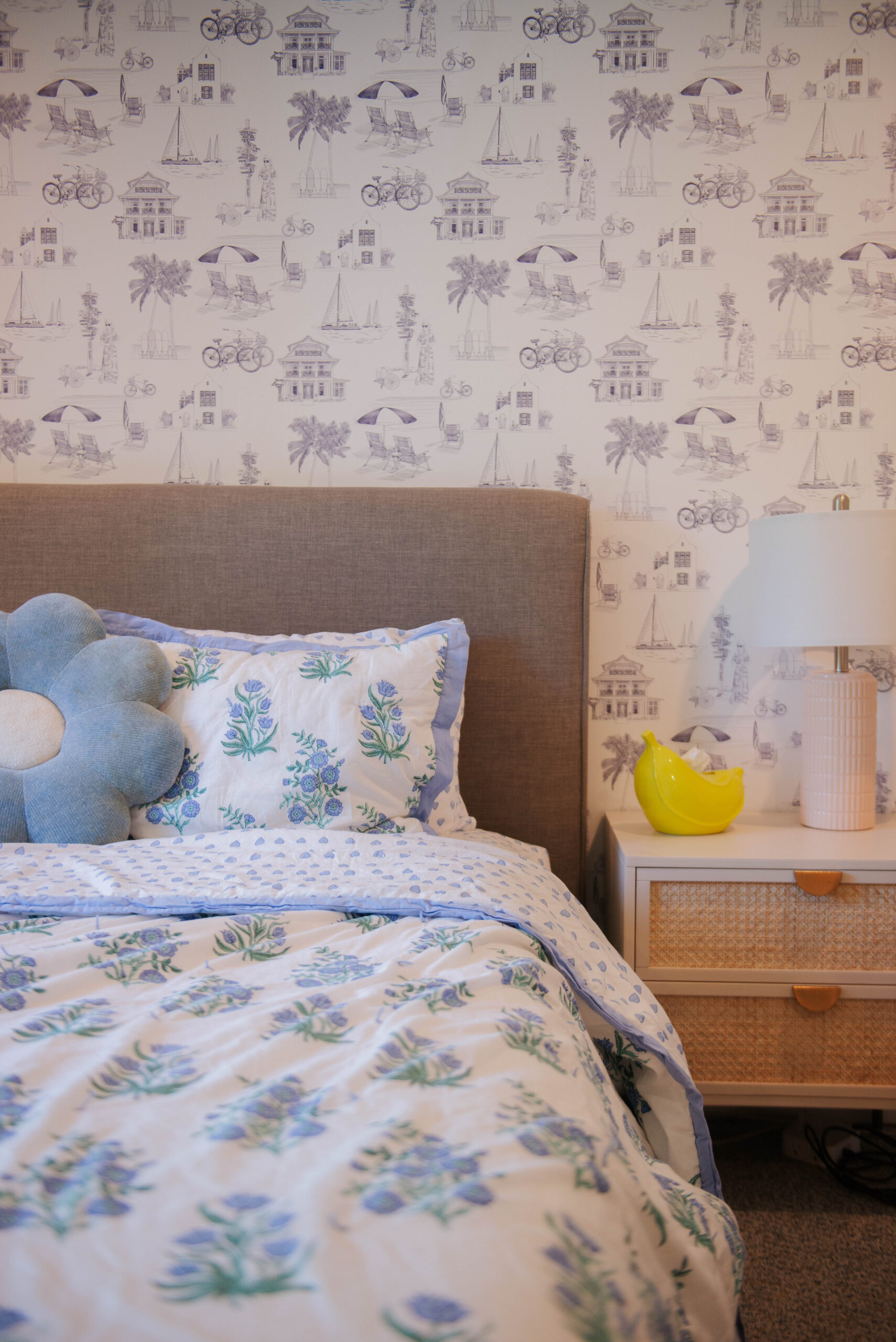
Different types of terrazzo tiles, from California-based Concrete Collaborative, were installed primarily on the first floor, where Katie’s office, their daughters’ ocean-themed bedrooms and a den are located. Blue tones are carried downstairs in the wallpaper and art. The Sibleys chose to color-drench Katie’s office in pink.
“Why not? I spent a lot of time in there. I wanted to have some fun and some color. And so we thought, what color matches the blue in the main room, and that could play and fits with the vibe of the house,” Katie says.
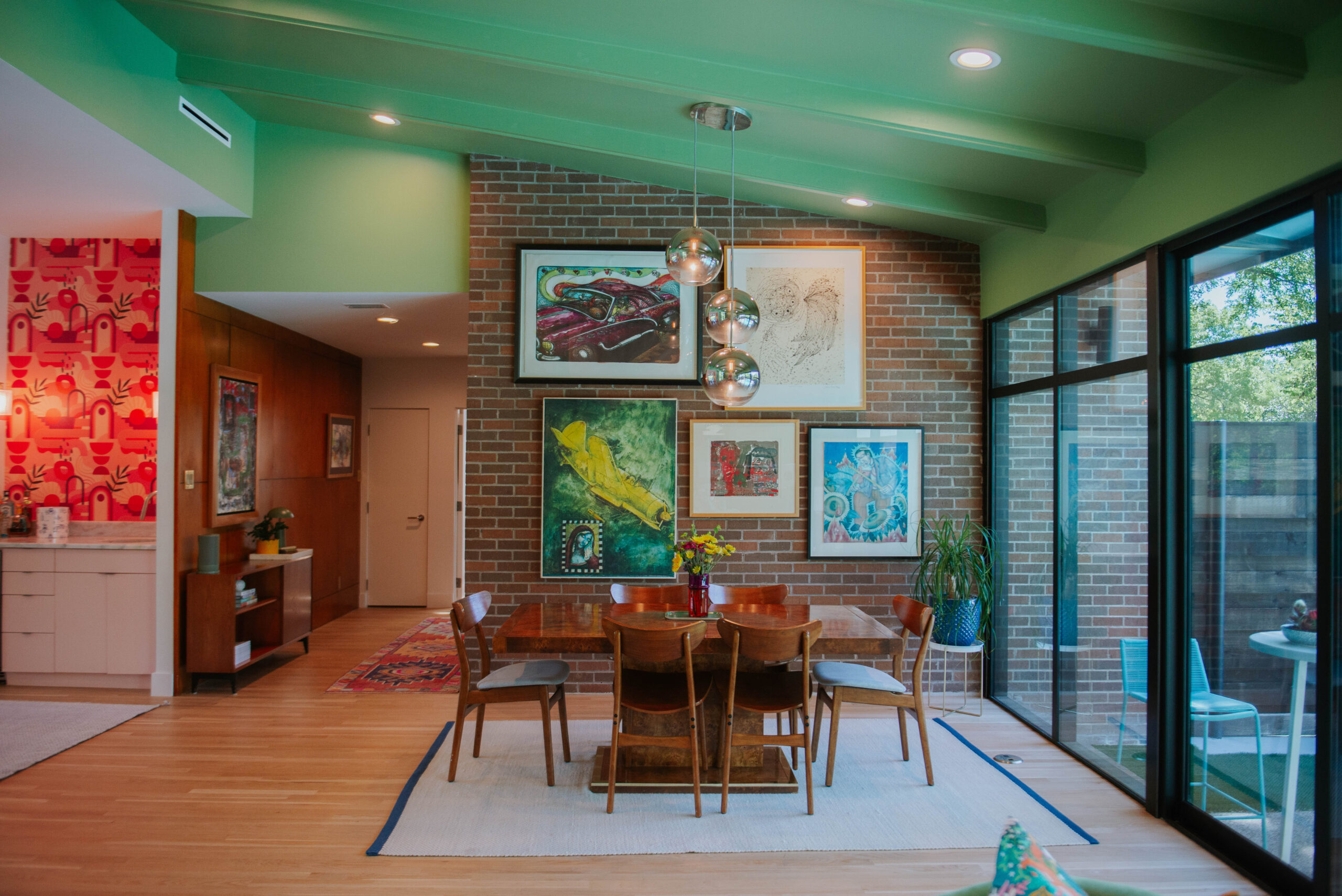
If you know just enough about architecture and construction, you can tell the home wasn’t built by someone whose bread and butter was residential design. The brick in the dining room, for example, a deeper reddish brown that’s slightly larger than standard-issue, is actually commercial grade. Acme Brick informed Daniel that the specific brick that was produced was no longer in production, and he ended up sourcing reclaimed pieces to repair the wall.
New plumbing needed to be installed. Daniel vaulted the ceiling, installed windows near the roof line and enlarged all the windows to flood the home in light.
They have a love for the Texas sun.
The backsplash that Daniel designed in a color gradient mimics the sunset. He printed a life-size template to assist the tilers in mimicking the pattern. The ceiling height double-stack, fully functional cabinets are a light blue meant to emulate the sky and keep the eyes moving upward.
The wallpaper in the twin niches, one for a wet bar and the second for a built-in bench, uses peach tones, geometric shapes and the sun illustrations.
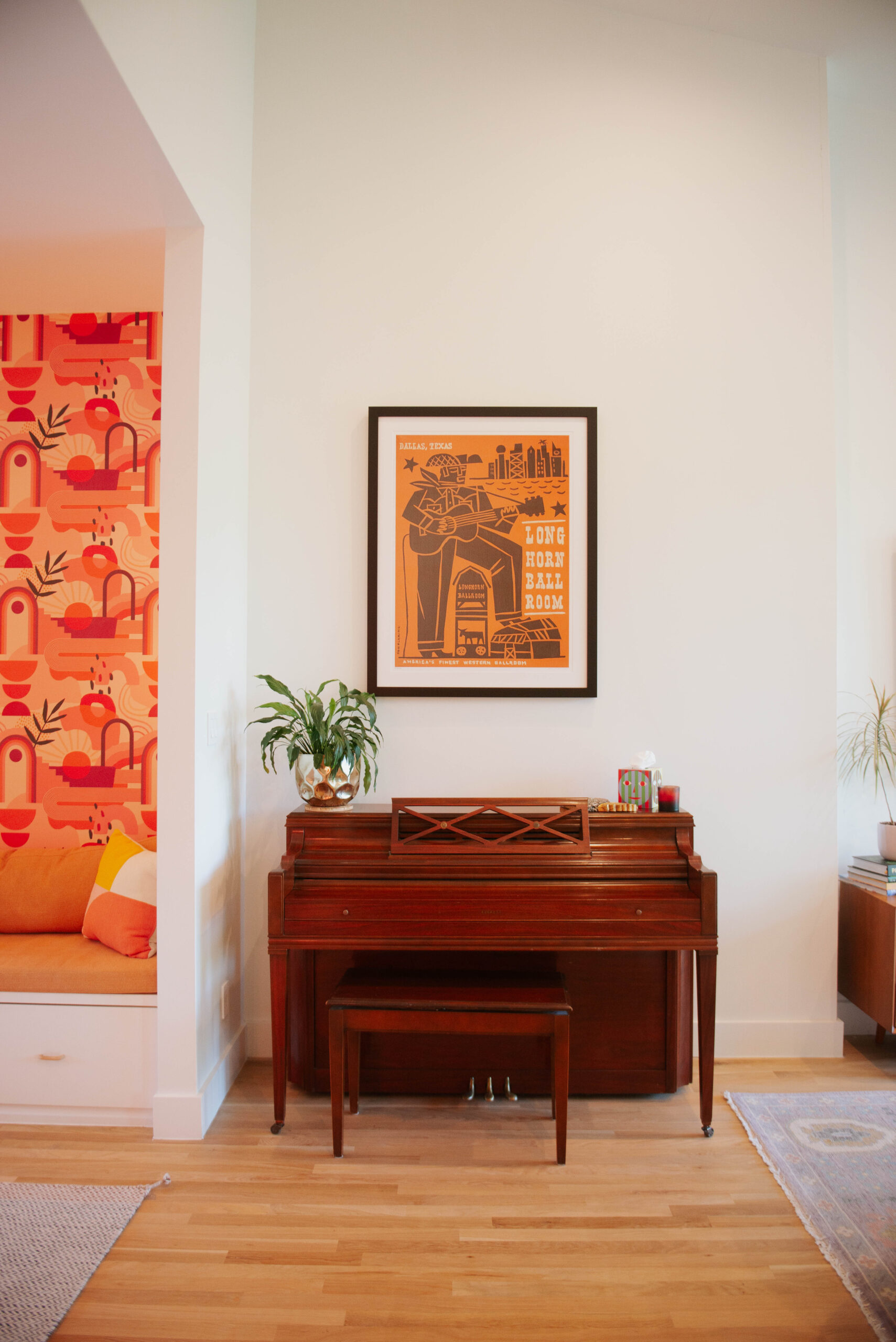
“[When] we first got the house, it was so awesome to see the sunsets in a whole new way here. The song ‘Texas Sun’ had just come out by Leon Bridges, and we just felt like it was the vibe of this house,” Katie says.
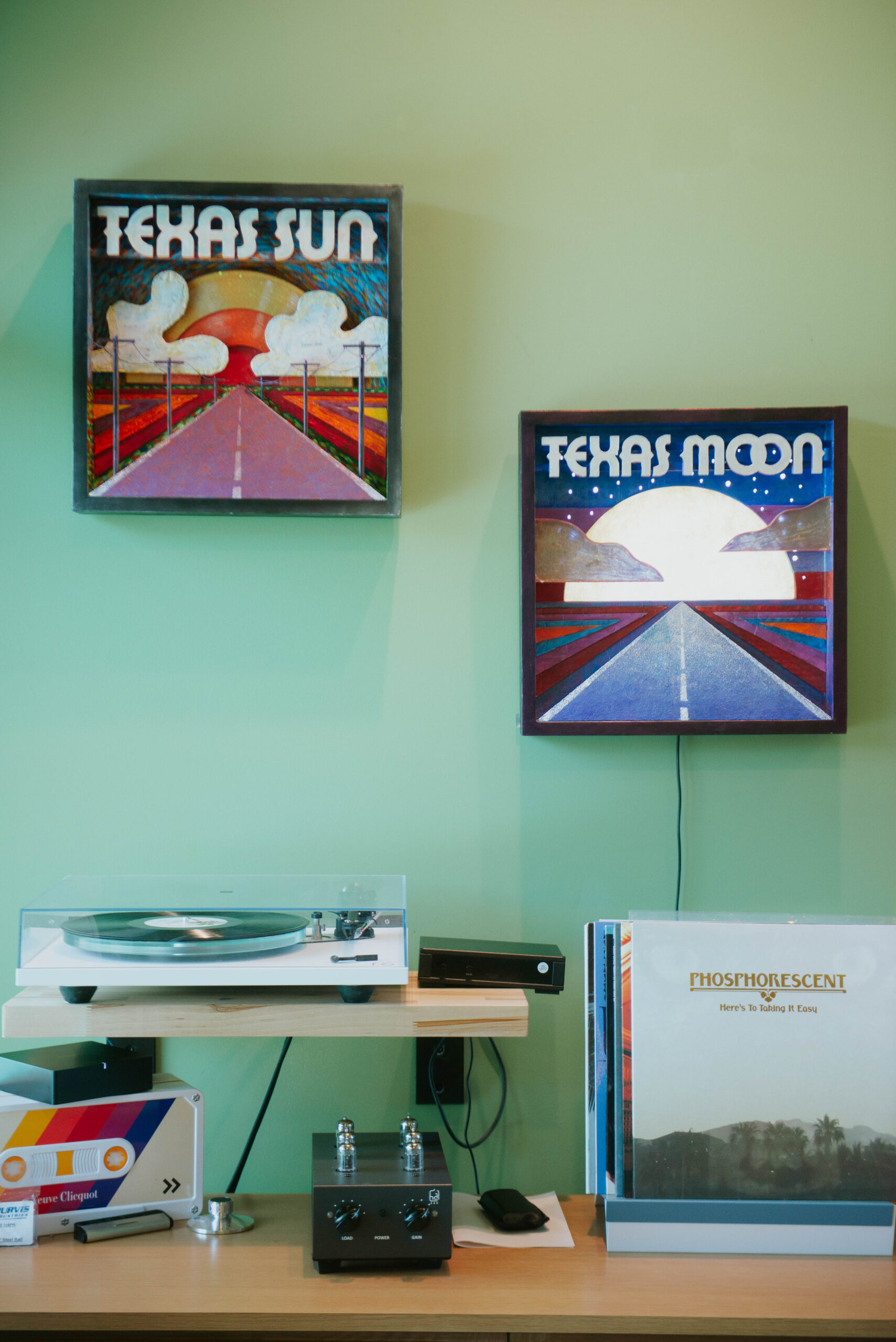
Katie purchased an East Dallas-based Ken Womack piece illustrating Leon Bridges’ Texas Sun album as a gift. Womack reached out once the Texas Moon album was released and created a similar piece, using found materials. Both fittingly are in the broccoli-green color-drenched music room, similar to the avocado green in the original kitchen, with a record player and floor-to-ceiling shelves filled with vinyls.
“I feel like music and the design are very interconnected,” Katie says.
There’s always music playing, sometimes without them noticing.
“We weren’t like, ‘Let’s put our love of music into the design,’” Daniel says. “I think it’s just so ingrained.”
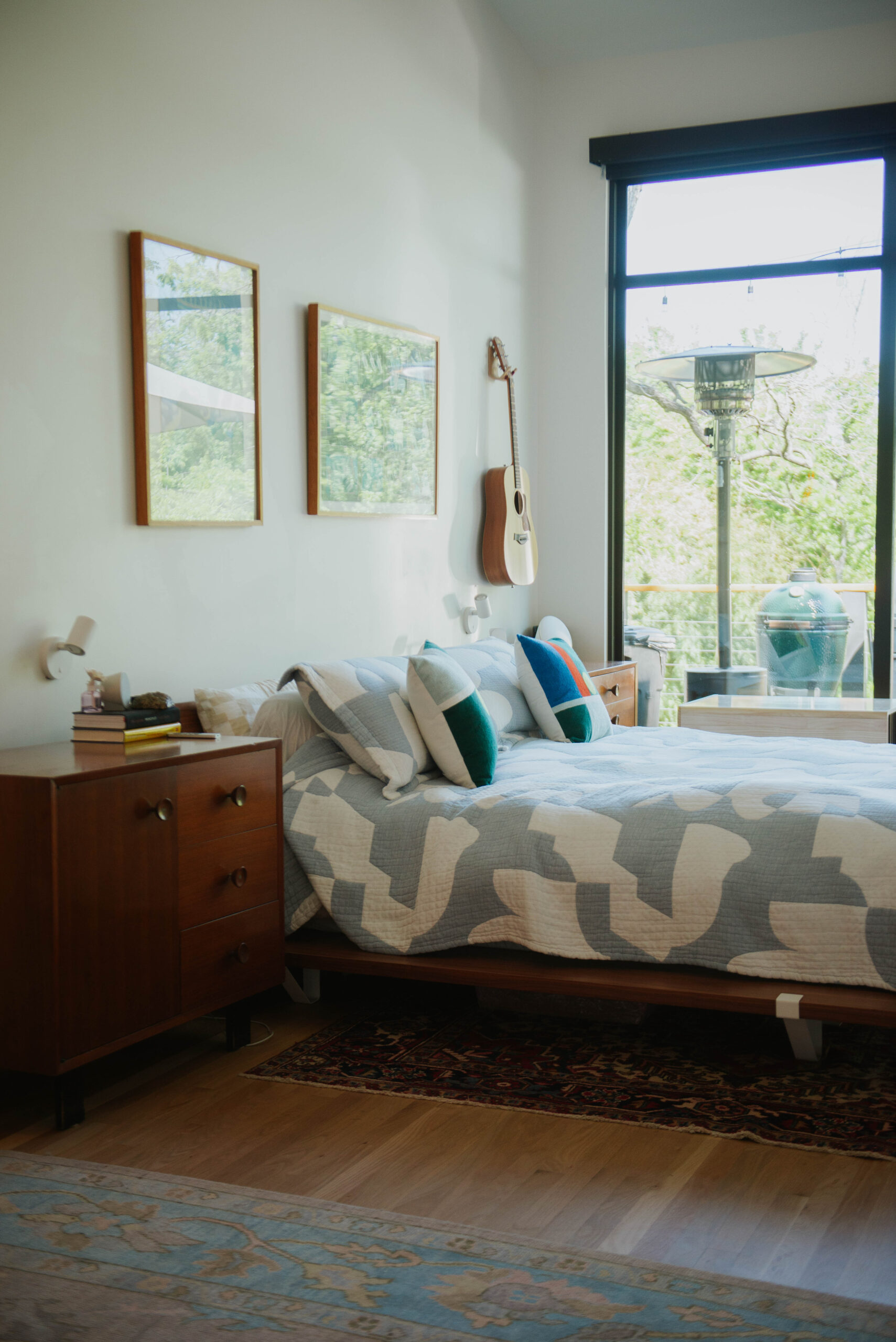
Their art collection includes a massive Pop-Tart piece from Womack in their primary bedroom. There are a few concert posters, too, but not too many. Everywhere they travel, they try to bring back pieces from lesser-known artists, like a Japanese artist based in Belgium. Pieces from Daniel’s mom hang on the wall opposite the fireplace. Art from Dan Allison, Luis Jimenez, Dick Wray and Jame Surls in a variety of styles dot the home. Most of the lighting fixtures, which Katie sourced from the depths of the internet, doubles as art pieces.
“My mom and my stepdad used to say that it will speak to you. It’ll tell you where it’s supposed to be, and it kind of does,” Daniel says.
His assumption that the houses on the north side of the street had ping-pong tables was at least partially correct. In the photos Linda sent to the Sibleys, there’s a ping-pong table on the ground level of the house, which incidentally and unknowingly, is exactly where Sibley’s placed their ping-pong.
Katie, who is now part of the Mediterranean Garden Club, was talking to a member who lives a couple of doors down. Forty years ago, Daniel used to play in her front yard.
“She left and walked in the back of the house, and then came back and she had a Hot Wheels car, and she said, ‘Daniel left this in my front yard, and could you give it to him?’” Katie says. “It just made me feel like a part of a story that you started here.”