If you have lived in Lake Highlands for a while, you’ve probably heard it described as having a “small town feel in a big city.”
There’s certainly some truth to that sentiment. It’s beyond easy to spot old neighbors, friends and teachers while shopping at Kroger or Tom Thumb. People keep up with each other and many return to raise families.
And just like any small town, there’s plenty of nostalgia.
Neighbors still recount tales about the State Championship-winning 1981 Lake Highlands High School football team, nights spent at White Rock Skate, the “muffin men” and appearances by late Lake Highlands neighbor Mr. Peppermint, aka Jerry Haynes.
One of the most tangible indicators of Lake Highlands natives’ affinity for the past is the fondness — and passion — with which they remember their childhood restaurants.
In our post in the “You Know You Grew Up in Lake Highlands if…” Facebook group (which has over 7,000 members) asking for eateries to include in this story, we received close to 500 comments in just under a month.
Long-gone eateries like Next Door and Shakey’s Pizza Parlor still cling to the minds of their once-regulars, many of whom now have children of their own.
While many have memories of individual establishments, others still remember an overarching absence of choices — outside of fast food — compared to surrounding areas. Of the restaurants we heard of from neighbors, close to half were located outside of the neighborhood proper in Lake Highlands-adjacent areas like Upper Greenville. “So, the weird thing about Lake Highlands is we’ve always had a dearth of sit-down restaurants,” says Keith Whitmire, who administers the Facebook page. “Never been a whole lot of places to have a nice sit-down restaurant. We’ve had a lot of diners and fast food places, but not too many, nice fast casual places like the suburbs have so many, even though we’re essentially a suburban-style area.”
Early Days
Once a placid patchwork of rolling hills and meadows, the bulk of Lake Highlands was developed in the 1960s and 1970s as Dallas’ population skyrocketed. However, some southern portions of the neighborhood developed earlier, such as the L Streets, which were built during the post-war construction boom in 1954.
Most of the development took shape in the form of sprawling, low-density suburban-style residential neighborhoods built for young families dotted with a couple of retail shopping centers — fertile grounds for supermarket chains, not a robust dining scene. However, there were some early leaders.
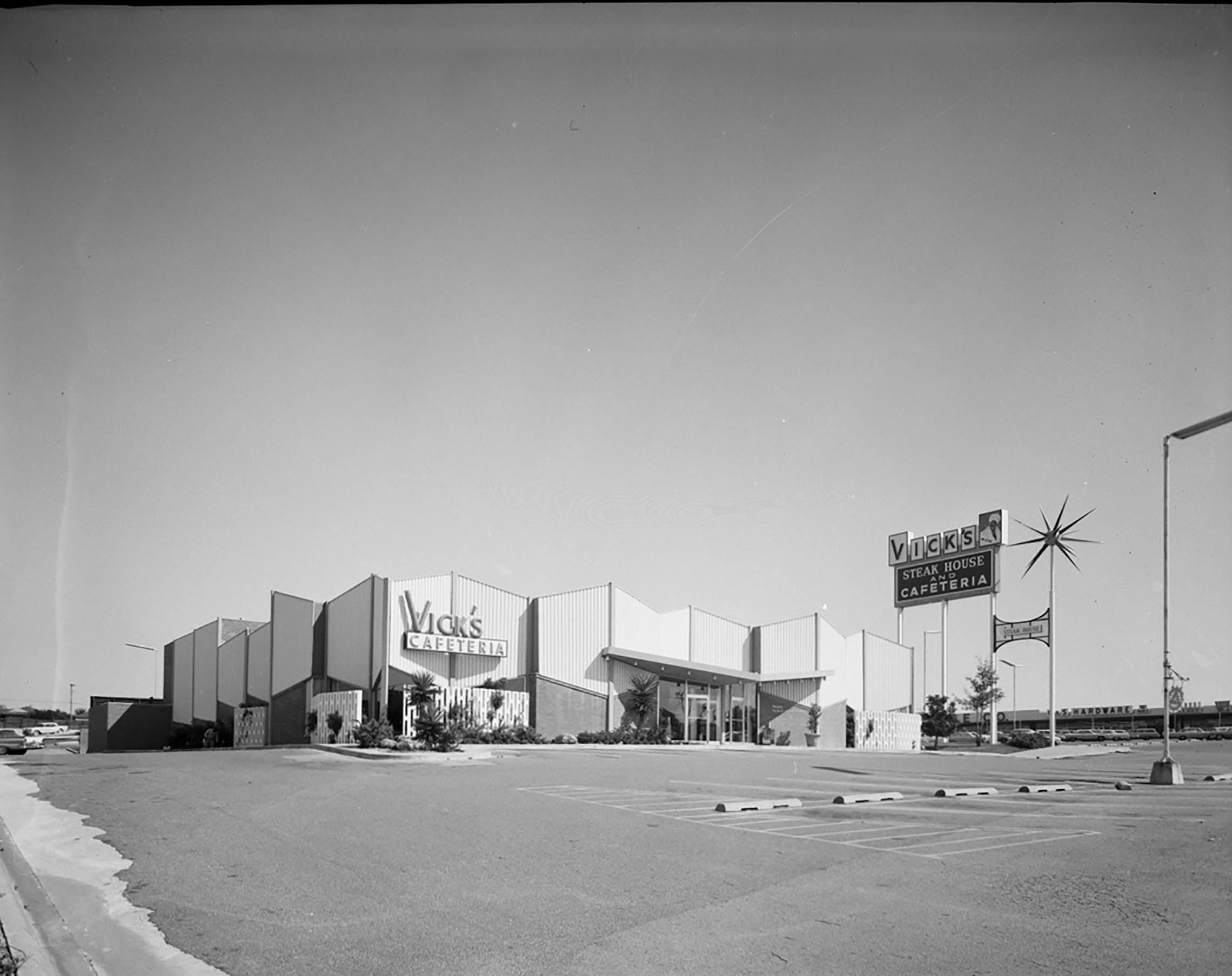
In 1959, Northlake Shopping Center opened on Northwest Highway. One of the first eateries to open in the center was Vick’s Cafeteria in July of 1961. A Dallas Morning News article from 1963 lauds Vick’s as a “luxury cafeteria” with “varied daily offerings,” Italian paintings, and a private club and steakhouse on the upper level. After its closure in the ’70s, it would take decades for the neighborhood proper to land another high-end concept.
Vick’s was joined by Adam’s Pharmacy, which boasted a soda fountain and grill (customers could get five hamburgers for $1), and Northlake Bakery.
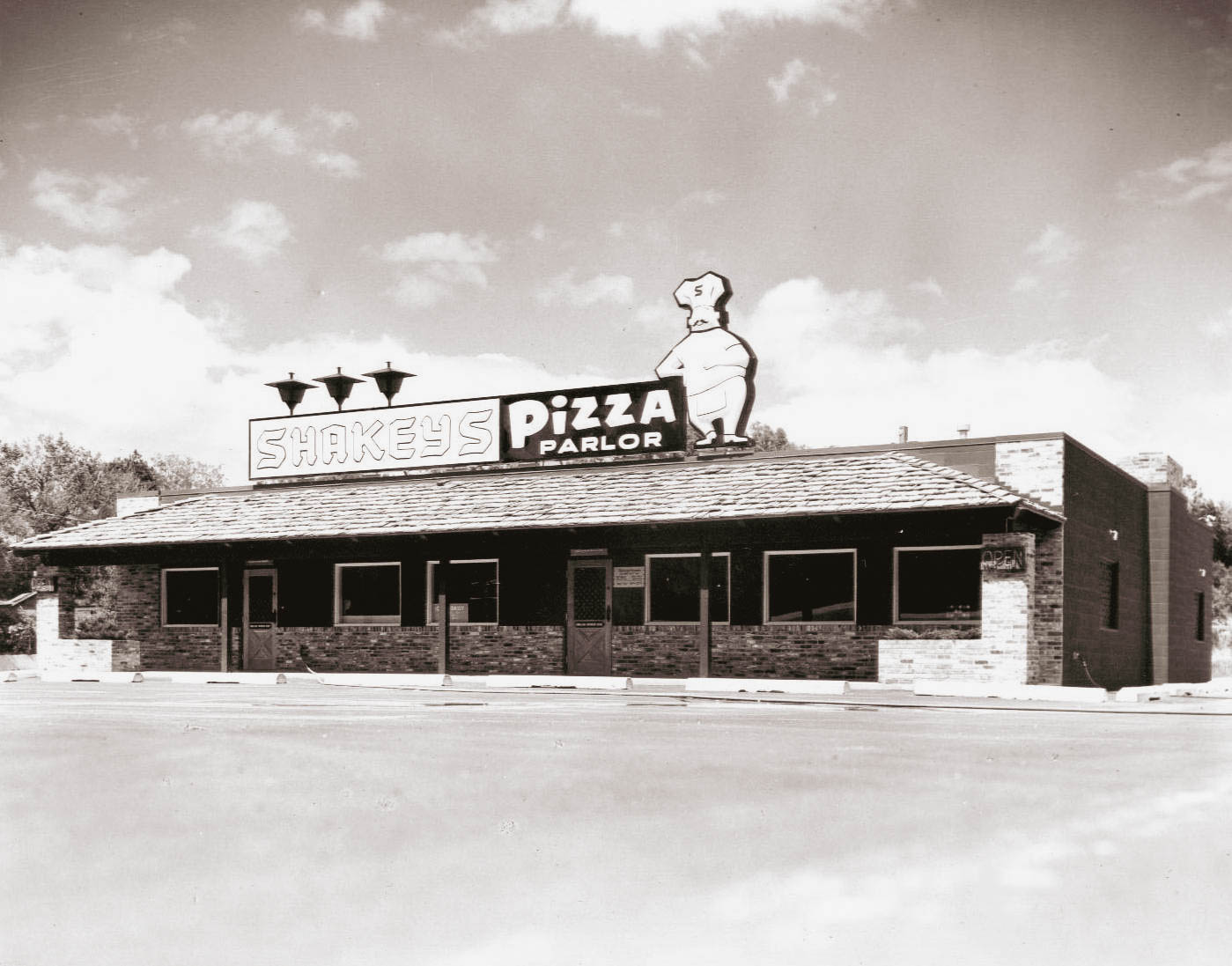
In 1964, Andy Stasio opened the first Shakey’s Pizza Parlor franchise in Dallas near the intersection of Northwest Highway and Abrams Road. Across the street, Jack Keller, a veteran of Dallas’ first drive-in restaurant, Kirby’s Pig Stand, opened a second Keller’s Hamburgers in 1965.
Alan Walne, who grew up in Lake Highlands in the ’60s and served as District 10’s council member for seven years, says while he can remember spending time at the Dairy Queen built later in the decade near Audelia Road and Kingsley (Walnut Hill Lane post-2005), there was less emphasis on eating out and even fewer options to do it.
“That was pretty much the long and short of it, as far as right in the neighborhood itself. Back then, you weren’t eating out as much as people tend to eat out today,” Walne says. “But if we wanted a steak, you went to Steak and Ale. We didn’t have that for a long time, but Dunston’s Steakhouse or something like that was the deal, but that wasn’t in the neighborhood.”
Alongside the Dairy Queen, a Pizza Hut opened in the late ’60s at the intersection of Kingsley and Audelia Road, as did a Hardee’s Hamburgers in the present day Lake Highlands Car Wash building. On Shoreview Road, Whataburger debuted a classic A-frame building, which now houses Studio Arts, in 1968.
Lake Highlands’ long-term relationship with chain restaurants had begun.
1961
1964
1965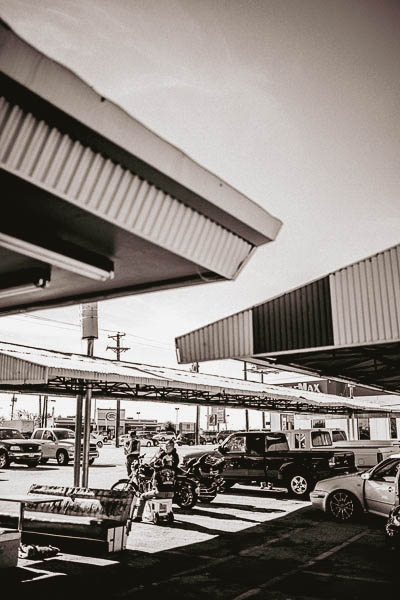
The ‘70s
Many of the restaurants we heard about from the 1970s weren’t in Lake Highlands proper. Instead, many neighbors recall times spent along northern Greenville Avenue in the Vickery Meadow area. As for most of Lake Highlands’ history, driving a few miles created exponentially more options.
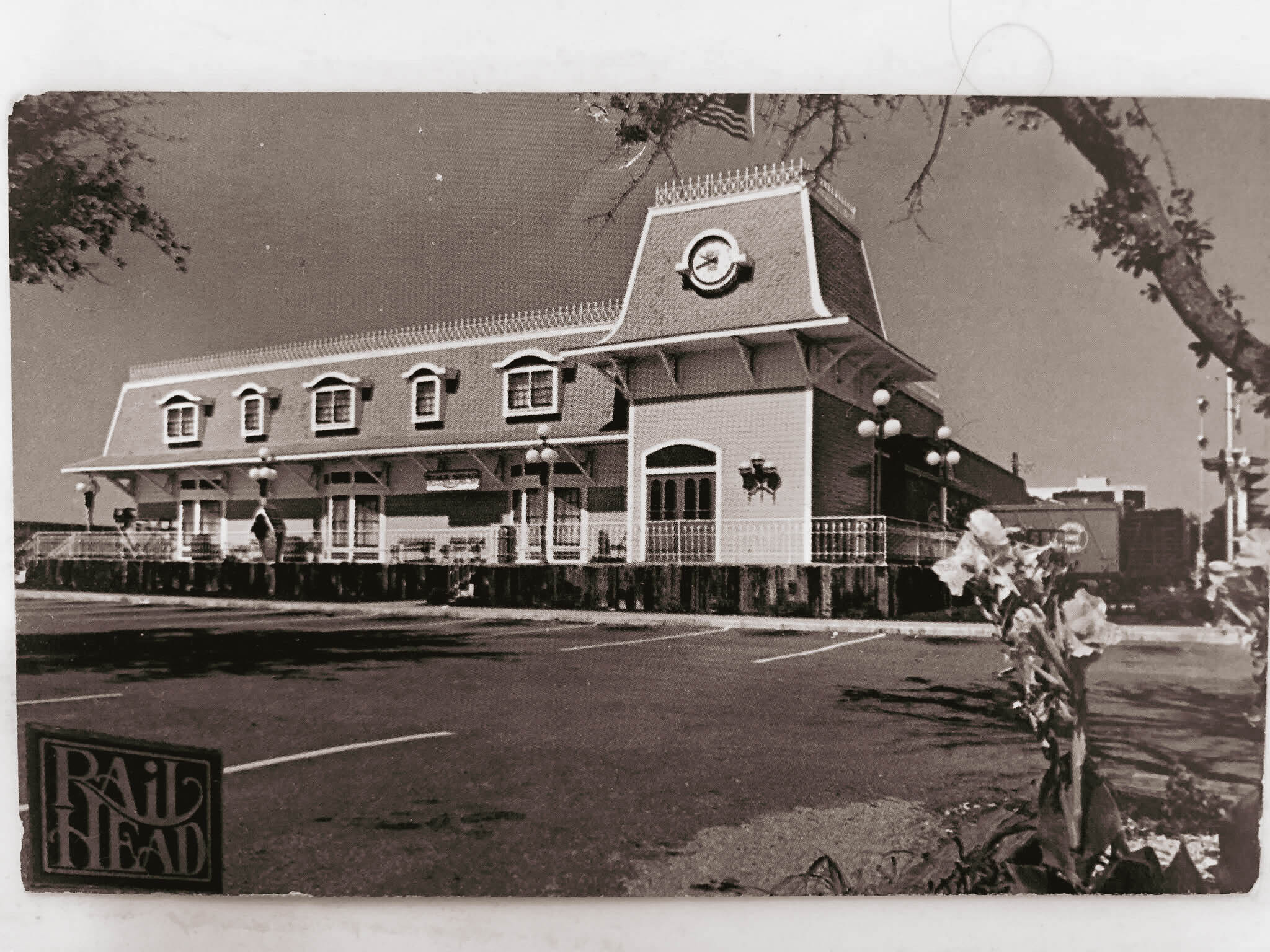
The Railhead, a steakhouse serving prime rib and lobster in a rustic, train station-themed setting, opened at Park Lane and Greenville Avenue in 1972. Further up the road, the Filling Station, a burger and beer joint operating out of a 1920s gas station said to have been frequented by Bonnie and Clyde, opened in 1975.
That same year, the original Chili’s opened at the corner of Greenville and Meadow Road.
“Lake Highlands people went there in droves,” Whitmire says. “You know, that was our spot. If you were on a date in high school, you went to the Chili’s. It was the closest thing to a nice, casual, sit-down restaurant. And it was wildly popular.”
However, that same year also marked a significant moment for Lake Highlands proper’s dining scene. In 1975, Charles Tippit opened Next Door Restaurant at Kingsley-Audelia.
Fifty years later, the restaurant still holds strong in Lake Highlands’ memory, with no other establishment mentioned more in our Facebook comments.
“If somebody, some Lake Highlands longtime resident or alumni, would put the money in and reopen the Next Door, then they’d have lines out the block,” Whitmire says. “These kids have never handled an actual telephone, they would love it.”
Tippit opened the first Next Door restaurants in Oklahoma, Arizona and Texas in the early ’70s. While he sold the Oklahoma locations to Pizza Hut as part of a franchise deal shortly after, he retained ownership over its three Dallas locations, including Lake Highlands.
When he first opened in our neighborhood, he pursued a savvy recruitment strategy to lure younger crowds in.
“I would go to the closest high school and try to hire all the cheerleaders,” Tippit says. “They would just bring in everybody in the world, and we had almost immediate, just huge business. And then, of course, the parents came in, and as it went on, it became well known.”
Draped in Revolutionary War-themed Americana decor, the restaurant’s interior featured red booths with a phone in the middle of each table. Its purpose? Ordering chicken fried steak, milkshakes, hamburgers and curly-q fries — a novelty at the time. “At one time, we were running through almost maybe 1,000-1,500 pounds of potatoes a weekend,” Tippit says.
Blair Thomas, who grew up in the neighborhood in the ’80s, says he still vividly remembers Next Door over 40 years later.
“It was an upbeat place, and it was really unique,” Thomas says. “I remember the times when we would go with my cousins and my aunt and uncle. And when the kids could sit at their own booth, and then we would pick up the phone and try to order on our own. I mean, just fun stuff like that. But there was just no other restaurant like it.”
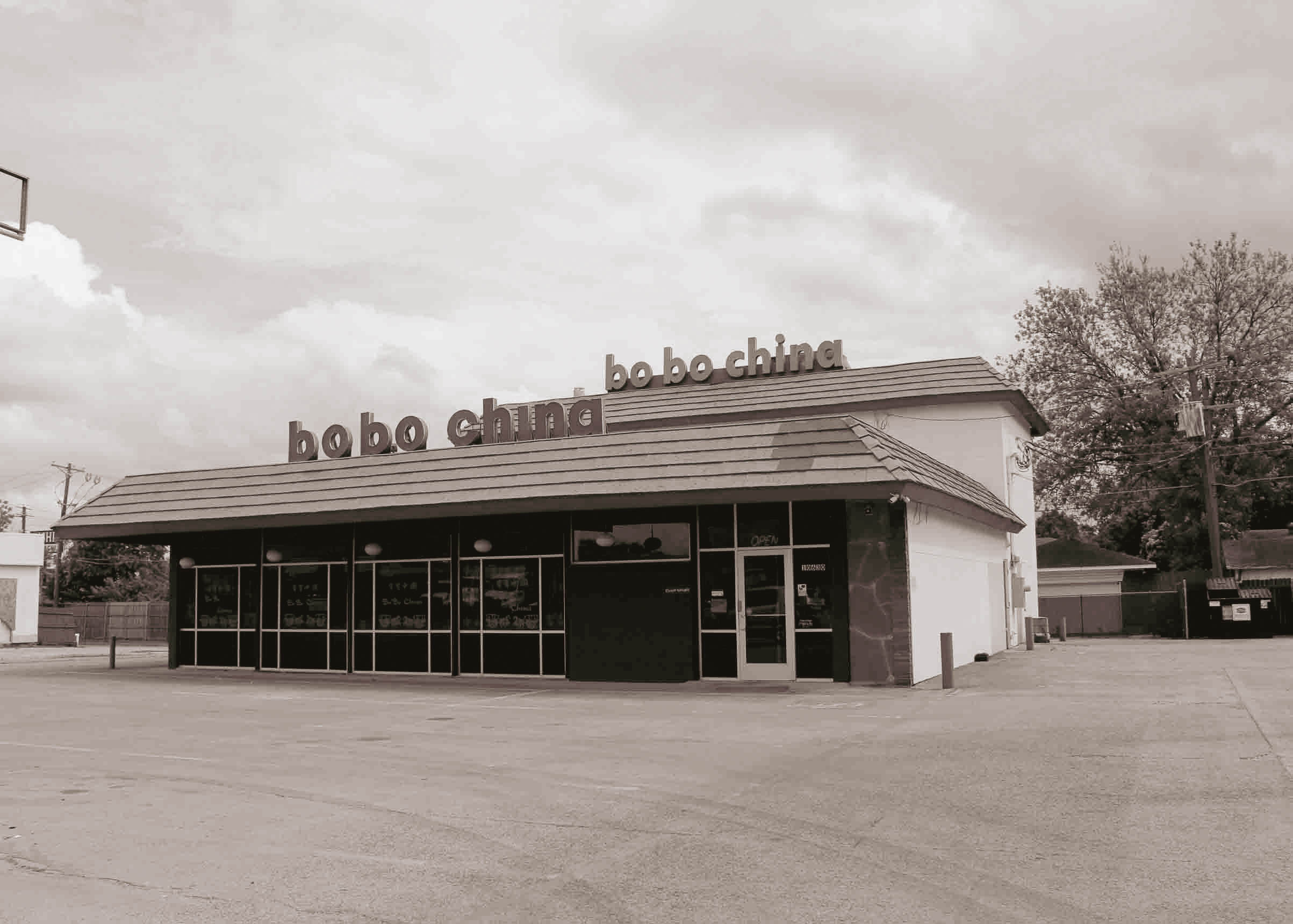
Two years after Next Door opened, the Lee family launched Bo Bo China on Church Road in 1977. The restaurant, despite some admitted ebbs in quality in later years, became a go-to destination for Christmas Day meals and family dinners. While Bo Bo closed its doors after close to a half-century in Lake Highlands in 2024, the property’s real estate agent has told the Advocate a comeback is still a possibility for one of the neighborhood’s most enduring independent eateries.
1975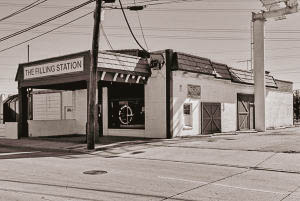
1977
1983
Start of a Decline
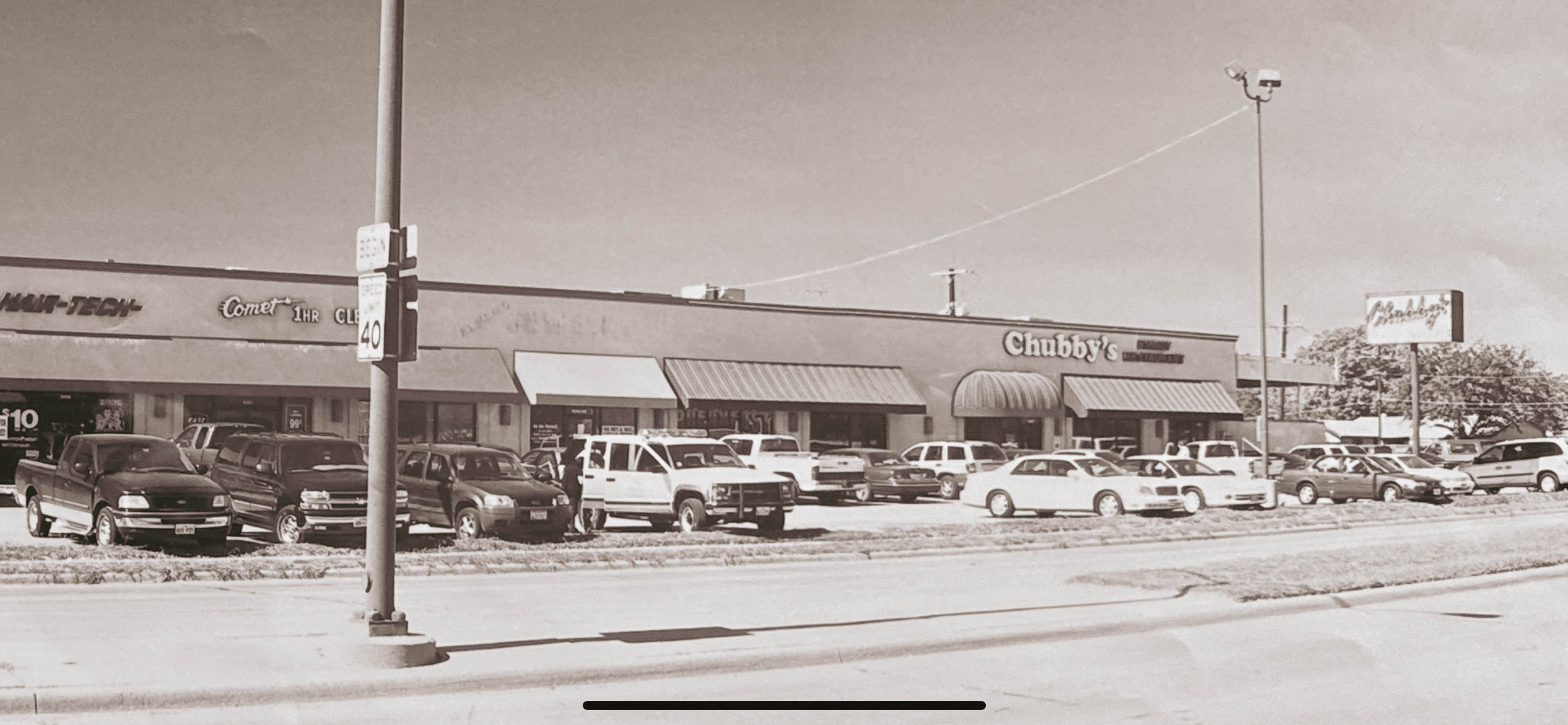
Jack Keller’s nephew Jake Jr. split off and opened Jakes Burgers near the intersection of Abrams Road and NW Highway in 1985. Chubby’s came onto the scene in 1987, and Mama’s Pizza (another neighbor favorite) opened around the same time at Kingsley-Walnut Hill, delivering three important dining wins for the neighborhood in the ’80s.
For the most part, however, the decade seems to have been the start of a slow decline for Lake Highlands’ standalone dining scene. Landmark Pizza and Pipes, a zany concept cashing in on a fad combining pipe organs and pepperoni pies on Northwest Highway, had closed by 1984, according to permitting records. Shakey’s Pizza also closed in the ’80s, opening a pizza void in the neighborhood.
Next Door shuttered around 1986 after close to a decade of making phone-ordered memories as Tibbitt’s lease expired. It was preceded in its departure by The Railhead on Greenville, which closed in 1983. The Filling Station and original Chili’s fared slightly better, closing in 2004 and 2007, respectively.
“We had multiple independent restaurants and burger places and ice cream parlors all in Lake Highlands,” Thomas says. “Then something happened. A lot of them went away by the end of the ’80s. But then in the ’90s is when I feel like we lost a ton of restaurants and that carried into the 2000s and so there was just this gradual decline over the years.”
1987
This is part 1 of a 3-part series on Lake Highlands dining.