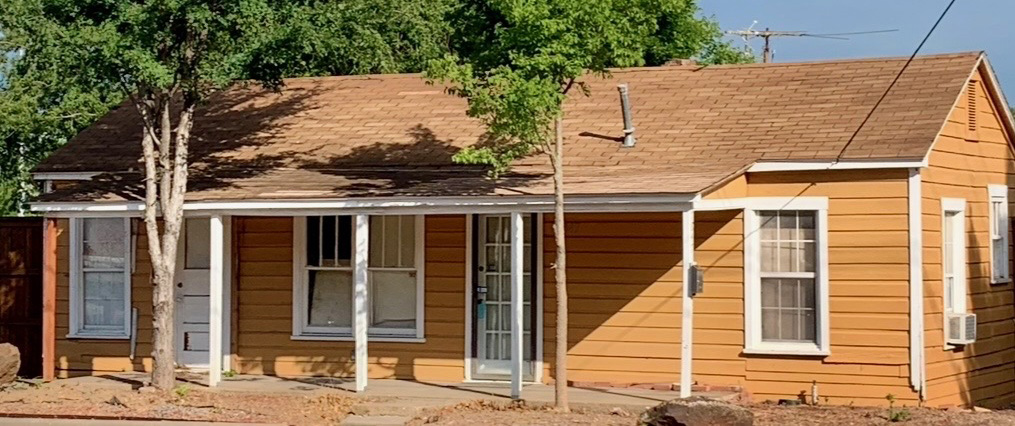
The little yellow house at Fair Oaks and Walnut Hill
In my almost 20 years of writing for Advocate Magazines, there’s one question I’m asked more than any other — what goes on in that little yellow house at the corner of Fair Oaks and Walnut Hill? At the risk of sounding like Gladys Kravitz from the 1960s television show Bewitched, I’ve often wondered myself, and I’ve tried a few times to solve the mystery. I’ve peered over the fence and peeked through the windows, but I never figured it out — until now.
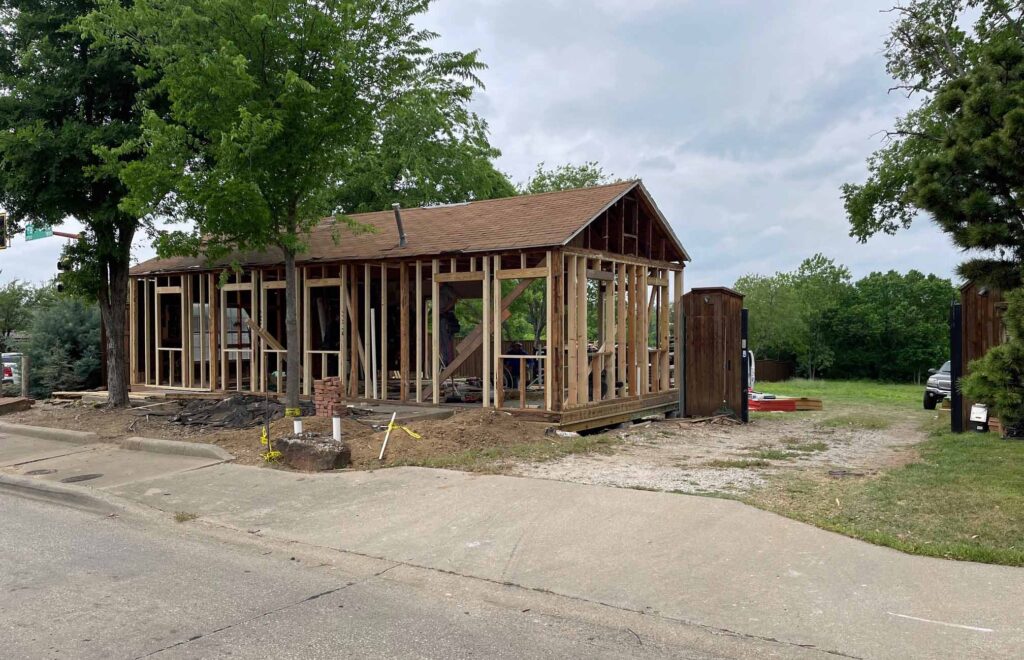
7847 Fair Oaks Avenue
While driving past the house in mid-April, I noticed work crews had taken it down to the studs. I pulled into the parking lot at NorthStar Preschool, walked over and looked around. I knew from previous research that the house was owned by residents of the gorgeous yellow Mediterranean home next door, so I did what any intrepid reporter worth her salt would do. I walked up and knocked on their door.
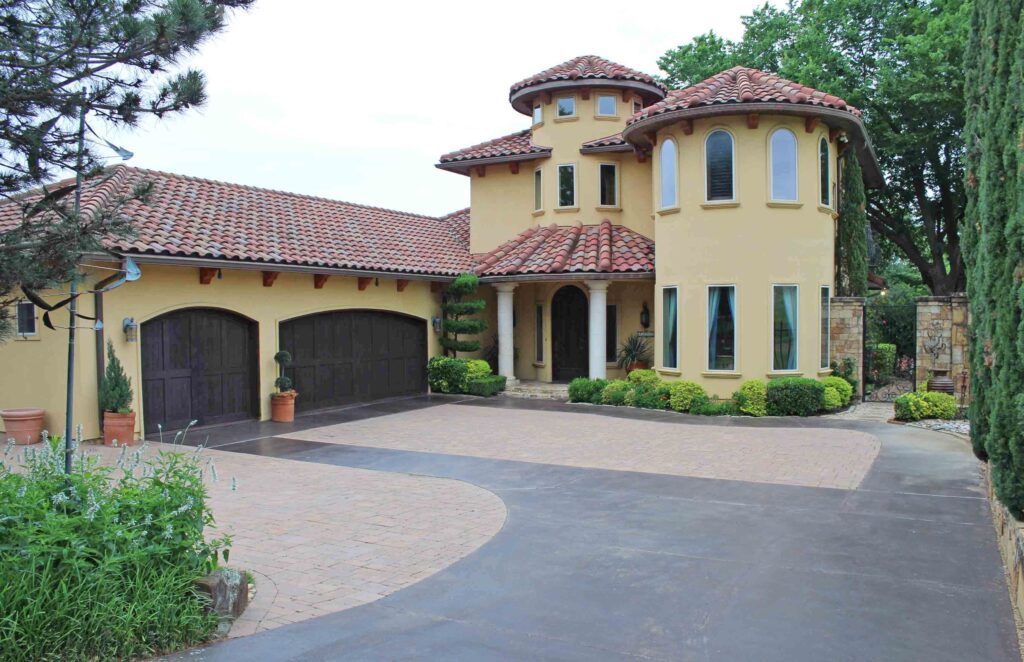
Mediterranean home at 7849 Fair Oaks
Hank Bashore (pronounced “Bayshore”) is a money manager at Hilltop Securities, and I could see him in the front window working on his computer and speaking on the phone. He held up his forefinger in the universal signal for “one moment please” until his beautiful blond wife, Suzy, arrived from the backyard, garden soil dripping from her work gloves. She laughed when I explained my mission, and she promised to sit down with me when she completed her gardening project. Here’s what I learned.
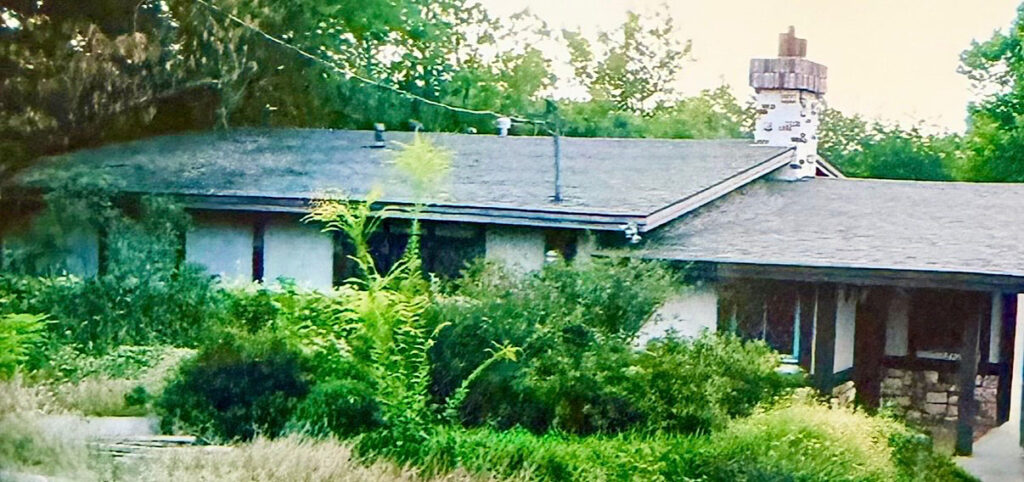
Hank Bashore’s Tudor home. Courtesy of Hank Bashore.
Before Hank and Suzy married, he lived on that site in a smaller, Tudor-style home with horse stables. The area had been part of Moss Haven — the 400-acre stock farm bought as a weekend retreat for (and home for the new State Fair prize bull of) Harry S. Moss and his family in 1930. The Bashores had the Tudor torn down to build their Mediterranean home when they wed in 2003.
The small, yellow house next door was owned by a parishioner of Dr. Wayne Brashear, who preached for 55 years at Vertical Life Church, and he received the property upon the grateful congregant’s death. Brashear rented the house to a married couple attending classes at SMU, then later to a group of day laborers working in the area. Architect Steve Whitney bought the house in 2013 for use as an office, renovating the interior and adding a big back deck to enjoy extensive wildlife in the woods and creeks nearby. He improved fences and gates so that he and business visitors could push a button and park in a secure gravel lot out back.
“I liked that it looked abandoned,” Whitney laughed. “We wanted to be left alone.”
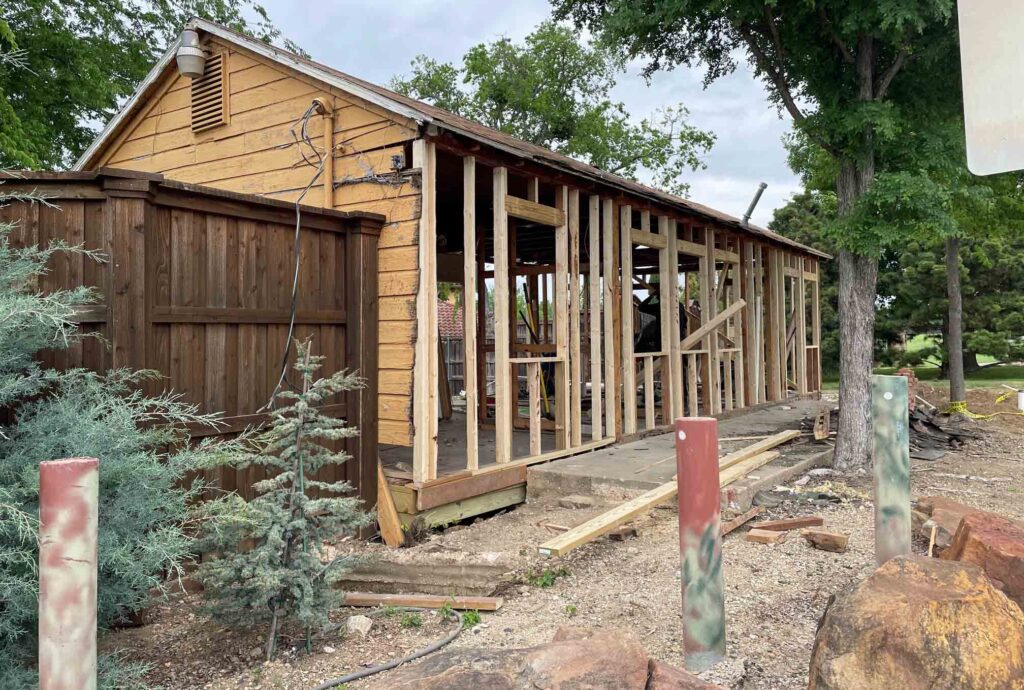
Bollards and boulders were installed after numerous car accidents.
Aside from security concerns, Whitney also worried about frequent car wrecks at that corner. The house sits very close to the roadway, so he installed boulders and bollards to protect people inside. A friend later made a confession.
“(She) told me her son was learning to drive, and he accidentally took out the house’s garage one night with his car,” Whitney laughed. “The garage was never rebuilt, and at least one other car ran through the fence over the years.”
Whitney researched the property and believes the yellow house and the Tudor were both built from Sears and Roebuck kits. Between 1908 to 1940, Sears and Roebuck offered mail order homes through their popular catalogs. Customers could choose from 370 floor plans, and all the necessary materials would be rail-shipped from Chicago directly to the purchaser for assembly. Each kit weighed about 25 tons and contained about 30,000 factory-cut pieces of lumber, millwork, wiring, plumbing, nails and paint.
The Bashores found similarities between the little yellow house and the Tudor during deconstruction.
“When we bought the little house, we had an inspector come over to do a thorough inspection, and he said ‘I cannot believe how structurally solid this house is.’” Suzy recalled. “Even though the houses looked a little bit different, both had the same, really nice wood paneling like you’d see in a nice cabin. We donated it to Habitat for Humanity.”
As for rumors about “goings on” in the little yellow house, Suzy said she’s heard them, too.
“I had heard that, when they were originally built, they were considered to be out in the country. Politicians from Dallas and Highland Park would apparently go out there and gamble and drink and do whatever they wanted to do. If you read any kind of history of the city, that was really common.”
Before they began their current project to renovate the little yellow house, the Bashores considered several possibilities. First, they decided what they did not want next door. They didn’t want a noisy business, and they didn’t want multi-storied multifamily homes which might enable residents to look into their yard and pool.
“We were fearful that, if we didn’t buy it, someone could get the residential zoning changed,” she said. “We both like pickleball, and one day we may add a pickleball court. The main thing is that this will make the street corner look better.”
And if a buyer comes along with a purchase offer, wanting to build their dream home?
“We’d entertain it,” said Suzy. “Never say never.”
When the current project is completed in mid-June, the little house will be used as an office and guest house.
“It will be stucco on the outside, and the roof will be a Mediterranean tower,” Suzy said. “We’re trying to make it look a little bit more of the same architecture as our house, even though it’s a little farmhouse.”
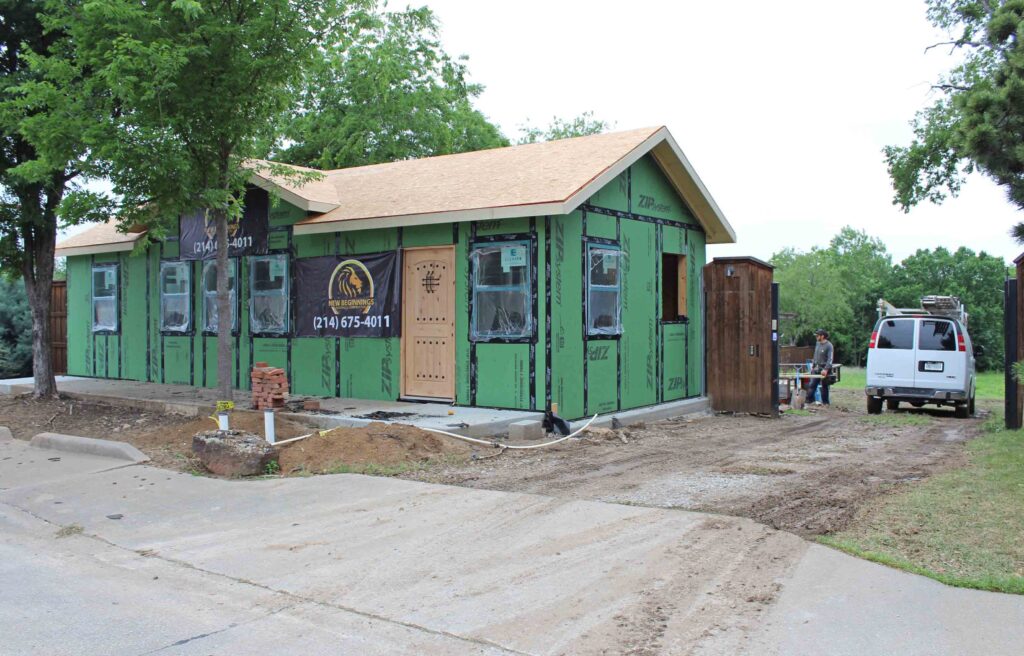
Remodeling is expected to be complete by mid-June.