Fifteen-year-old Zach Porter thought taking home Madagascar hissing cockroaches was cool.
But his mother was less than thrilled.
“I had PTSD from the giant water roaches at Six Flags from when I was a teenager,” says Angela Johnson, East Dallas 4-H Club Manager.
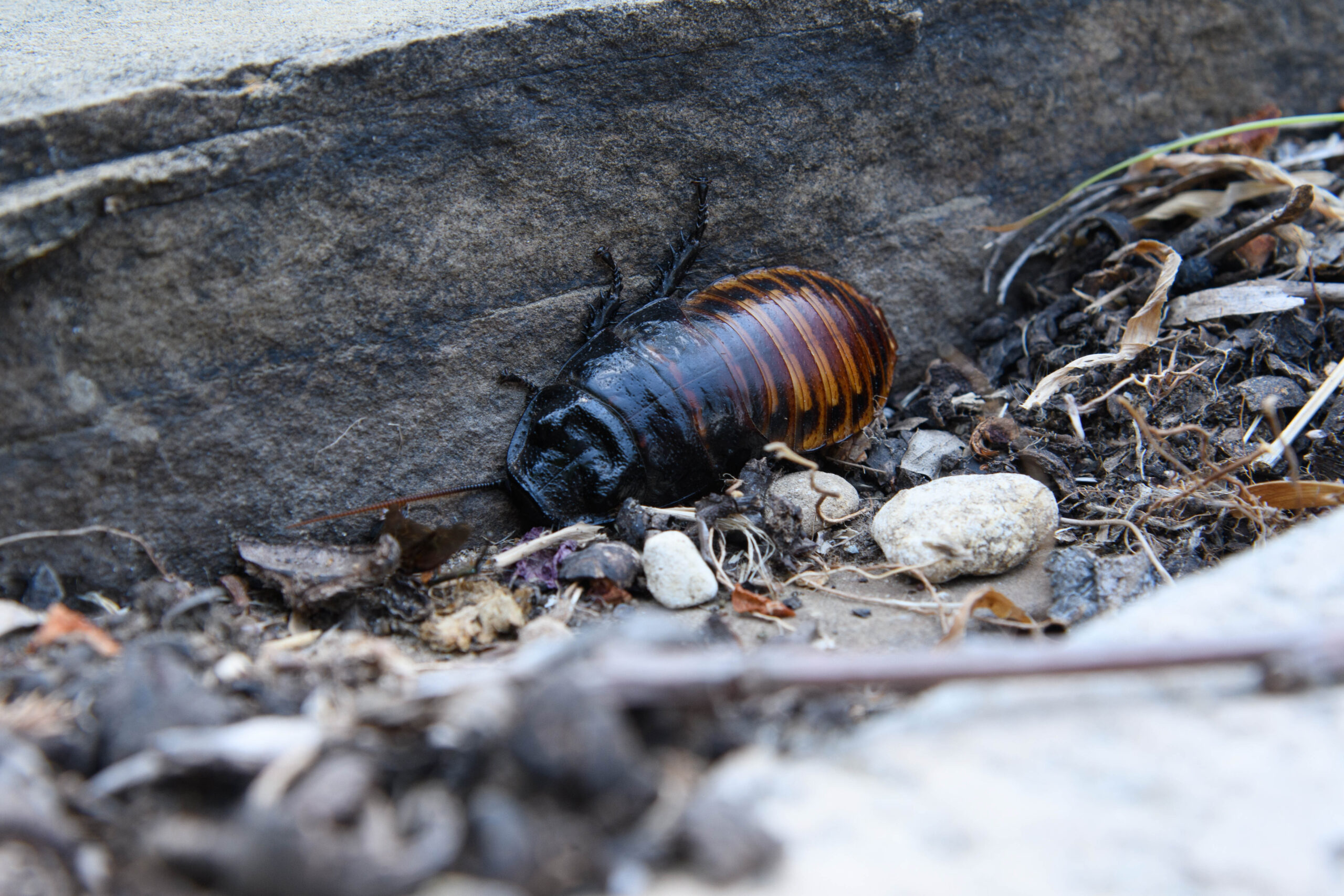
Photography by Zach Porter
These insects aren’t as ugly as the roaches we’re used to seeing in Texas, but they’re still bugs. They look more like beetles (or roly-polies, Zach says), and thankfully, they can’t fly.
Madagascar hissing cockroaches can be ideal for someone who wants an unusual pet and doesn’t mind insects because they’re low maintenance. Zach only fed his first Madagascar hissing cockroach a handful of dry cat food twice in its lifetime. The cockroaches’ cage needs to be misted with a spray bottle every day or two since the country these bugs hail from typically has a tropical, humid climate.
“It was surprisingly easy,” Zach says of the cockroaches’ care. “I was expecting much more of a challenge.”
East Dallas 4-H Club President Zach, who joined the club a few years ago as a homeschooler, took home his first hissing cockroach in the entomology project group during his first year of 4-H. He had the roach — named Lord Farquaad — for three years, and it was about 2 inches long. Lord Farquaad eventually died of old age, but Zach currently has three more. They enjoy hanging out on tree bark in their small tank.
Johnson can see the Madagascar hissing cockroaches in their cage without shrieking in horror, but she isn’t comfortable with an up-close view of them outside their cage.
“He is not allowed to have it any closer to me than the other side of the room,” Johnson says.
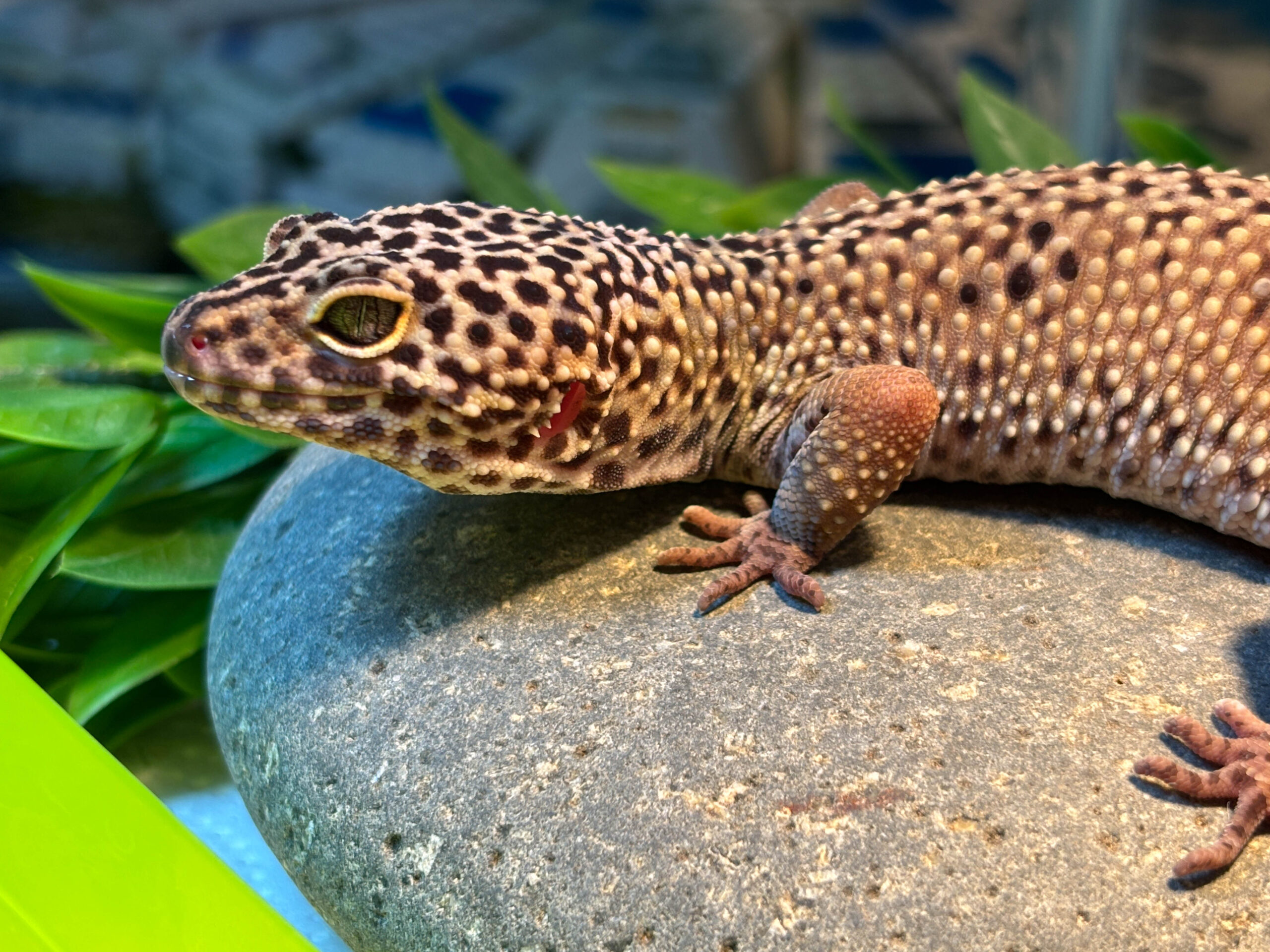
Photography by Angela Johnson
Meanwhile, Zach will let the cockroaches crawl around on his hands.
“You don’t take them out for walks or play with them, but you can take them out and have them on your hand and look at them,” he says.
The cockroaches’ hiss is a defense mechanism that they also do in the mating process. The sound is louder than expected and can be heard from across the room, Johnson says.
“You can hear it if they want you to hear it,” Zach says.
You can tell if Madagascar hissing cockroaches are male or female based on the horns at the top of their heads. Males have pronounced horns while females barely have them, Zach says.
“You don’t want to get a male and a female because then you will have a zillion cockroaches,” Johnson says.
Zach also has a leopard gecko, which is more to his mother’s liking. Johnson convinced him to adopt the gecko at this year’s Dallas Public Library Community Nature Expo. The gecko, named Bubba, is bumpy all over, except for his velvety-soft tail, where excess fat is stored, Zach says. Bubba was overweight when Zach first got him, and his tail was as big as his body.
Bubba eats crickets, superworms and mealworms, but his meals must be live insects, Johnson says. The gecko needs three feeders, as in one cricket or one mealworm, a week, Zach says. Superworms are treats and should be used sparingly. The insects he eats need to be fed as well for the meal to be nutritious.
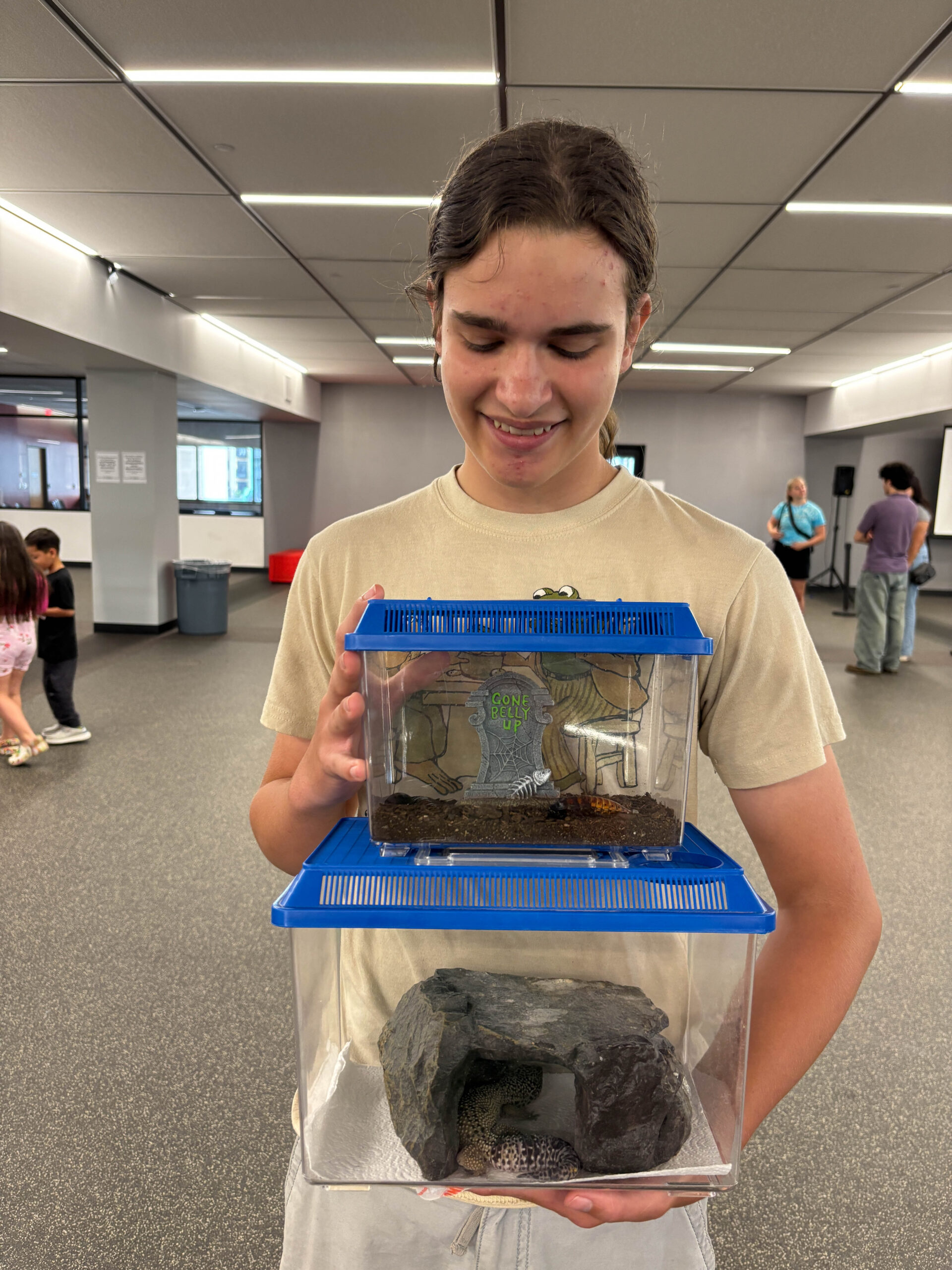
The leopard gecko’s tank needs to be set up with a warm side, heated by a lamp, and a cool side. The warm side needs UVB light and a basking rock, which are necessary for Bubba’s health. The 20-gallon tank must also be equipped with three kinds of places for Bubba to crawl into — warm, cool and moist, Zach says. Johnson points out that the basking rock also can’t get too hot or the gecko can get burned.
Unlike the cockroaches, Johnson doesn’t mind spending time up close and personal with the leopard gecko.
“Bubba is really cool,” she says. “He’s gorgeous, just his coloring and his eyes and everything. And when you talk to him, he looks at you.”
FUN FACTS
- Madagascar hissing cockroaches contain a neurotoxin that numbs the mouth and makes it difficult to swallow.
- Madagascar hissing cockroaches are excellent climbers and can scale smooth glass.
- Madagascar hissing cockroaches are detritivores, which means that they help break down decaying plant and animal matter.
- Leopard geckos are one of few gecko species with eye-lids.
- Leopard geckos can detach their tails as a defense mechanism.