Texas Health Presbyterian Hospital Dallas Executive Chef Jason Gersten sees food as a path to recovery for its patients.
As head of the culinary department, Gersten has a 40-person team under him responsible for preparing 1,500 patient meals a day. He’s helped evolve a scratch-made, room service-style program into something that gives people another perspective on often-maligned hospital offerings.
Originally from New York, he got his culinary training at the French Culinary Institute in New York City. Gersten worked in restaurants in the city in his early years in the industry, but a trip to a family member’s hospital room shifted his path.
“At the time, I guess the stigma of healthcare food was kind of poor,” Gersten says. “It was a lot of ready-made food. It just had a bad perception. So, I was at a hospital in New York, and the food quality wasn’t good, and I was like, basically the people that deserve the most nutritious-based food would be somebody that is either not feeling well, has gone through a procedure or has a disease, unfortunately.”
Afterwards, he worked at hospitals in the city like Mercy Hospital and Sloan Kettering, where the chefs he worked under led a movement away from microwave foods toward scratch-made, high-quality meals cooked to order. He’s been in Texas for seven years but joined Texas Health Dallas in 2022 as executive chef.
Gersten has brought his scratch-made experience to the hospital. His team cooks more than 800 pounds of chicken and 400 pounds of salmon to order a week. The menus contain popular dishes like blackened salmon in a remoulade sauce, chicken andouille sausage, grits with creole cajun red pepper sauce and Tex-Mex inspired offerings. Some of the most popular staples are brisket — of which his team prepares 300 pounds weekly — and pot roast.
“Currently, on my new menu that I’m working out, we’re gonna be doing Southwest-type cuisine,” he says. “So, it’s gonna be a lot of finishing sauces, like a smoked, roasted red pepper sauce we’ll be doing. Probably like cilantro oils and stuff that you would see kind of in restaurants with microgreens. And really, the trick is figuring out how to make it stand up through the whole process of us cooking the dish and then transporting it to the patient. So basically, we have a 45-minute window, and we try to get it there in under 45 minutes.”
For patients unable to get to the phone, there is a program called Room Service Assist which sends team members to help facilitate ordering.
The culinary team navigates allergens and dietary restrictions every day. Gersten develops low-fat, low-sugar variants of menu items to conform with diabetic, cardiac and low-fat diets set by the hospital.
“When it comes to low-salt or sodium diets, we try to look into how we can elevate the flavor profiles,” he says. “So, we’ll have either non-salt seasonings, or we try to use citrus to put impact flavor into certain sort of products, and we always take fresh herbs to elevate the dishes.”
In addition to taking care of patients, Gersten oversees the hospital’s retail cafe. The buffet-style concept offers three rotating chef entrees weekly, in addition to burgers and a salad bar for visitors and staff.
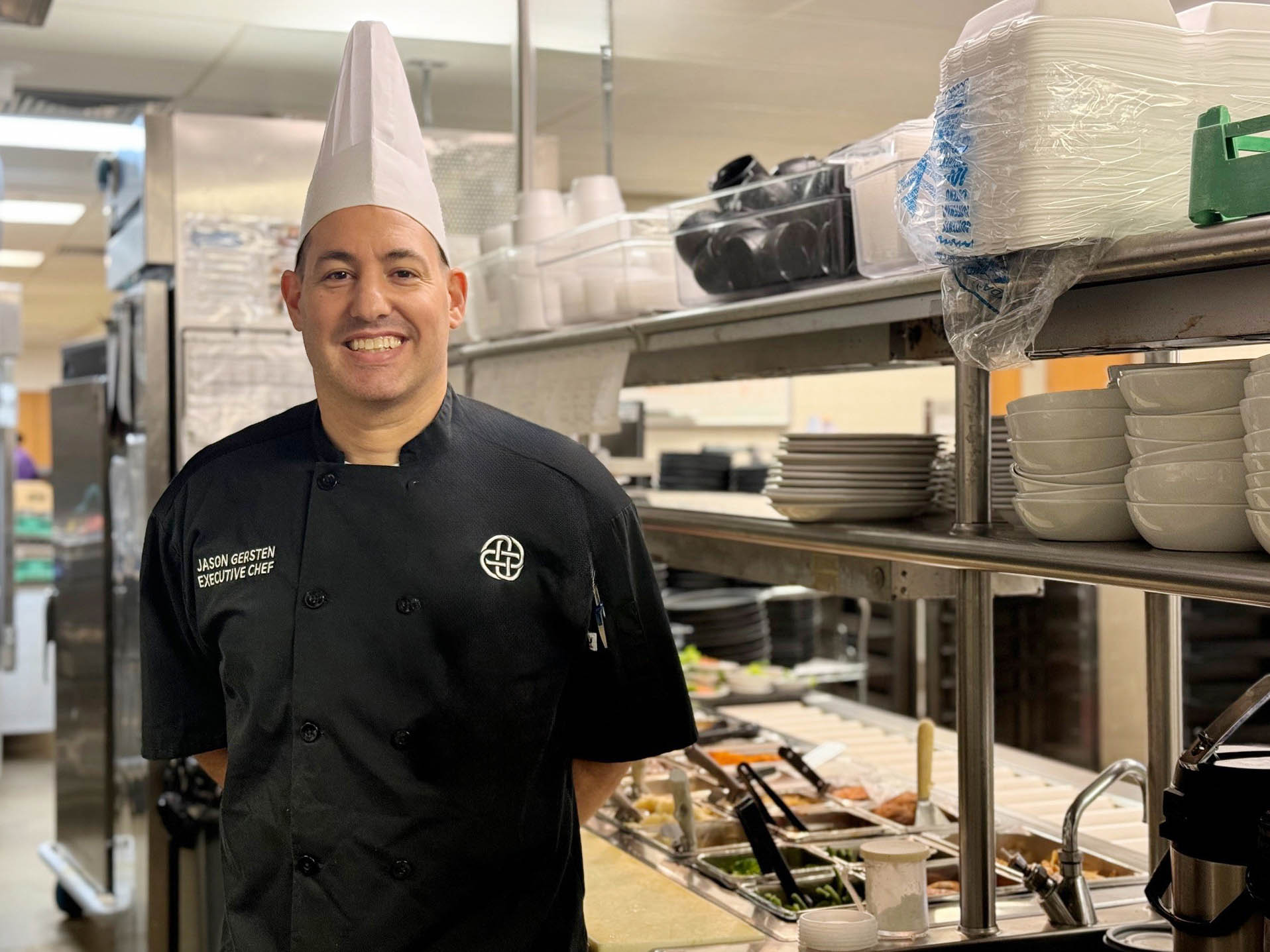
Chef Jason Gersten. Courtesy of THD
Gersten says he will likely stay in healthcare for the rest of his career. His key to success? Give patients a home-cooked experience.
“I always tell my cooks, ‘We’ve got to treat every patient like they’re family. Like, this is one of your family members.’ They can tell that if we’re using the best ingredients and we’re treating them with respect through the whole cooking process,” he says. “When they finally get that product, they feel the love that we put into that dish, and it will help nourish them through whatever they’re going through.